
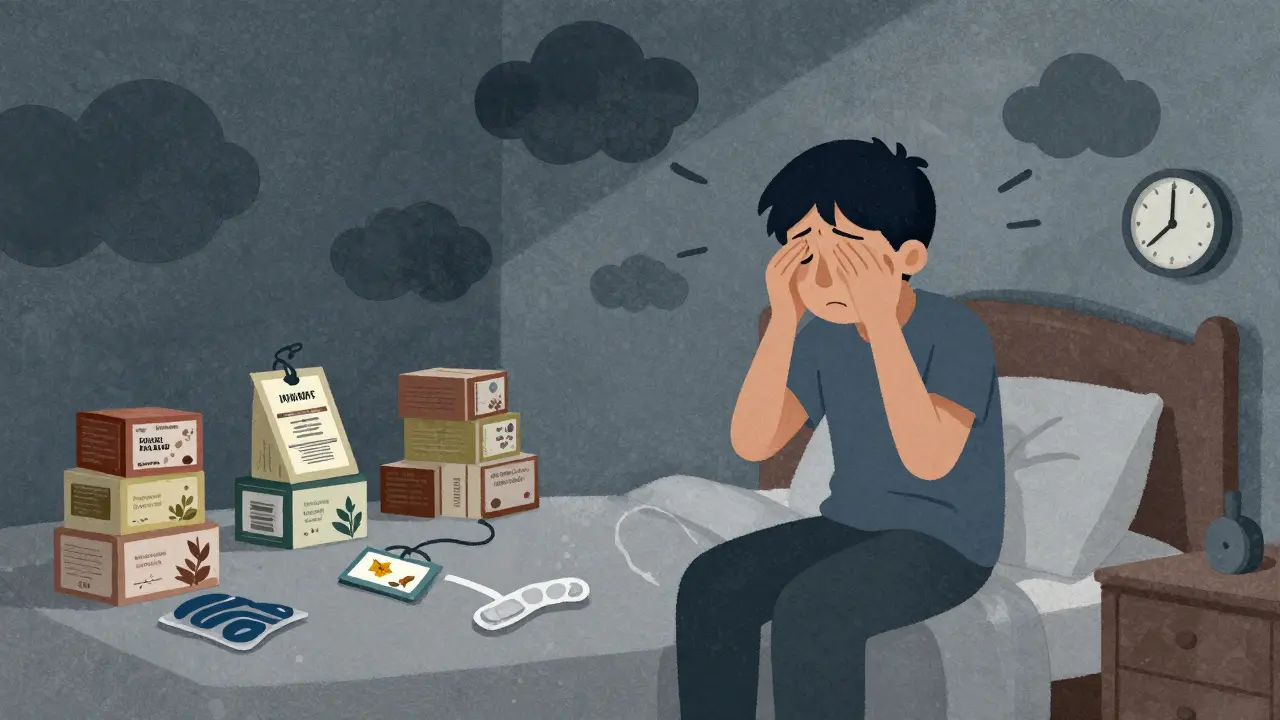
Waking up exhausted after spending eight hours in bed is a frustrating experience. If you have struggled with falling asleep or staying asleep at least three nights a week for more than three months, you are likely dealing with chronic insomnia, which is a persistent sleep disorder characterized by difficulty initiating or maintaining sleep despite adequate opportunity to rest. It is not just about being tired; it affects your mood, focus, and physical health. Many people try to fix this by buying expensive mattresses or drinking herbal tea, but these small changes rarely solve the root problem.
The medical community has shifted its stance on how to treat this condition. For years, doctors prescribed sleeping pills as the go-to solution. Today, major health organizations recommend a different approach. The American College of Physicians issued a guideline in 2016 that remains the standard today: Cognitive Behavioral Therapy for Insomnia (CBT-I) should be the first line of defense. This structured therapy addresses the thoughts and behaviors keeping you awake, offering long-term relief without the side effects of medication.
What Is Chronic Insomnia Really?
To understand why simple fixes fail, we need to look at how chronic insomnia works. It is not just bad luck. Experts use the three-factor model to explain it. First, there are predisposing factors-things like genetics or a naturally light sleeper temperament. Second, precipitating factors trigger the issue, such as stress, illness, or a major life event. Finally, perpetuating factors keep the problem going even after the initial stressor is gone.
These perpetuating factors are usually habits or beliefs. You might start worrying about not getting enough sleep, which creates anxiety that keeps you awake. Or you might spend hours in bed trying to force sleep, which trains your brain to associate the bed with frustration rather than rest. According to the American Academy of Sleep Medicine (AASM), chronic insomnia requires specific diagnostic criteria: symptoms must occur at least three nights per week for a minimum of three months. Recognizing this pattern is the first step toward choosing the right treatment.
Why Sleep Hygiene Alone Fails
You have probably heard advice to improve your "sleep hygiene." This includes keeping your room cool, avoiding screens before bed, and limiting caffeine. While these steps are helpful, they are not a cure for chronic insomnia. Dr. Jack D. Edinger, a leading researcher in the field, warns that sleep hygiene education alone is minimally effective for chronic cases. It should never be offered as a standalone treatment.
Think of sleep hygiene like brushing your teeth. It is necessary for basic health, but it cannot fix a cavity. Similarly, optimizing your environment supports better sleep, but it does not retrain your brain’s sleep drive. The Sleep Foundation notes that while environmental modifications are part of a broader strategy, they lack the power to reverse chronic sleep disorders on their own. Relying solely on these tips can lead to false hope and prolonged suffering.
| Feature | Sleep Hygiene | CBT-I |
|---|---|---|
| Primary Goal | Optimize environment | Retrain brain-behavior connection |
| Evidence Level | Moderate | High (Strong Recommendation) |
| Long-Term Efficacy | Low for chronic cases | High (effects persist 12+ months) |
| Best Used As | Supportive measure | First-line treatment |
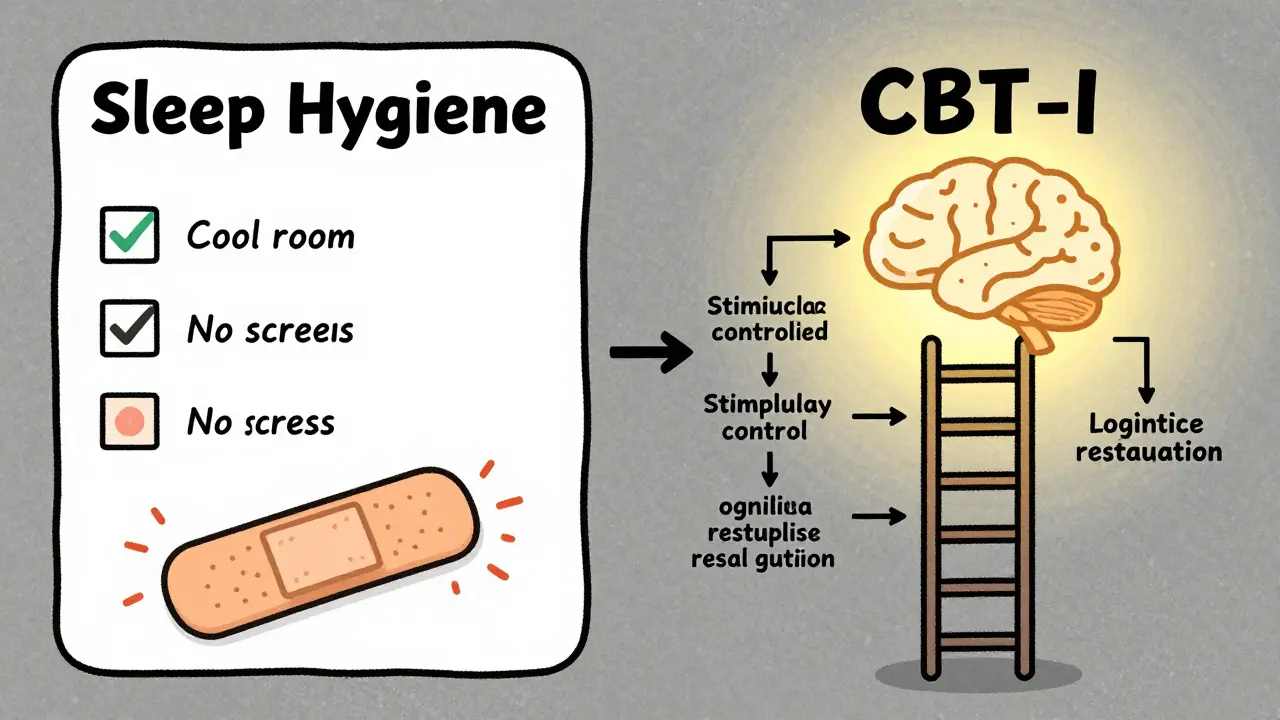
How Cognitive Behavioral Therapy for Insomnia Works
CBT-I is a structured program typically delivered over six to eight weekly sessions. It combines several techniques to tackle insomnia from multiple angles. Unlike medication, which masks symptoms, CBT-I changes your relationship with sleep. Dr. Rachel Manber from Stanford University explains that CBT-I addresses the underlying causes, providing durable results.
The core components of CBT-I include:
- Stimulus Control Therapy: This technique breaks the association between bed and wakefulness. You only lie down when sleepy. If you do not fall asleep within 15 to 20 minutes, you get out of bed and do something quiet until you feel drowsy again. You also maintain a consistent wake-up time every day, regardless of how much you slept.
- Sleep Restriction: This sounds counterintuitive, but it is highly effective. Your time in bed is limited to match your actual sleep time. If you only sleep six hours but stay in bed for eight, you restrict your bed time to six hours. This creates mild sleep deprivation, which increases your "sleep drive" and helps you fall asleep faster and stay asleep longer. As your efficiency improves, you gradually add more time in bed.
- Cognitive Restructuring: This addresses negative thoughts about sleep. Many people believe, "If I don’t get eight hours, I will fail at work tomorrow." These catastrophic thoughts create anxiety that prevents sleep. CBT-I helps you challenge and replace these irrational beliefs with realistic ones.
- Relaxation Training: Techniques like progressive muscle relaxation or deep breathing help reduce physical tension and mental arousal before bedtime.
CBT-I vs. Medication: The Long-Term View
Many patients prefer medication because it feels easier than changing habits. Drugs like zolpidem or eszopiclone can induce sleep quickly. However, their effectiveness often diminishes after four to six weeks. There is also a risk of dependence and withdrawal symptoms. A 2020 meta-analysis in Sleep Medicine Reviews showed that CBT-I reduced sleep onset latency by an average of 18.2 minutes and wake after sleep onset by 27.4 minutes. Medications achieved smaller reductions, and their benefits disappeared once the patient stopped taking them.
CBT-I effects last. Studies show that improvements persist at 12-month follow-ups. This makes it a superior choice for long-term management. Furthermore, digital therapies are expanding access. Apps like Somryst, which received FDA clearance, offer guided CBT-I protocols. Research indicates these digital tools can achieve remission rates of over 50% in some users, making treatment accessible even if you live far from a specialist.
Real-World Challenges and Expectations
Starting CBT-I is not always easy. The sleep restriction phase, in particular, can be tough. Users often report increased fatigue during the first two weeks. One Reddit user noted, "The sleep restriction part was brutal for the first two weeks but worth it long-term." About 62% of users experience initial worsening of sleep symptoms before improvement kicks in.
Adherence is another hurdle. Maintaining a strict wake-up time on weekends is difficult for many. Data shows that 68% of beginners struggle with consistency. Additionally, access to trained therapists is limited. In the United States, there are only about 0.5 CBT-I certified therapists per 100,000 people. Insurance coverage can also be inconsistent, with some plans covering only a fraction of the recommended sessions.
Despite these challenges, the rewards are significant. Users report improved daytime functioning, better mood, and reduced anxiety. A survey found that 78% of CBT-I participants experienced reduced daytime fatigue. The key is patience and commitment to the protocol.
Practical Steps to Start CBT-I
If you are considering CBT-I, here is how to prepare. First, track your sleep for seven to fourteen days using a sleep diary. Record when you go to bed, when you think you fall asleep, how many times you wake up, and when you finally get up. This data helps calculate your sleep efficiency.
Next, implement basic sleep hygiene rules to support the therapy:
- Keep your bedroom temperature around 65°F (18.3°C).
- Eliminate light exposure with blackout curtains or an eye mask.
- Use white noise to mask disruptive sounds.
- Avoid caffeine for at least six hours before bedtime.
- Limit alcohol intake and finish any drinks four hours before sleep.
Finally, find a qualified provider. Look for therapists certified by the Society of Behavioral Sleep Medicine. If in-person therapy is unavailable, consider FDA-cleared digital therapeutic apps. Remember, CBT-I is a skill you learn. Like learning a new language, it takes practice, but the results can transform your life.
Is CBT-I covered by insurance?
Coverage varies significantly by provider and plan. While CBT-I is recommended as first-line treatment, many insurance plans still limit the number of sessions covered. Some plans may cover only three sessions instead of the recommended six to eight. Digital CBT-I apps may have different reimbursement policies. Always check with your insurer and ask for pre-authorization to avoid unexpected costs.
How long does it take for CBT-I to work?
Most people see initial improvements within two to four weeks. Full benefits are typically realized after eight to twelve weeks of consistent application. The first few weeks can be challenging due to sleep restriction, but adherence during this period is crucial for long-term success.
Can I do CBT-I on my own?
While self-help books and online resources exist, working with a trained therapist yields the best results. Therapists provide personalized adjustments to the protocol, especially for sleep restriction calculations. However, FDA-cleared digital programs offer a guided alternative that mimics professional therapy through interactive modules.
What if CBT-I doesn't work for me?
CBT-I is effective for most people, but not everyone responds fully. If you do not see improvement, consult your doctor to rule out other sleep disorders like sleep apnea or restless leg syndrome. Sometimes, combining CBT-I with other treatments or adjusting the protocol can help. Do not give up too early; consistency is key.
Is sleep restriction safe?
Yes, when done correctly under guidance. Short-term mild sleep deprivation is used to increase sleep drive. It is not recommended for individuals with certain medical conditions, such as bipolar disorder or severe depression, without careful monitoring. Always discuss your health history with a healthcare provider before starting sleep restriction.