
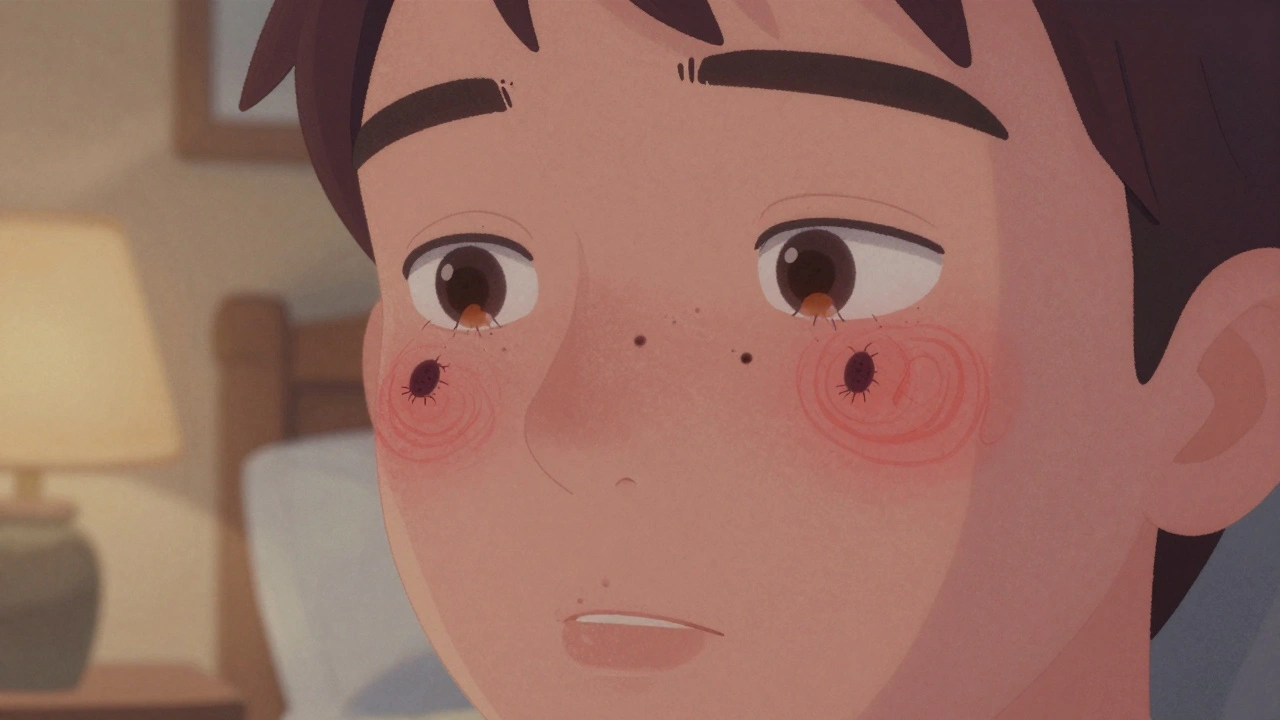
Soolantra isn’t a cure, but for many people with rosacea, it’s the first thing that actually works. If you’ve tried cleansers, antibiotics, or over-the-counter creams that promised relief but left your skin red, burning, or covered in bumps, you’re not alone. Soolantra targets the root cause many doctors miss-not just surface inflammation, but the tiny mites living in your pores.
What exactly is Soolantra?
Soolantra is a topical cream with one active ingredient: ivermectin. It’s not an antibiotic. It’s not a steroid. It’s an antiparasitic-specifically designed to kill Demodex mites, which are microscopic creatures that live naturally in human hair follicles. For most people, these mites cause no harm. But in people with rosacea, especially the papulopustular type (the kind with red bumps and pus-filled spots), research shows these mites multiply out of control and trigger inflammation.
The cream comes in a 1% concentration and is applied once daily, usually at night. A pea-sized amount covers the entire face-forehead, cheeks, nose, and chin. It’s fragrance-free, non-comedogenic, and doesn’t sting like some other rosacea treatments. You don’t wash it off. You just leave it on.
How does Soolantra actually work?
For years, doctors thought rosacea was caused by blood vessel problems or diet. Then studies in the 2010s started pointing to Demodex mites. People with rosacea have 10 to 20 times more of these mites than people without it. The mites themselves aren’t the problem-it’s what happens when they die. Their bodies break down and release bacteria and toxins that make your skin angry.
Soolantra doesn’t just kill the mites. It reduces the inflammatory response they trigger. Clinical trials showed that after 12 weeks of daily use, over 40% of users saw their bumps and pimples clear up by 75% or more. That’s not a placebo effect. That’s measurable, visible improvement.
Unlike metronidazole or azelaic acid-which can take months to show results-some people notice less redness and fewer breakouts within 2 to 4 weeks. It’s not instant, but it’s faster than most alternatives.
Who is Soolantra for?
Soolantra is approved for adults with papulopustular rosacea. That means you have persistent redness on your central face, plus visible bumps and pimples that aren’t acne. It’s not for cystic acne, eczema, or perioral dermatitis. If your skin is just flushed or blushing easily without bumps, Soolantra probably won’t help.
It’s also not for kids. It’s only been tested and approved for people 18 and older. Pregnant or breastfeeding women should talk to their doctor first-there’s limited data, and while the cream is absorbed minimally, it’s not risk-free.
People with sensitive skin often tolerate it better than other rosacea treatments. I’ve seen patients who couldn’t use metronidazole because it burned like acid switch to Soolantra and finally sleep through the night without itching.
What are the side effects?
Most people have no side effects. In clinical trials, less than 5% of users reported mild irritation-like dryness, burning, or stinging-usually in the first week. That usually fades. If it doesn’t, you stop using it.
There’s no increased risk of skin thinning, like with steroid creams. No rebound flare-ups after stopping, like with some antibiotics. And unlike oral ivermectin (used for parasites like scabies), the topical version doesn’t enter your bloodstream in any meaningful amount. You’re not getting systemic effects.
One thing to watch: if you’ve never used a prescription rosacea treatment before, your skin might react at first. Don’t panic. Give it 3 weeks. If your skin looks worse after 6 weeks, it’s time to check in with your dermatologist.
How does it compare to other rosacea treatments?
Here’s how Soolantra stacks up against the most common options:
| Treatment | Active Ingredient | How It Works | Time to See Results | Common Side Effects |
|---|---|---|---|---|
| Soolantra | Ivermectin | Kills Demodex mites, reduces inflammation | 2-12 weeks | Mild dryness, stinging (rare) |
| Metronidazole cream | Metronidazole | Antibiotic, anti-inflammatory | 4-12 weeks | Burning, itching, redness |
| Azelaic acid (Finacea) | Azelaic acid | Reduces bumps and redness | 4-12 weeks | Burning, stinging, peeling |
| Brimonidine gel (Mirvaso) | Brimonidine | Constricts blood vessels to reduce redness | Within hours | Rebound redness, flushing |
| Oral Doxycycline | Doxycycline | Antibiotic, anti-inflammatory | 4-8 weeks | Upset stomach, sun sensitivity, yeast infections |
Soolantra stands out because it treats the likely cause-not just the symptoms. Metronidazole and azelaic acid help calm the skin. Brimonidine hides redness. Doxycycline wipes out bacteria but can disrupt your gut. Soolantra goes after the mites, which many experts now believe are the trigger.
How to use Soolantra correctly
Getting results isn’t about using more-it’s about using it right.
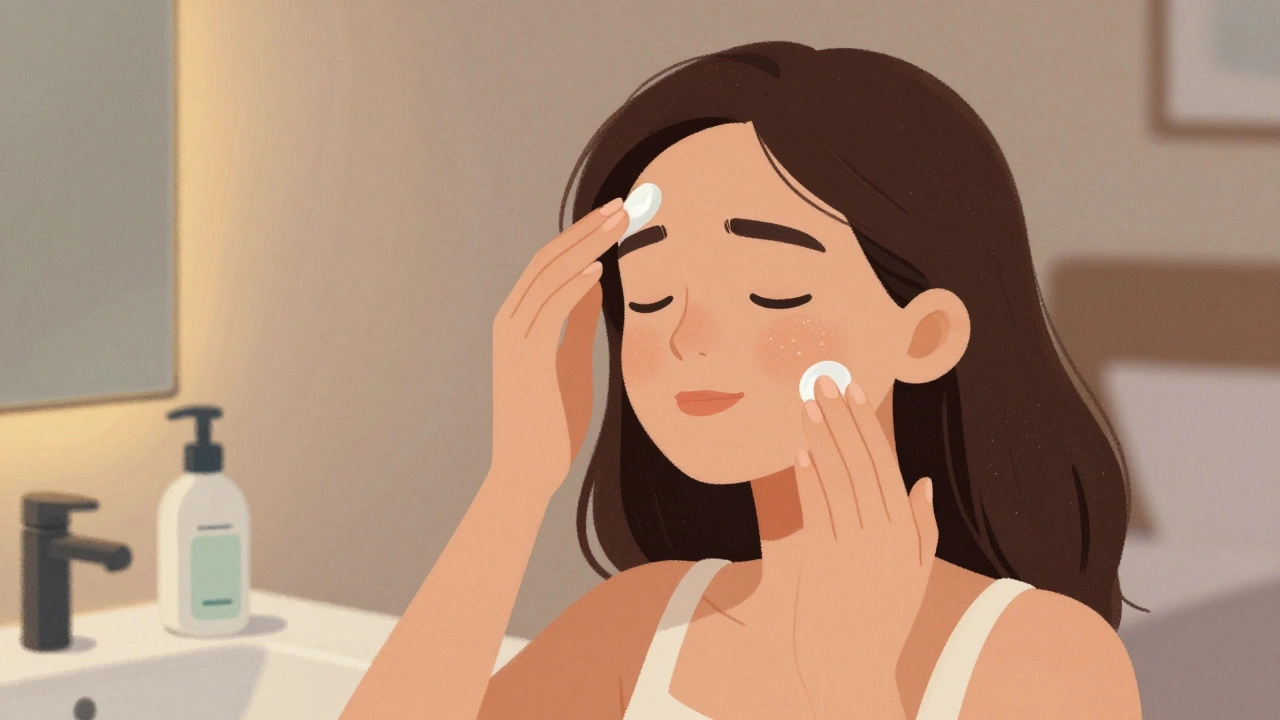
- Wash your face with a gentle, fragrance-free cleanser. Pat dry-don’t rub.
- Wait 15 minutes. Let your skin fully dry.
- Squeeze a pea-sized amount onto your fingertip.
- Dot it on your forehead, cheeks, nose, and chin.
- Gently spread it in thin layers. Don’t rub it in hard.
- Don’t apply makeup, sunscreen, or other creams for at least 15 minutes after.
- Use it every night, even if your skin looks better.
Don’t use it on your eyelids, lips, or inside your nose. Don’t double up if you miss a dose. Just skip it and go back to your regular schedule.
What to expect over time
Week 1-2: Your skin might feel slightly dry or tingly. This is normal. Don’t stop.
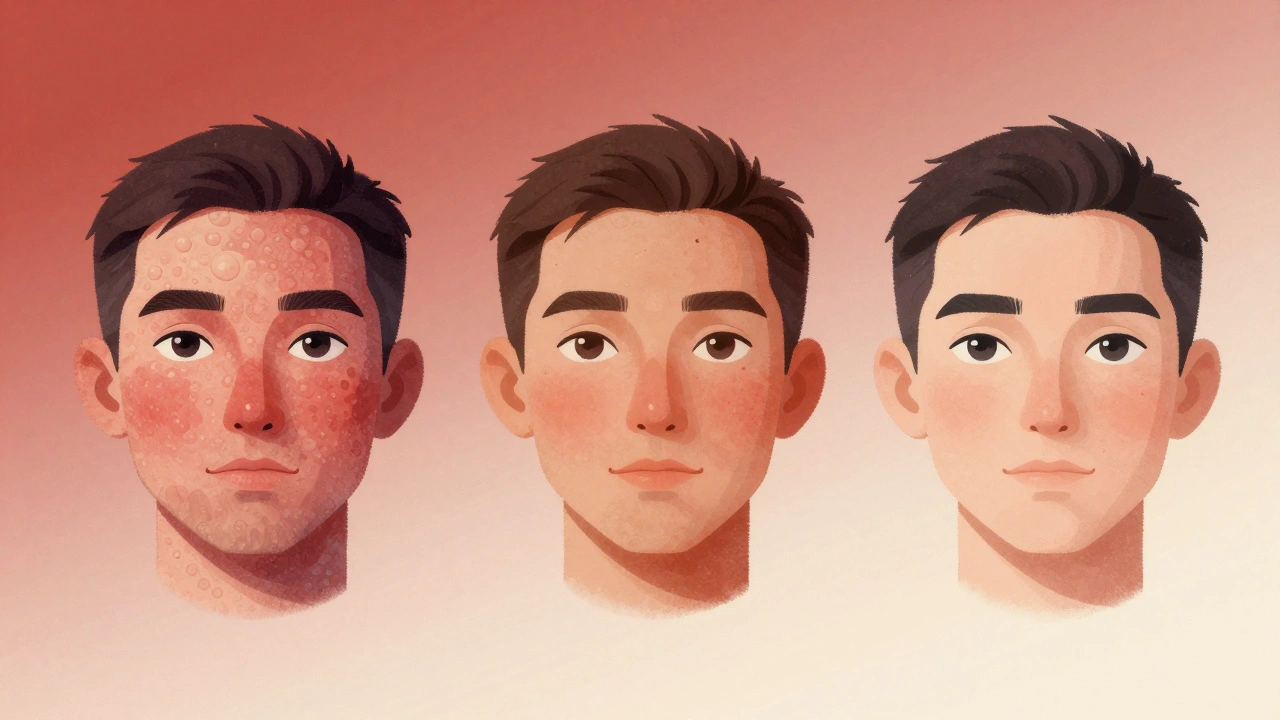
Week 3-6: You’ll start to notice fewer bumps. Redness may begin to fade, especially around your nose and cheeks.
Week 8-12: Most people see the biggest improvement here. Many report their skin feels calmer, less reactive to heat, alcohol, or spicy food.
After 12 weeks: Your doctor might suggest continuing treatment. Unlike antibiotics, Soolantra doesn’t cause resistance. Long-term use is safe for most people. Some stay on it for years, using it 2-3 times a week to keep flare-ups away.
What doesn’t work with Soolantra
Soolantra won’t fix everything. If you’re still breaking out after 3 months, you might need a different approach. Here’s what it doesn’t help with:
- Visible blood vessels (telangiectasia)-you’d need laser or intense pulsed light for that.
- Thickened skin on the nose (rhinophyma)-that’s a surgical issue.
- Redness caused by menopause or stress-those need different strategies.
- Acne with blackheads or deep cysts-Soolantra isn’t an acne treatment.
Also, don’t combine it with harsh exfoliants, retinoids, or alcohol-based toners. They’ll make your skin more sensitive and defeat the purpose.
Where to get it and how much it costs
Soolantra is a prescription-only cream in the UK, the US, and most of Europe. You can’t buy it over the counter or online without a doctor’s note. Your GP or dermatologist can prescribe it. Some NHS clinics in the UK cover it if you’ve tried other treatments first.
A 30g tube usually costs between £60 and £90 without insurance. That lasts 2-3 months with daily use. Some private clinics offer subscription plans or patient support programs that lower the price.
Generic ivermectin creams exist in some countries, but they’re not FDA or EMA approved for rosacea. Stick with the branded version. It’s formulated specifically for facial use.
Real stories from real users
One woman in Leeds, 42, told her dermatologist she’d tried 11 different creams over 8 years. She’d given up on makeup, avoided social events, and felt like her skin was always on fire. After 8 weeks on Soolantra, she posted a photo on a rosacea forum: her cheeks were clear, no redness, no bumps. She wrote: ‘I didn’t think I’d ever feel normal again.’
A man in Manchester, 58, used to get flare-ups every time he drank wine. After Soolantra, he could have a glass without breaking out. He didn’t stop drinking-he just stopped fearing it.
These aren’t outliers. They’re the norm for people who’ve been stuck in the rosacea loop for years.
Final thoughts
Soolantra isn’t magic. It won’t erase rosacea forever. But it’s the first treatment in decades that targets what’s likely causing the problem-not just hiding it. If you’ve been told your rosacea is ‘just stress’ or ‘bad skin,’ know this: it’s a real, biological condition. And now, there’s a treatment that actually works on the root cause.
It’s not for everyone. But if you’ve got bumps, pimples, and persistent redness on your face-and nothing else has worked-it’s worth asking your doctor about. You don’t have to live with it anymore.
Is Soolantra a steroid?
No, Soolantra is not a steroid. It contains ivermectin, an antiparasitic that kills Demodex mites and reduces inflammation. Unlike steroid creams, it doesn’t thin the skin or cause rebound redness.
Can I use Soolantra with other rosacea treatments?
You can use Soolantra with gentle moisturizers and sunscreen. Avoid combining it with retinoids, strong exfoliants, or alcohol-based products. Some doctors prescribe it alongside metronidazole or azelaic acid, but always check with your dermatologist first.
How long does a tube of Soolantra last?
A 30g tube lasts about 2 to 3 months with daily use. You only need a pea-sized amount for your entire face each night. Using more won’t make it work faster.
Does Soolantra cause resistance or dependency?
No. Unlike antibiotics, ivermectin doesn’t lead to bacterial resistance. You also won’t become dependent on it. Many people reduce to 2-3 times a week after clearing their skin and still stay in control.
Can I use Soolantra if I have sensitive skin?
Yes. Soolantra is fragrance-free, non-comedogenic, and formulated for sensitive skin. In fact, many people with sensitive skin tolerate it better than metronidazole or azelaic acid, which often cause burning.
What if Soolantra doesn’t work for me?
If you’ve used it daily for 12 weeks with no improvement, talk to your dermatologist. You might have a different type of rosacea, or another condition like seborrheic dermatitis. There are other treatments, including laser therapy or oral medications, that might help.
If you’ve been struggling with rosacea for years, you’re not alone-and you don’t have to keep guessing what’s wrong. Soolantra offers a real, science-backed option. Ask your doctor. Give it a fair shot. And don’t settle for creams that just cover up the problem.

Erin Nemo, December 2, 2025
I tried Soolantra after 5 years of failed treatments. My skin hasn't looked this calm since high school. Just a pea-sized amount and boom - no more burning after coffee. Life changer.
Rachel Stanton, December 3, 2025
The Demodex mite hypothesis is fascinating - it reframes rosacea from a vascular disorder to a microecological imbalance. Ivermectin’s selective anti-inflammatory action on TLR2 pathways is what makes this superior to broad-spectrum antibiotics. Long-term microbiome preservation is key.
Karandeep Singh, December 5, 2025
this stuff is overhyped. i used it for 2 weeks and my face looked like a tomato. why do americans always think one cream fixes everything?
James Allen, December 7, 2025
I mean, if you're not from the US, you probably can't even get this. Why does everything good here cost $80? We're literally exporting our medical breakthroughs while other countries laugh at our healthcare prices.
Suzanne Mollaneda Padin, December 8, 2025
I’m a dermatology nurse in California and I’ve seen patients go from hiding behind scarves to going out without makeup after Soolantra. It’s not magic, but it’s one of the few treatments that actually targets the biology. Recommend it to everyone with papulopustular rosacea.
Amber-Lynn Quinata, December 9, 2025
I just want to say I’m so happy for everyone who found relief 😍 but if you’re not using organic coconut oil + tea tree first, you’re doing it wrong. This is Big Pharma pushing a $$$ cream over natural solutions 🤦♀️
Margaret Stearns, December 11, 2025
I used it for 10 weeks. No side effects. My skin feels like skin again. I didn’t even know I was this red until it was gone.
amit kuamr, December 12, 2025
India has cheaper ivermectin creams but no one uses them for rosacea because doctors dont know. You dont need to pay 90 pounds for this
ariel nicholas, December 14, 2025
Let’s be real: the ‘Demodex causes rosacea’ theory is just a trendy hypothesis pushed by pharmaceutical-funded studies. Where’s the longitudinal data? Where’s the control group for gut microbiome correlation? This isn’t science - it’s marketing dressed in lab coats.
Bonnie Youn, December 15, 2025
YOU CAN DO THIS. I was skeptical too but I stuck with it for 8 weeks and now I can go to the gym without feeling like my face is on fire. You got this. Trust the process. No more hiding. Go get your glow back 💪✨
Alexander Williams, December 15, 2025
The clinical trial data is statistically significant but lacks ecological validity. The population was heavily skewed toward mild-to-moderate cases. Real-world adherence is poor. We’re overestimating efficacy due to selection bias.
Kenny Leow, December 17, 2025
In Singapore, we have similar cases. Many patients assume rosacea is acne. Soolantra works, but only when paired with proper skincare education. Patience is everything. Also - sunscreen. Always sunscreen.
Kelly Essenpreis, December 18, 2025
I got mine from a guy on Instagram for $20. It works fine. Why pay full price when you can just order it from abroad? America is so gullible.