
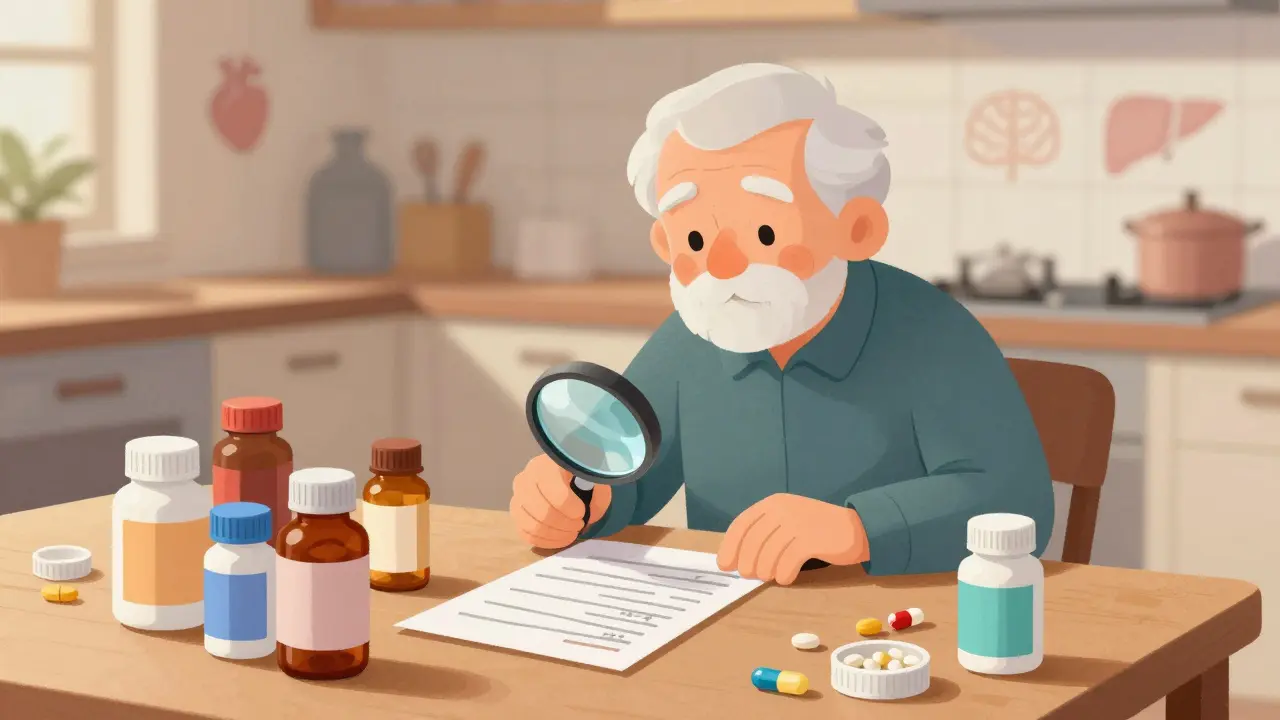
More than one in five adults over 65 in the UK are taking ten or more medications every day. It’s not unusual. Diabetes, high blood pressure, arthritis, heart disease, and depression often come together - and each one brings its own pills. But the more medicines you take, the higher the chance something bad will happen. Drug interactions aren’t just a risk - they’re a real, daily threat. A medication meant to help might make another one useless, or worse, cause dizziness, falls, kidney damage, or internal bleeding. The good news? You don’t have to just accept it. With the right steps, you can cut down on unnecessary pills, avoid dangerous mix-ups, and take only what truly helps.
What Exactly Is Polypharmacy?
Then there’s inappropriate polypharmacy - where medications are no longer needed, don’t match a diagnosis, cause more harm than good, or are too hard to take. This is the dangerous kind. It’s what leads to confusion, falls, hospital stays, and even death. A study from the National Center for Biotechnology Information found that nearly half of older adults in the U.S. take five or more prescriptions. In the UK, similar numbers are rising fast.
How Do Dangerous Drug Interactions Happen?
It’s not just about two pills clashing. It’s a chain reaction. Here’s how it usually starts:
- Multiple doctors, no one in charge. You see your GP for blood pressure, a cardiologist for your heart, a rheumatologist for arthritis, and a neurologist for nerve pain. Each one adds a new prescription - but no one looks at the whole list.
- Side effects become new problems. A medication for high blood pressure causes a dry cough. The doctor prescribes a cough suppressant. That suppressant makes you drowsy, so you’re given something to stay awake. Now you’re on three pills for one original issue.
- Over-the-counter stuff slips through. You start taking ibuprofen for joint pain, or melatonin for sleep. You don’t think it’s a "medication," but it is. It can interfere with blood thinners, diabetes drugs, or blood pressure pills.
- Supplements and herbs. St. John’s Wort, ginkgo, garlic pills - they all interact. Some make blood thinners too strong. Others reduce the effect of antidepressants or heart medications.
- Nothing gets taken off. A drug was prescribed years ago for a temporary issue. No one ever checked if it’s still needed.
The result? A tangled web of pills. And your body doesn’t know which one to respond to.
Five Steps to Safer Medication Use
Managing multiple medications isn’t about cutting pills randomly. It’s about smart, careful changes. The World Health Organization outlines five clear steps that work:
- Review every pill - not just prescriptions. Bring every bottle, capsule, and supplement to every appointment. Include painkillers, antacids, vitamins, and herbal teas. Your doctor or pharmacist needs to see the full picture. Don’t assume they know what you’re taking.
- Link every drug to a diagnosis. If you can’t say why you’re taking a pill - "It’s for my blood pressure," "It’s for my sleep," "It was given after my surgery" - it might be time to question it. If there’s no clear reason, it’s a candidate for removal.
- Use the fewest pills possible. Ask: "Can one drug do two jobs?" Sometimes, a single medication can replace two. Or can a once-daily pill replace one taken three times a day? Simpler regimens mean fewer mistakes.
- Check for interactions. Tools like the Beers Criteria help doctors spot risky drugs for older adults. Ask your pharmacist: "Are any of these on the list?" Also, check for interactions with food - grapefruit can wreck the effect of statins, and alcohol can make sedatives dangerous.
- Start low, go slow. If a new medication is added, ask for the lowest possible dose. Watch for side effects for at least two weeks. Don’t rush. Slower changes mean safer outcomes.
Deprescribing: Taking Pills Off, Not Just Adding
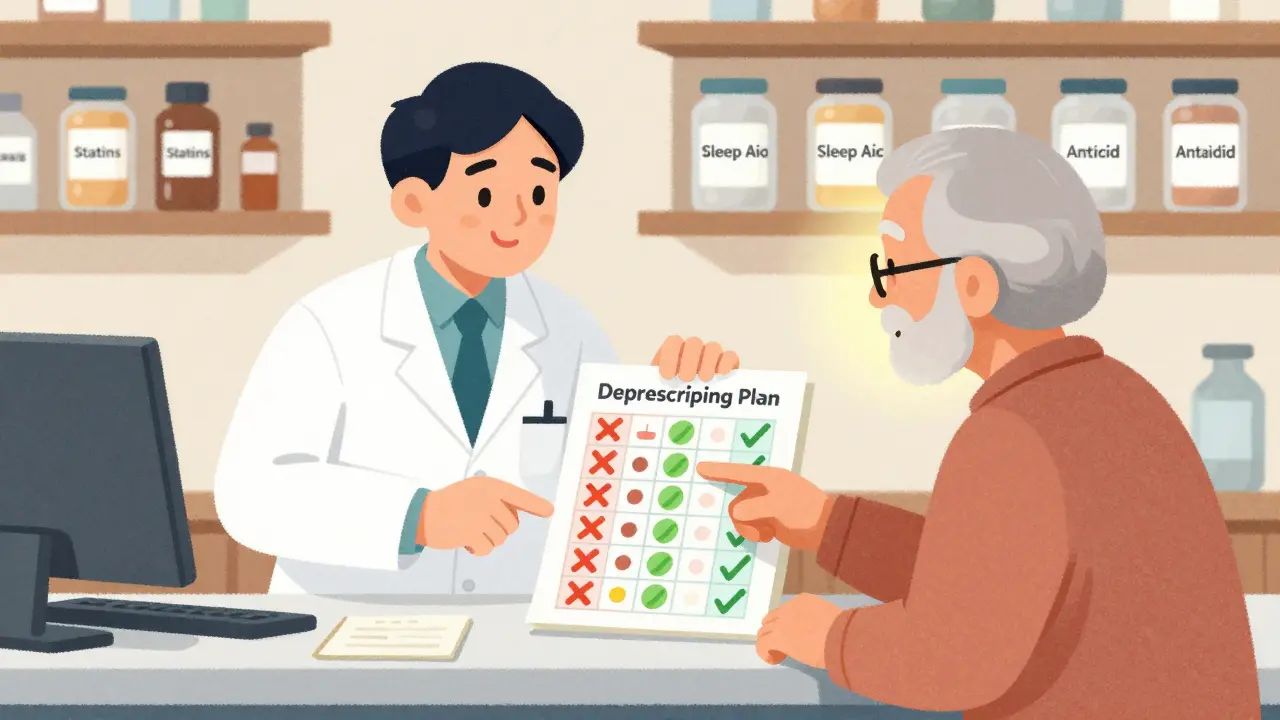
Most people think managing meds means adding more. But the real win is taking some away. That’s called deprescribing.
It’s not about stopping everything. It’s about stopping what’s no longer helping - or worse, hurting. For example:
- A statin prescribed ten years ago for borderline cholesterol - but your liver function has changed, and you’re now at higher risk of muscle damage.
- A sleep aid you’ve been taking nightly for five years - but you haven’t slept poorly in months.
- An antacid you started for occasional heartburn - but now you’re on it every day, and it’s increasing your risk of bone fractures.
Deprescribing doesn’t mean stopping cold turkey. Some medications - like antidepressants, blood pressure pills, or steroids - need to be tapered slowly. Stopping suddenly can cause rebound effects: your blood pressure spikes, your anxiety returns, or you get severe withdrawal symptoms. Always do this with your doctor’s guidance.
Studies show that when deprescribing is done right, patients feel better. Fewer side effects, more energy, fewer falls, and even improved memory. The key? Talk about it. Ask: "Is this still helping me?" "What would happen if I stopped?"
Your Role: Be the Boss of Your Meds
You’re not just a patient - you’re the manager of your own medication plan. Here’s how to take control:
- Keep a Medication Master List. Write down: name, dose, time of day, why you take it, who prescribed it. Example: "Lipitor 20mg - 1 tablet at bedtime - for high cholesterol - Dr. Patel." Update it every time something changes.
- Use one pharmacy. If all your prescriptions come from one place, the pharmacist can spot interactions before you even walk in. They’ll flag risky combinations you didn’t know about.
- Link pills to habits. Take your meds after brushing your teeth, with breakfast, or right before bed. These daily routines help you remember - and reduce missed doses.
- Speak up about side effects. New dizziness? Fatigue? Confusion? Nausea? Don’t assume it’s "just aging." Tell your doctor. It might be a drug interaction.
- Never change your meds without talking to a provider. Even if you think a pill "isn’t doing anything," don’t quit. Ask first.
Teamwork Makes It Work
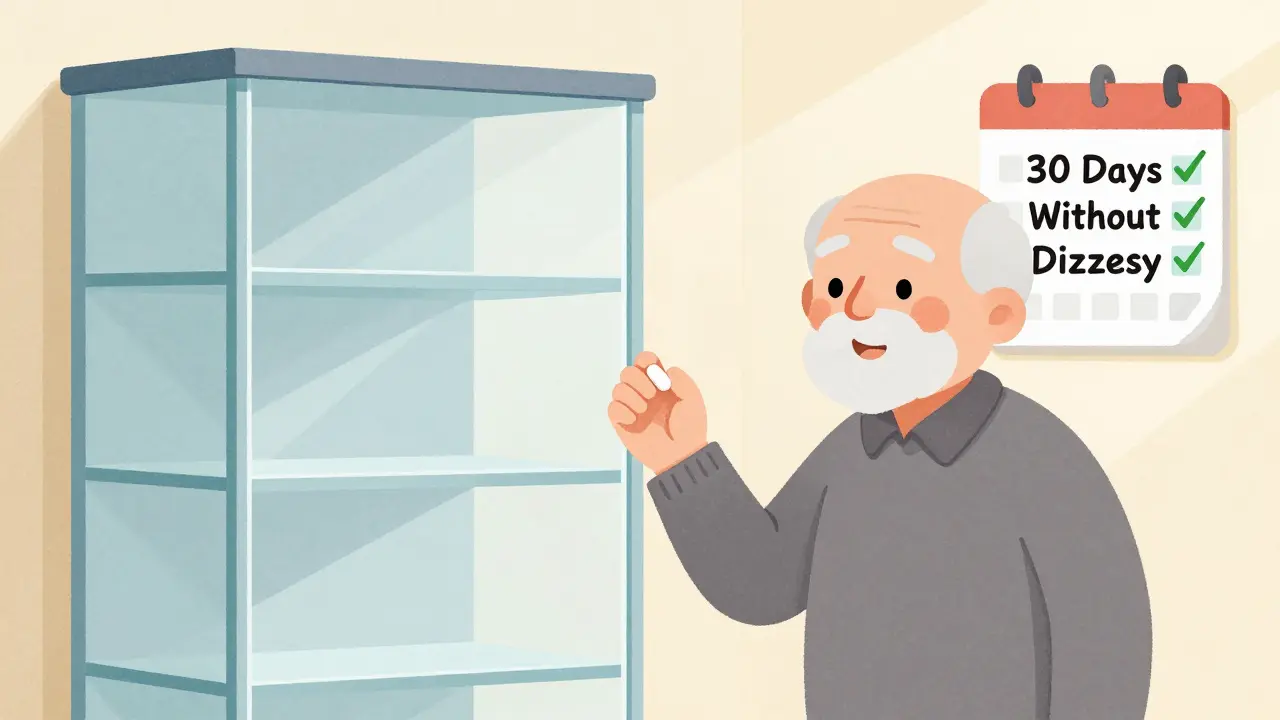
No single person can manage complex medication lists alone. It takes a team:
- Your GP leads the big-picture review.
- Your pharmacist checks for interactions, simplifies dosing, and helps with deprescribing.
- Nurses and care coordinators track changes during hospital stays or care transitions.
- Family or caregivers help you remember pills, notice side effects, and support your decisions.
When these roles work together - especially during transitions like hospital discharge - mistakes drop by up to 70%. That’s why medication reconciliation (double-checking your list when you move from hospital to home) isn’t optional. It’s essential.
What to Do Right Now
If you or someone you care for is on five or more medications:
- Make a full list - include everything, even aspirin and ginseng.
- Bring it to your next GP appointment. Say: "I’d like a full medication review. Are all of these still necessary?"
- Ask your pharmacist: "Are there any red flags here? Any drugs I should stop or switch?"
- Start tracking side effects for the next 30 days. Write them down.
- Set a reminder to revisit this in six months.
You don’t need to be an expert. You just need to be informed. And you deserve to feel better - not overwhelmed by a cabinet full of pills.
How do I know if I’m taking too many medications?
If you’re taking five or more prescription drugs, plus any over-the-counter pills, supplements, or herbs, you’re in the polypharmacy range. That doesn’t automatically mean it’s wrong - but it does mean you need a review. Ask yourself: Can I name why I take each one? Do I feel side effects like dizziness, fatigue, or confusion? If yes, it’s time to talk to your doctor.
Can I stop a medication if I think it’s not helping?
No - never stop a medication on your own. Some drugs, like blood pressure pills or antidepressants, can cause serious rebound effects if stopped suddenly. Instead, make a note of your concerns, then bring them to your GP or pharmacist. They’ll help you decide if it’s safe to reduce or stop - and how to do it safely.
Are supplements safe to take with prescription drugs?
Not always. Supplements like St. John’s Wort, ginkgo, garlic, or vitamin E can interfere with blood thinners, heart medications, and antidepressants. Even common ones like calcium or magnesium can affect how your body absorbs other drugs. Always tell your pharmacist about everything you’re taking - even if you think it’s "natural."
What’s the difference between deprescribing and stopping meds?
Deprescribing is a planned, step-by-step process guided by a healthcare professional. It’s based on your current health, goals, and risks. Stopping meds on your own is risky - it can cause withdrawal, rebound symptoms, or make your condition worse. Deprescribing is about safety. Stopping alone is about guesswork.
How often should I get my medications reviewed?
At least once a year - but more often if you’ve had a hospital stay, changed doctors, or started new medications. If you’re on five or more drugs, ask for a review at every routine check-up. Your pharmacist can also help between visits.


Tasha Lake, February 10, 2026
So polypharmacy isn't just a buzzword-it's a pharmacokinetic nightmare waiting to happen. CYP450 enzyme saturation, renal clearance bottlenecks, protein binding displacement... we're talking about a perfect storm when you stack 10+ drugs. I've seen patients on warfarin, amiodarone, and fluconazole all at once. The INR spikes? Yeah. That's not a coincidence. It's biochemistry in overdrive.
And don't even get me started on P-glycoprotein interactions. One little statin + grapefruit juice combo and you've got rhabdomyolysis on your hands. We need better CDS tools in EHRs-like real-time, dynamic interaction alerts, not the clunky ones we have now.
Sam Dickison, February 11, 2026
Man, I wish my grandma had someone to sit down with her and audit her med list. She’s on 14 pills. Half of them were prescribed by different docs over 8 years. No one ever asked if she still needed them. I’ve got a spreadsheet. I track dosing times, side effects, and refill dates. It’s wild how many are just... ghost prescriptions. Like that 2018 thyroid med she hasn’t had a TSH test for since 2020. Classic.
Karianne Jackson, February 12, 2026
My mom almost died because of a pill mix-up. I’m not exaggerating. One day she was fine, next day she was in the ER, confused, falling, heart racing. Turns out the new blood pressure med and her old anxiety pill did something nasty together. They didn’t even tell us. Just added another pill to fix the side effect. It’s like a horror movie where the doctor is the villain.
Chelsea Cook, February 12, 2026
Let me get this straight-you’re telling me we’ve got a system where old people are basically human pharmacology experiments? And we call it "standard care"? Wow. Just wow. We’re not just managing meds here-we’re managing a broken system that treats seniors like they’re disposable puzzle pieces. Time to stop being polite and start demanding change. Because no one should have to take a pill alphabet soup just to stay alive.
John Sonnenberg, February 13, 2026
It's not just about interactions. It's about the sheer volume. The number of pills someone takes should be inversely proportional to their quality of life. If you're taking ten different medications daily, you're not living-you're scheduling. You're not managing health-you're managing a pharmacy. And the worst part? Nobody ever asks if you want to keep taking them. They just assume you're too old to say no.
Jessica Klaar, February 15, 2026
I work in geriatric care, and I can tell you-it’s not about the meds. It’s about the silence. No one talks about how lonely it is to swallow 12 pills every morning. No one asks if the person even remembers why they’re taking them. We focus on the science, but we forget the human. A lot of these meds are taken out of habit, not necessity. A simple conversation-just asking "What do you hope this does for you?"-can change everything. Sometimes, less really is more.
PAUL MCQUEEN, February 16, 2026
Yeah, polypharmacy is a problem. But let’s be real-most of these patients are on these meds because their doctors didn’t know what else to do. It’s not that the system is evil. It’s just lazy. And patients? They don’t push back. They’re scared. They think if they stop one pill, they’ll die. So the cycle continues. We need better guidelines. Not more pills.
glenn mendoza, February 17, 2026
I would like to express my profound appreciation for the thoughtful and clinically grounded analysis presented in this post. The recognition of polypharmacy as a multifactorial syndrome-rather than a mere accumulation of prescriptions-is both timely and deeply necessary. I would respectfully suggest that future iterations of this discourse incorporate the principles of deprescribing as articulated by the Beers Criteria and the STOPP/START guidelines. Furthermore, the integration of interdisciplinary medication reconciliation protocols, led by clinical pharmacists, has demonstrated a 37% reduction in adverse drug events in randomized controlled trials conducted by the American Geriatrics Society. Continued collaboration among primary care providers, pharmacists, and patients remains paramount to sustainable improvement in medication safety.