

Quick Summary of Zoonotic Risks
- What they are: Diseases that jump from animals (vertebrates) to people.
- Common Types: Bacterial (Lyme), Viral (Rabies), Parasitic (Toxoplasmosis), and Fungal (Ringworm).
- Main Routes: Direct touch, contaminated environments, insect bites, and tainted food/water.
- Key Prevention: Handwashing, cooking meat properly, and using barriers like gloves.
- The Big Picture: The "One Health" approach links human, animal, and environmental health to stop outbreaks.
The Different Types of Zoonotic Pathogens
Not all animal-borne illnesses act the same. Depending on what the pathogen is, the symptoms and treatments vary wildly. Most of these are categorized by their etiology-basically, what they are made of.
First, we have bacterial zoonoses. These are often linked to livestock or wild game. For example, Anthrax can linger in the soil for years, while Lyme disease is passed via ticks. These usually require specific antibiotics to clear. Then there are viral zoonoses, which are often the most dangerous because they can mutate quickly. Rabies is the most famous example; it has a near 100% fatality rate if you don't get the vaccine immediately after exposure.
Parasites and fungi round out the list. You've likely heard of Toxoplasmosis, often linked to cat litter, or the itchy patches of Ringworm. While these are rarely fatal, they can be incredibly stubborn to treat and highly contagious among pets and people in the same house.
| Pathogen Type | Common Examples | Typical Transmission | Risk Level |
|---|---|---|---|
| Bacteria | Salmonella, Lyme Disease, Plague | Food, Tick bites, Fleas | Moderate to High |
| Virus | Rabies, Ebola, Avian Flu (H5N1) | Bites, Bodily fluids | High (Potentially Fatal) |
| Parasite | Giardiasis, Toxoplasmosis | Contaminated water/feces | Low to Moderate |
| Fungi | Ringworm | Skin-to-skin contact | Low |
How These Diseases Actually Reach You
Pathogens don't just teleport into your system; they need a doorway. Most zoonotic diseases enter the body through one of five primary routes. Direct contact is the most obvious: getting bitten by a stray dog or petting a farm animal. But indirect contact is sneakier. This happens when you touch a surface-like a fence or a water bowl-that an infected animal recently used.
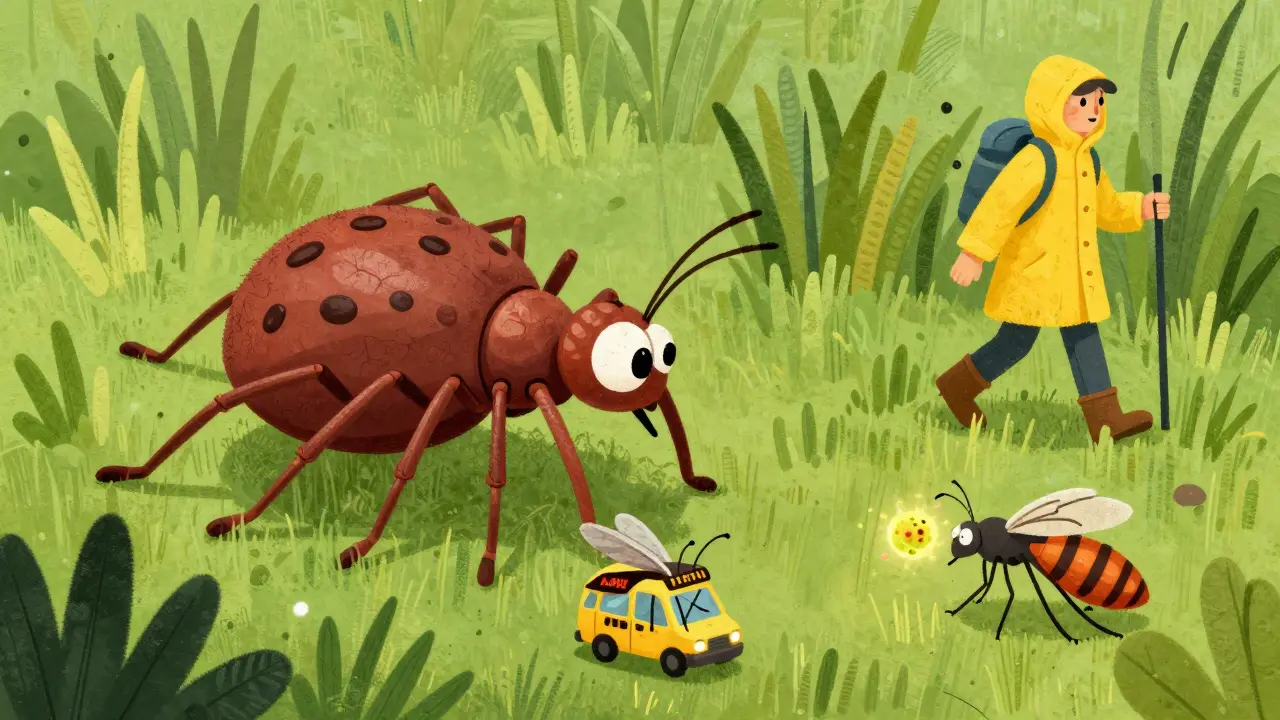
Then there are the "middlemen" known as vectors. Ticks, mosquitoes, and fleas don't cause the disease themselves; they just carry the pathogen from one host to another. If a tick bites an infected mouse and then bites you, it's just acting as a biological taxi. This is why clearing tall grass before a hike is so important.
Food and water are the final frontiers. Consuming undercooked poultry can lead to salmonellosis, while drinking from a stream might expose you to giardia. Interestingly, the CDC notes that foodborne zoonoses affect about 1 in 6 Americans every year. It's not just about "wild" animals; our food chain is a massive highway for these pathogens.
The "One Health" Strategy: Why Humans Can't Fix This Alone
For a long time, doctors treated humans and vets treated animals, and the two groups rarely spoke. This was a mistake. You can't stop a disease that lives in two different species if you're only monitoring one. This is where One Health comes in. It's a collaborative approach that recognizes that human health is tied to animal health and the environment.
Think about the 2014 Ebola outbreak. By the time humans were dying in huge numbers, the virus had already been circulating in animal populations. If we had better surveillance of wild animals, we could have spotted the jump before it became a pandemic. The World Bank suggests that investing in these integrated systems could prevent 70% of future pandemic risks. It's a matter of monitoring the "interface"-the places where humans, livestock, and wildlife overlap.
Real-World Warning Signs and Case Studies
Knowing the symptoms is half the battle, but zoonoses can be tricky because they often mimic the common flu. However, there are specific red flags. For instance, hunters who handle infected rabbits are prone to tularemia. They often report high fevers (103-104°F) and distinct skin ulcers right where the animal touched them. This isn't a standard cold; it's a direct result of skin penetration by the bacteria.
Pet owners aren't immune either. A family once ended up in the hospital after their young child contracted salmonellosis from pet turtles. The symptoms started within 72 hours: high fever and severe diarrhea. Because the child was only two, the dehydration was critical. This highlights a common gap: many people don't realize that "cute" pets like turtles or lizards carry high bacterial loads on their shells and skin.
In agricultural settings, the risks are even higher. Veterinarians have about 8 times the risk of exposure compared to the average person. Whether it's psittacosis from parrots causing severe pneumonia or brucellosis in cattle, the occupational hazard is real. If you work with animals, a "little scratch" isn't always just a scratch.
Practical Steps to Avoid Transmission
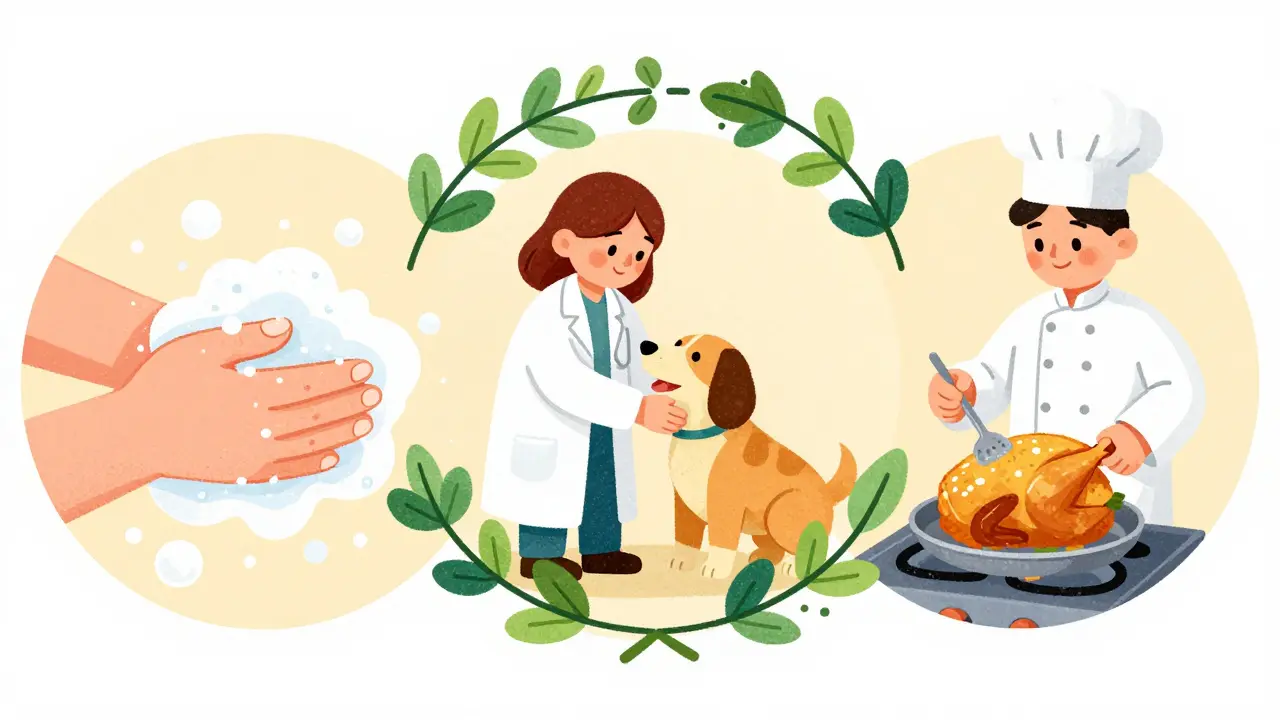
You don't have to live in a bubble to stay safe. Most zoonotic jumps are preventable with a few simple habits. First and foremost: handwashing. Scrubbing with soap for 20 seconds can reduce pathogen transmission by 90%. It sounds basic, but it's the most effective barrier we have.
When handling animal waste or cleaning cages, always wear gloves. Research shows this can cut your risk by 85%. If you're cooking, heat is your best friend. Cooking poultry to an internal temperature of 165°F kills salmonella instantly. It's a simple rule that prevents thousands of hospitalizations annually.
Beyond the home, be mindful of the environment. Avoid standing water where mosquitoes breed and use repellent in tick-heavy areas. Also, pay attention to animal behavior. A wild animal that seems "too friendly" or is acting disoriented (like a raccoon during the day) is a massive red flag for rabies. Give them space and call animal control.
Can I get a zoonotic disease from my indoor cat?
Yes, though the risk is lower than with outdoor animals. Indoor cats can still carry parasites like Toxoplasma gondii or fungi like ringworm, especially if they were rescued from the street or if the owner doesn't keep up with veterinary check-ups. The best way to prevent this is regular vet visits and washing your hands after cleaning the litter box.
What is the most common zoonotic disease?
While it varies by region, ringworm and various forms of salmonellosis are among the most common. In the US, foodborne salmonella is a frequent culprit. In terms of global impact, rabies remains one of the most critical due to its fatality rate, despite being preventable via vaccination.
Do all zoonotic diseases require antibiotics?
No. Only those caused by bacteria (like Lyme or Anthrax) respond to antibiotics. Viral zoonoses, such as Rabies or Ebola, do not. Fungal infections require antifungals, and parasitic infections require antiparasitic medications. This is why a correct diagnosis from a doctor is vital.
How does climate change affect these diseases?
Climate change expands the habitats of vectors. For example, warmer winters allow ticks to survive in regions they previously couldn't. Experts forecast a 45% increase in areas suitable for Lyme disease transmission in North America by 2050 because the ticks are moving further north as the planet warms.
Are vaccines effective against zoonotic diseases?
Absolutely. The rabies vaccine is a perfect example; it's nearly 100% effective if administered promptly. Similarly, vaccinating animal populations (like dogs in Uganda) has shown a 92% reduction in human cases. Vaccines are the primary tool for breaking the transmission chain.
Next Steps for Protection
If you've recently had contact with a wild animal or a sick pet and start feeling unwell, don't just assume it's a cold. Be specific with your doctor. Instead of saying "I feel sick," say "I've been handling reptiles" or "I was hiking in a tick-heavy area." This helps them look for zoonotic markers rather than general flu symptoms.
For those in high-risk jobs-like farmers or vet techs-invest in high-quality PPE. Don't skip the gloves, even for "quick" tasks. Also, keep your own vaccinations up to date and ensure your pets are on a strict preventative schedule for fleas and ticks. Preventing the disease in the animal is the most effective way to keep it out of your own body.