
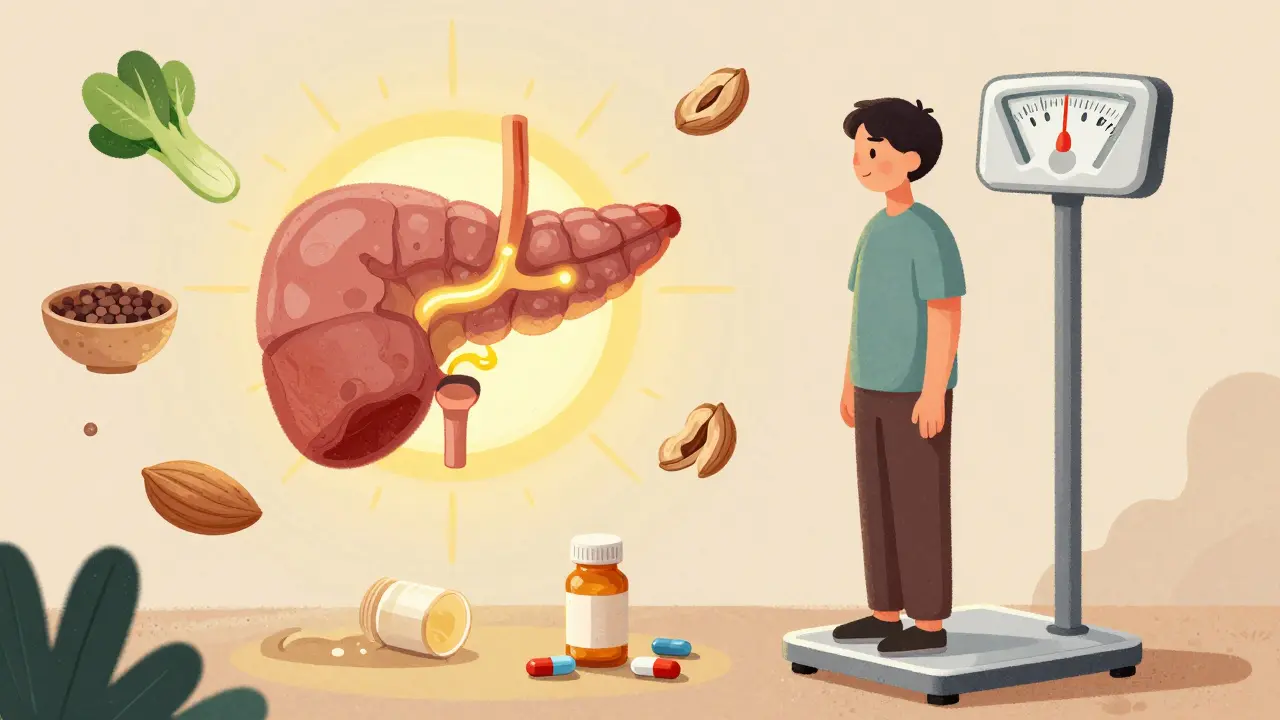
For millions living with type 2 diabetes, the idea of stopping medication isn’t just a dream-it’s a real possibility. But it’s not about luck or magic. It’s about weight loss and the science behind it. Remission isn’t a cure. It’s not permanent. But for many, it’s a turning point: no more pills, no more injections, and blood sugar levels that stay in a healthy range-without drugs.
What Does Remission Actually Mean?
In 2021, a group of global diabetes experts from the American Diabetes Association, the European Association for the Study of Diabetes, and Diabetes UK came together to define remission once and for all. Their answer? If your HbA1c stays below 6.5% (48 mmol/mol) for at least three months, and you’re not taking any diabetes medications, you’re in remission. That’s it. No fancy terms. No ambiguity. Just clear numbers.
This wasn’t just a technical tweak. It was a shift in how doctors think. For years, some patients were told their diabetes was "controlled" because their blood sugar was low-thanks to pills. But that’s not remission. That’s management. Remission means your body is doing the work. The pancreas is producing insulin again. The liver isn’t dumping out too much glucose. Your cells are responding like they used to. And none of that happens if you’re still on medication.
It’s also not a one-time test. You can’t take a single HbA1c reading after losing 15 pounds and call it remission. The three-month window matters because it filters out short-term spikes from diet changes or stress. You need consistency. And if HbA1c isn’t reliable-for example, if you have anemia or a blood disorder-you can use fasting glucose under 7.0 mmol/L or estimated HbA1c from continuous glucose monitoring (CGM) data instead.
How Much Weight Do You Need to Lose?
The answer isn’t "lose 10% of your body weight." It’s more specific: lose at least 10 kilograms (22 pounds). That’s what the landmark DiRECT trial found. In that study, nearly half of participants who lost 10kg or more went into remission within a year. That’s 46%. And even after two years, a third of them were still off medication.
But here’s the catch: not everyone loses weight the same way. Some do it with very low-calorie diets-like replacing meals with shakes for 8 to 12 weeks. Others use structured meal plans, portion control, and daily movement. The method doesn’t matter as much as the result. What matters is that the fat around the liver and pancreas drops. That’s the real trigger. When that fat shrinks, the pancreas wakes up. Insulin production starts again. Blood sugar drops on its own.
Studies like DiRECT-Aus and ARMMS-T2D back this up. Even in diverse populations-Australia, the U.S., the UK-the pattern holds. People who lost weight, especially early in their diabetes journey, had the best shot at remission. And those who had surgery? Around 37.5% were in remission three years later. But surgery isn’t the only path. Lifestyle works too.
Who Has the Best Chance?
Not everyone has the same odds. If you’ve had type 2 diabetes for less than five years, your chances are much higher. Why? Because your beta cells-the insulin-producing cells in your pancreas-haven’t burned out yet. If you’ve been on insulin for years, remission is far less likely. Same if your HbA1c was above 8% when you started your weight loss journey. The higher the number, the more damage has been done.
Age matters too. Younger people tend to respond better. But it’s not just about age. It’s about body fat distribution. Someone with a smaller waistline-even if they’re not "overweight" by BMI standards-can still be in danger. Visceral fat, the kind that wraps around organs, is the real enemy. That’s why waist measurement is often more telling than scale weight.
And here’s something most people don’t realize: you don’t have to be "obese" to get type 2 diabetes. Many people in remission studies were only moderately overweight. The key wasn’t their size-it was their metabolic health. And that’s something you can change.
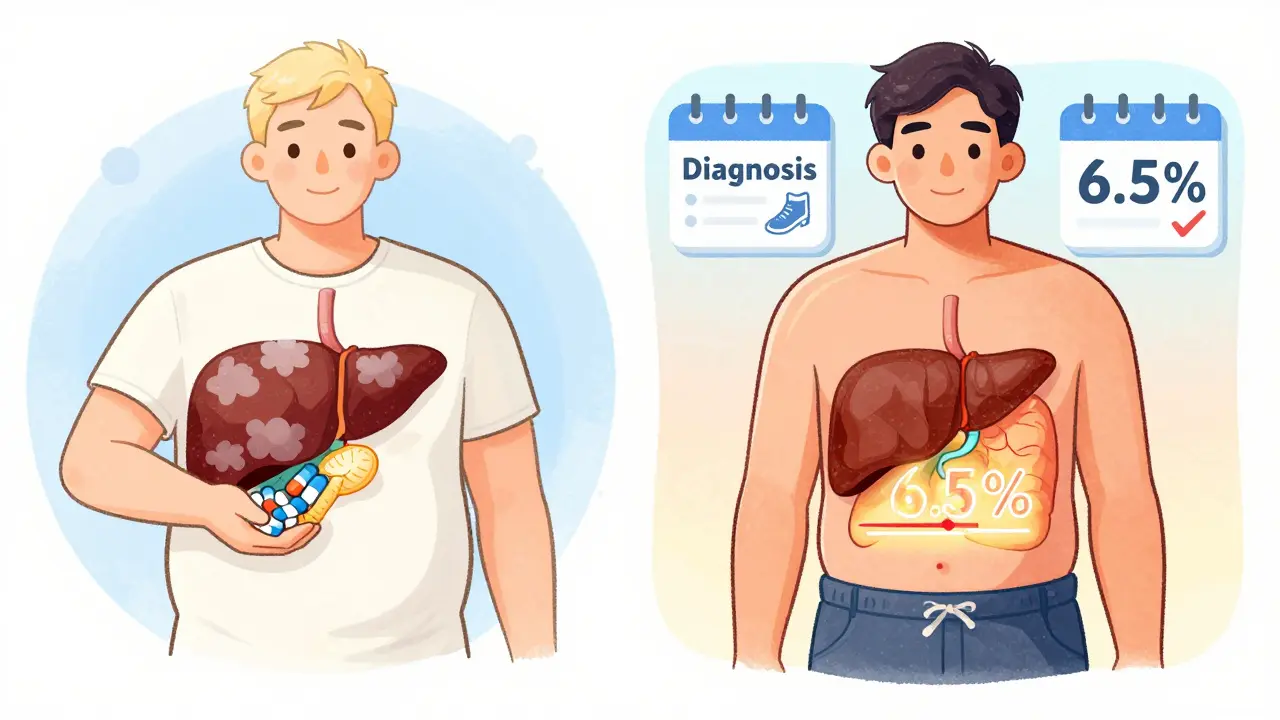
What Happens After You Stop Medication?
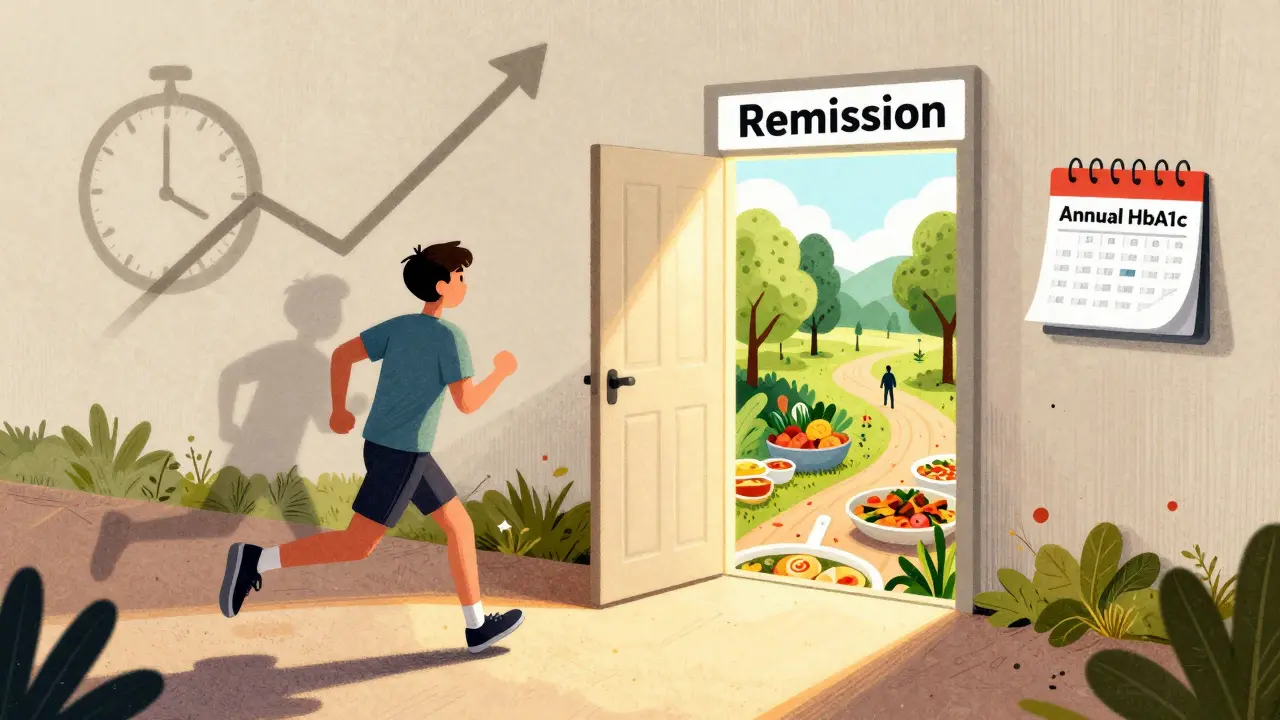
Stopping your pills isn’t the finish line. It’s the starting line.
Remission doesn’t mean your body is "fixed." The underlying tendency for insulin resistance is still there. The fat can creep back. The pancreas can tire again. That’s why follow-up is non-negotiable. You still need annual HbA1c checks. You still need to watch your diet. You still need to move.
Think of it like this: you’ve turned off the alarm. But the house is still on fire. You just put the fire out. Now you have to keep the smoke detectors working.
The DiRECT study showed remission rates dropped from 46% at year one to 36% at year two. Why? Because weight came back. For many, life got busy. Stress returned. Sleep got worse. Old habits crept back in. That’s why the NHS and RACGP both stress: remission requires maintenance. You can’t go back to eating like you did before diagnosis.
And yes, some people relapse. Blood sugar creeps up. HbA1c climbs again. But even that’s not a failure. Time spent in remission lowers your risk of heart disease, kidney damage, and nerve problems. Every year without high blood sugar is a year your body heals.
Can You Still Take Medication and Be in Remission?
Technically, no. The official definition requires you to be off all glucose-lowering drugs. But here’s the gray area: some people lose weight, stop metformin, and then take a low dose of a non-glucose-lowering drug-like semaglutide-for weight control. Is that remission?
Dr. Michael Nauck, one of the consensus authors, says maybe we need a second category. "Remission with ongoing weight-lowering drugs," he suggested. It’s not official yet. But it’s a realistic idea. Semaglutide, liraglutide, and similar drugs don’t just help with weight-they protect the heart and kidneys. If someone needs them to stay lean and healthy, should they be denied the label of remission?
Right now, guidelines say no. But in practice, doctors are starting to see it differently. The goal isn’t just to stop pills. It’s to stop complications. If a drug helps you stay in remission longer, maybe it’s part of the solution-not the problem.
What About the Long-Term?
We still don’t know everything. Will remission cut your risk of blindness? Will it prevent dialysis? We have strong hints, but not solid proof. Studies haven’t followed people for 20 years yet. We know remission reduces cardiovascular risk. We know it lowers inflammation. But we don’t yet have long-term mortality data.
And there’s another question: should the 6.5% threshold change? Should remission require an HbA1c under 6%? Or should it last six months instead of three? Experts admit these are "working hypotheses," not fixed rules. Future studies may adjust them.
What we do know is this: remission is possible. It’s not rare. It’s not just for the young or the thin. It’s for anyone willing to make lasting changes. And it’s becoming a standard goal-not just an outlier.
What Should You Do Next?
If you’re on medication and want to explore remission:
- See your doctor. Don’t stop meds on your own. Some drugs, like sulfonylureas, can cause dangerous lows if stopped suddenly.
- Get your HbA1c tested. Know your starting point.
- Focus on losing 10kg or more. Use a structured plan-diet replacement, low-carb, or Mediterranean-style eating. Combine it with daily walking or strength training.
- Track your progress. Use a CGM if you can. It shows how your body reacts to food in real time.
- Plan for maintenance. Remission isn’t a sprint. It’s a lifelong habit shift.
And if you’re already in remission? Keep going. Don’t celebrate with cake. Celebrate with a walk. Keep your appointments. Keep moving. Keep eating well. Because the next time your HbA1c is checked, you want to see the same number.
Can type 2 diabetes be cured completely?
No, type 2 diabetes cannot be cured. Remission means blood sugar levels are normal without medication, but the underlying metabolic issues-like insulin resistance and fat buildup in the pancreas-can return. The risk of complications remains, and blood sugar can rise again if weight is regained or lifestyle changes are abandoned.
How long does it take to enter remission after losing weight?
Most people see improvements in blood sugar within weeks of starting weight loss, but remission is only confirmed after HbA1c stays below 6.5% for at least three months without medication. This usually takes 3 to 6 months of sustained weight loss and lifestyle changes.
Is it possible to go into remission if I’m on insulin?
It’s very rare. People who’ve been on insulin for more than a few years usually have significant beta cell damage. While some weight loss may improve insulin sensitivity, most won’t be able to stop insulin entirely. Remission is most likely in those who haven’t needed insulin yet.
Do I still need to see my doctor if I’m in remission?
Yes. Annual HbA1c checks are essential. You also need regular checks for blood pressure, cholesterol, kidney function, and eye health. Diabetes complications can still develop even when blood sugar is normal, so ongoing monitoring is critical.
Can I eat normally again if I’m in remission?
No. Remission requires ongoing healthy eating and physical activity. Returning to old eating habits-especially high-sugar, high-refined-carb diets-will almost certainly lead to a return of high blood sugar and the need for medication again. Remission isn’t a free pass to eat without limits.


Mike Dubes, March 4, 2026
Been in remission for 2 years now. Lost 28 lbs with low-carb and walking 10k steps daily. No meds, no headaches, no midnight snack cravings. It’s not magic-it’s just consistency. People think it’s about willpower but it’s really about finding a rhythm that doesn’t feel like punishment. I eat steak and avocado and still feel amazing. Don’t let anyone tell you it’s impossible if you’re not a gym rat.
Helen Brown, March 6, 2026
They dont want you to know this but big pharma is behind all this remission talk because they want you to think you can fix it without drugs so they can sell you more expensive supplements and fitness programs. The real cure is a government funded insulin program and free healthcare not some diet trend.
John Cyrus, March 7, 2026
Wrong. You dont need to lose 10kg. Thats a myth. I lost 14 lbs and went into remission. The real trigger is cutting out sugar and processed carbs. Not weight loss. Weight loss is just a side effect. People confuse correlation with causation. Also the HbA1c threshold is arbitrary. Why 6.5 why not 6.0 or 7.0. No one knows. Its politics not science.
John Smith, March 8, 2026
Yo I was diabetic as hell. HbA1c at 9.8. Took insulin twice a day. Then I started eating like a normal human-no more cereal for breakfast no more soda no more ‘just one slice’ of bread. Lost 35 lbs in 5 months. Now I eat tacos on weekends and my sugar’s at 5.4. They said I’d be on meds forever. F*ck that. This ain’t rocket science. It’s called not being a lazy sack. You wanna fix it? Stop treating your body like a trash can.
Sharon Lammas, March 9, 2026
It’s strange how we focus so much on the numbers-the HbA1c the weight the meds-and forget the quiet moments. The mornings you wake up without dreading the needle. The first time you eat a banana without checking the carb count. The way your shoes fit differently. Remission isn’t just a medical state. It’s a return to being yourself. The science tells us how. But the healing? That’s deeper than any lab result.
marjorie arsenault, March 10, 2026
If you’re just starting out dont get overwhelmed. Start with one change. Maybe walk after dinner. Maybe swap soda for sparkling water. You dont need to overhaul your life overnight. Small steps add up. I did one thing for 30 days. Then another. Now I’m off metformin. You can too. Just start.
Deborah Dennis, March 11, 2026
This is so misleading. People think remission means they can go back to eating pizza and ice cream. It doesn’t. And yet they do. And then they blame the ‘system’ when it comes back. Honestly? If you can’t control your eating habits after being told the truth-you’re not ready. And no amount of CGMs or shakes will fix that. This article is sugar-coated.
Shivam Pawa, March 12, 2026
Remission is real. I saw it in my uncle. He lost 22 kg. Stopped insulin. No more foot numbness. But here’s the thing-it’s not just about weight. It’s about inflammation. The fat around the pancreas is like a clogged pipe. Clear the pipe and the system works again. The science is solid. But in India we dont have access to CGMs or dietitians. So we improvise. Brown rice. Lentils. No sugar. Same result. The method varies. The truth? Same.
Diane Croft, March 13, 2026
I was skeptical. Thought it was hype. Then I tried the DiRECT plan. Meal replacements for 8 weeks. Then slowly reintroduced food. Lost 26 lbs. HbA1c dropped from 7.8 to 5.6. No meds. I’m 57. Not a fitness model. Just someone who listened. It’s not about being perfect. It’s about being consistent. And yes I still eat cake sometimes. But now I know how my body reacts. That’s power.
Donna Zurick, March 15, 2026
My mom is in remission. She’s 71. Started with walking and cutting out sugary tea. Now she cooks for the whole family and no one even notices she’s eating differently. She says it felt like waking up after a long sleep. I cried when I saw her glucose readings. This isn’t a trend. It’s a second chance. And it’s for everyone-even if you think you’re too old too tired too broken. You’re not.