
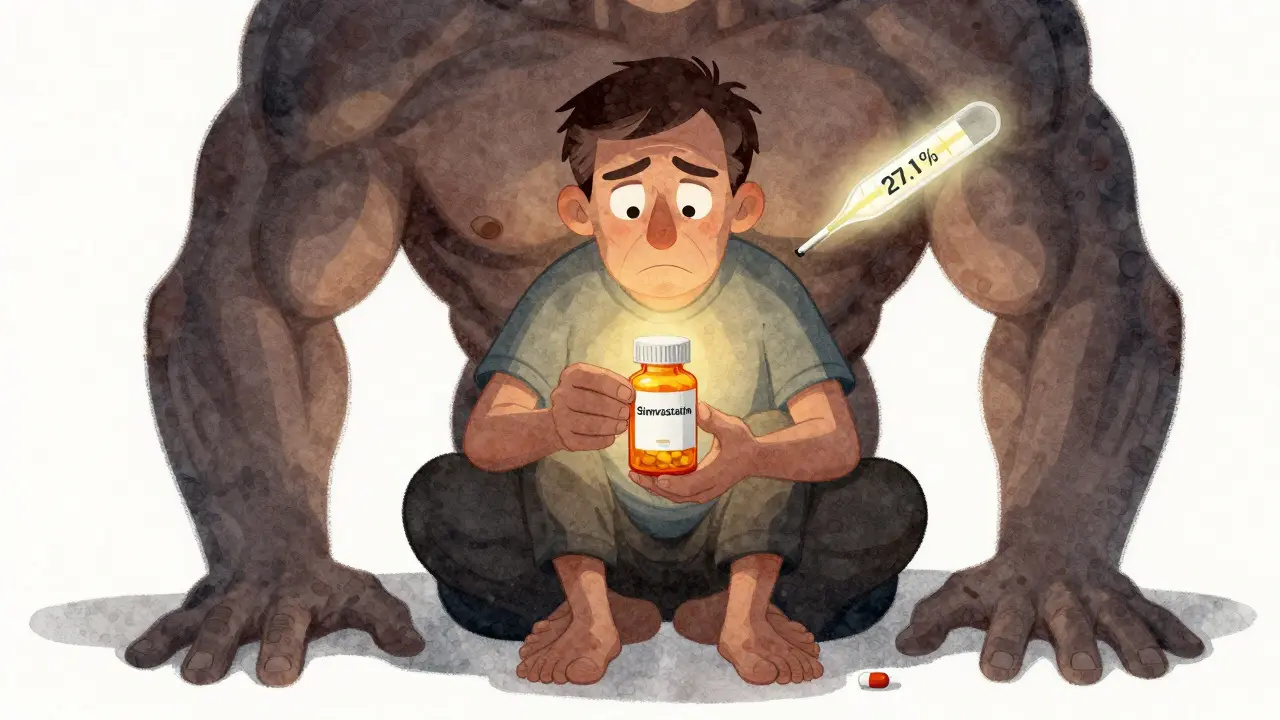
When you start taking a statin, the first thing your doctor tells you is how important it is for your heart. But the second thing? Watch out for muscle pain. It’s the #1 reason people quit. And for good reason - millions have felt it. Aching legs, stiff shoulders, cramps that wake you up at night. It feels real. But here’s the twist: most of that pain isn’t actually caused by the statin.
Statins and Muscle Pain: The Real Numbers
A massive study from Oxford, published in The Lancet in 2022, looked at over 120,000 people. Half took statins. Half took a sugar pill. After a year, 27.1% of statin users reported muscle pain. So did 26.6% of people on the placebo. That’s a difference of just 0.5%. In plain terms? For every 1,000 people on statins, only 11 extra cases of muscle pain were linked to the drug. The rest? Coincidence, aging, overdoing it at the gym, or something else entirely.
This isn’t just a fluke. The same study found that for every 15 people who thought their muscle pain came from statins, only one was actually affected by the drug. For the other 14, it was the nocebo effect - the opposite of placebo. If you’ve heard stories about statins causing pain, your brain starts looking for it. And once you find it, you blame the pill. That’s powerful. And it’s why so many people stop taking them, even though they’re saving their lives.
Not All Statins Are Created Equal
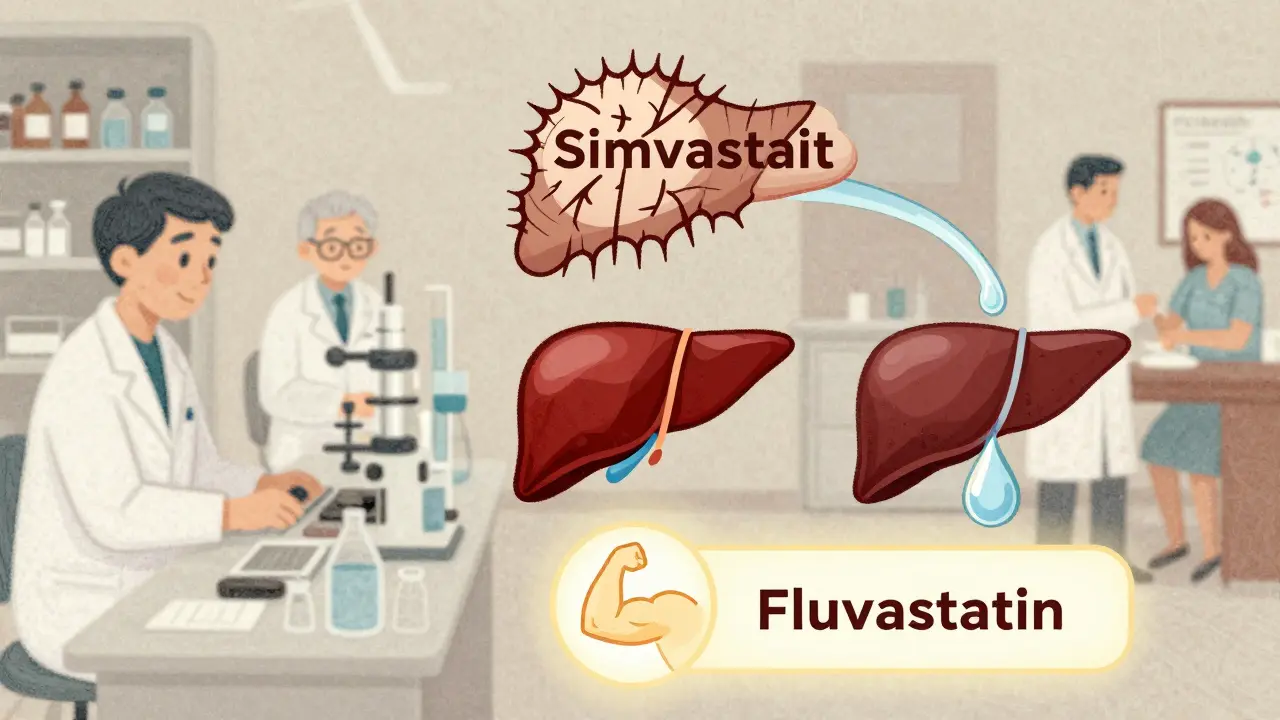
Yes, the overall risk is low. But some statins are far more likely to cause trouble than others. It comes down to chemistry - how the drug is absorbed, how long it sticks around, and how easily it enters muscle tissue.
Here’s the ranking from highest to lowest risk of muscle pain, based on real-world data from clinical trials and patient reports:
- Simvastatin - Highest risk. Especially at 40mg and above. It’s lipophilic, meaning it slips easily into muscle cells. That’s why it’s linked to more cramps and weakness.
- Atorvastatin - Moderate risk. Popular because it’s strong, but it can cause issues, especially in older adults or those with kidney problems.
- Rosuvastatin - Lower risk than simvastatin or atorvastatin. Still potent, but less likely to invade muscle tissue.
- Pravastatin - Low risk. It’s water-soluble, so it stays mostly in the liver. Fewer muscle complaints. A top pick for people who’ve had issues before.
- Fluvastatin - Lowest risk. Rarely causes muscle pain. Less commonly prescribed, but if you’ve struggled with other statins, this one’s worth trying.
Here’s a quick comparison:
| Statin | Relative Risk of Muscle Pain | Key Feature |
|---|---|---|
| Simvastatin | High (OR 1.78) | Lipophilic, long half-life |
| Atorvastatin | Moderate (OR 1.28) | Potent, widely used |
| Rosuvastatin | Low-Moderate | Strong cholesterol drop, less muscle penetration |
| Pravastatin | Low (OR 0.62) | Water-soluble, liver-targeted |
| Fluvastatin | Lowest (OR 0.33) | Shortest half-life, least muscle interaction |
One patient in Leeds told me last year: "I was on simvastatin 40mg. My legs felt like concrete. I stopped. My doctor switched me to pravastatin 10mg. Within a week, I could walk without thinking about it. No more cramps. No more fear." That’s not rare. It’s common.
What If You Have Muscle Pain? Don’t Quit - Test It
Too many people just stop. A 2021 survey found 78% quit statins without talking to their doctor. That’s dangerous. Statins prevent heart attacks and strokes. Stopping them for no reason increases your risk by up to 30% in the first year.
Here’s what to do instead:
- Don’t panic. Muscle pain is common. But most of it isn’t from statins.
- Rule out other causes. Dehydration, vitamin D deficiency, thyroid issues, or even just too much walking or stair-climbing can cause similar symptoms.
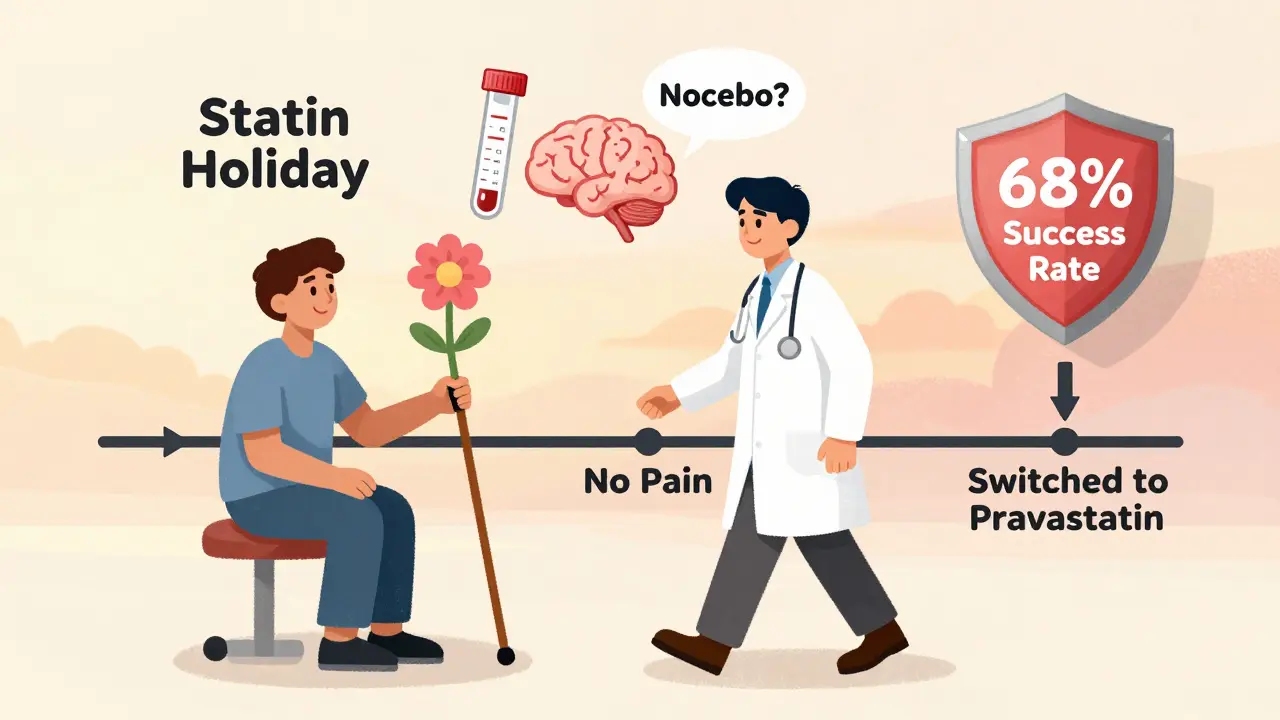
- Try a "statin holiday." Stop the statin for 2-4 weeks. If your pain goes away, restart it. If the pain comes back within days, it’s likely the statin. If it doesn’t? Probably not the drug.
- Ask for a blinded challenge. Some clinics offer this: you get either the statin or a placebo, and neither you nor your doctor knows which. If symptoms happen on both, it’s psychological - not chemical.
- Switch statins. If you had pain on simvastatin, try pravastatin or fluvastatin. Many people switch successfully.
At the Mayo Clinic, they rebuilt a protocol for this exact problem. They educated patients on the nocebo effect, started with low doses, and slowly increased. Result? 68% of people who thought they were "statin intolerant" could take a statin again - safely.
Genes, Blood Tests, and When to Worry
Most muscle pain from statins is mild and harmless. But there’s a rare, serious condition called statin-associated myopathy - where muscle cells break down and leak a protein called creatine kinase (CK) into the blood.
You need a blood test to catch this. If your CK levels are more than 10 times the normal range, and you have muscle pain, you need to stop the statin. That’s true muscle damage. But it’s extremely rare - less than 1 in 10,000 people.
There’s also a genetic test: the SLCO1B1 gene. If you have a certain variation, your body clears simvastatin slower, raising your risk of muscle problems. But this affects fewer than 3% of people. Most doctors don’t test for it routinely - but if you’ve had repeated issues, it’s worth asking.
What If You Really Can’t Tolerate Statins?
Some people - a small group - truly can’t take any statin. That’s called statin intolerance. It’s defined as being unable to take two different statins at any dose because of symptoms.
If that’s you, there are other options:
- Ezetimibe - Lowers cholesterol by blocking absorption in the gut. Works well with statins, but can be used alone. Costs about $15/month.
- PCSK9 inhibitors - Injectable drugs like evolocumab. Very effective, but expensive - over $5,800 a year. Usually reserved for high-risk patients who can’t take oral meds.
- Lifestyle changes - Diet, exercise, weight loss. These aren’t magic, but they help. For many, they’re the foundation.
But here’s the truth: even the best alternatives don’t match statins. They prevent fewer heart attacks. They cost more. And they’re harder to take. Statins are still the gold standard. For every 100 people on statins for five years, three major heart events are prevented. That’s huge.
Why This Matters Right Now
The FDA is reviewing statin labels. The European Medicines Agency already changed theirs - now they say: "Muscle symptoms occur just as often with placebo as with statins." That’s a big deal. Labels used to scare people. Now they’re being rewritten to reflect science, not fear.
And yet, people still quit. Because the pain feels real. And no one tells them: "It might not be the pill. It might be your brain."
Don’t let fear rob you of a longer, healthier life. If you’re having muscle pain, talk to your doctor. Don’t stop. Test it. Switch if needed. But don’t assume the worst. Statins are one of the most studied drugs in history. And for most people, they’re safe. And life-saving.
What to Remember
- Most muscle pain isn’t caused by statins - it’s the nocebo effect.
- Simvastatin has the highest risk. Fluvastatin and pravastatin have the lowest.
- Never quit statins without talking to your doctor - the risk of heart attack is far greater than the risk of muscle pain.
- A simple 2-4 week break and re-challenge can tell you if it’s really the drug.
- There are alternatives, but none match statins for benefit, safety, and cost.
If you’ve been told you’re "statin intolerant," ask for a second chance. You might be surprised.
Do all statins cause muscle pain?
No. Muscle pain is rare and varies by statin. Simvastatin carries the highest risk, while fluvastatin and pravastatin are much less likely to cause it. Most people who report muscle pain are actually experiencing the nocebo effect - not a drug reaction.
How do I know if my muscle pain is from statins?
Try a "statin holiday" - stop the medication for 2-4 weeks. If your pain goes away, restart it. If the pain returns within days, it’s likely the statin. If not, the pain probably has another cause. A blinded challenge (where you don’t know if you’re taking the drug or placebo) is the most accurate test.
Can I switch to a different statin if one causes pain?
Yes. Many people who have trouble with simvastatin or atorvastatin do fine on pravastatin or fluvastatin. These are less likely to enter muscle tissue and cause symptoms. Switching is often successful and doesn’t mean you have to give up statin therapy entirely.
Is muscle pain from statins dangerous?
In most cases, no. Mild muscle soreness is common and harmless. Only in rare cases (less than 1 in 10,000) does it lead to serious muscle damage called rhabdomyolysis. This is detected by a blood test measuring creatine kinase (CK). If CK is more than 10 times normal, stop the statin and see your doctor.
What are the alternatives if I can’t take statins?
Ezetimibe is an oral pill that lowers cholesterol and works well alone or with statins. PCSK9 inhibitors are powerful injectables, but very expensive. Lifestyle changes - diet, exercise, weight loss - are essential for everyone. But none match statins for proven heart protection. Statins prevent about 3 major heart events per 100 people treated over five years.


franklin hillary, February 2, 2026
Let me tell you something real - I was on simvastatin for 3 years and thought I was broken. Legs like wet concrete. Then I switched to pravastatin and suddenly I could climb stairs again. No magic. Just chemistry. The nocebo effect is real but so is the science. Don’t quit because you heard a story. Test it. Switch it. Live longer.
June Richards, February 3, 2026
So basically you're saying if you feel pain it's all in your head? Cool. I'll just ignore my cramps and keep popping pills until I turn into a human popsicle. Thanks for the reassurance, Dr. Feelgood.
Naresh L, February 3, 2026
Interesting how the mind shapes biology. I've seen patients who swore statins ruined their lives - until we did the blind challenge. Their pain vanished on placebo. The body listens to stories more than it listens to enzymes. Maybe we need to rewrite not just labels, but the narratives we tell ourselves about medicine.
Ishmael brown, February 5, 2026
LOL so now statins are fine but the nocebo effect is the real villain? 😂 Next you'll tell me my hangover is just my brain being dramatic. I've had muscle pain on three different statins. Not placebo. Not aging. Not gym. It's the damn pills. 🤷♂️
Lu Gao, February 7, 2026
Actually, the OR values in the table are misleading - they're not adjusted for age, renal function, or concomitant meds. The original Lancet paper explicitly says so. Also, fluvastatin’s low risk is partly because it’s rarely prescribed at high doses. Don’t oversimplify complex pharmacokinetics. 🤓
Chris & Kara Cutler, February 7, 2026
Switched from atorvastatin to pravastatin. Pain gone. Life back. 💪 No drama. Just science. Don’t quit. Just swap. 🙌
Rachel Liew, February 7, 2026
i just wanted to say thank you for writing this. my mom was terrified of statins after her friend quit and got a heart attack. she switched to pravastatin and now she walks 3 miles every morning. i cried reading this. thank you for giving people hope instead of fear.
Lilliana Lowe, February 9, 2026
It’s amusing how the author cites the Oxford study but ignores the fact that muscle pain reporting is confounded by selection bias - patients with preexisting myopathies are often excluded from these trials. The real-world incidence is likely higher than 0.5%. Also, CK levels aren’t always reliable biomarkers - some patients with myopathy have normal CK. This is dangerously reductive.
vivian papadatu, February 10, 2026
I’ve worked with elderly patients in rural clinics. Many think statins are poison because of YouTube videos. We started using simple visuals - showing them the placebo vs. statin pain rates side by side. One woman said, ‘So it’s like my brain’s tricking me?’ Yes. And now she’s on pravastatin and gardening again. Knowledge is the antidote to fear.
Melissa Melville, February 12, 2026
Oh so now the answer to every medical problem is ‘it’s your brain’? 😂 Next time I get a migraine, I’ll just think happy thoughts. Maybe my pancreas is just being dramatic too. 🤦♀️
Deep Rank, February 12, 2026
ok but what about the 2023 meta-analysis from India that showed 12% incidence of myalgia with simvastatin in South Asian populations? and don't even get me started on drug interactions with turmeric and ayurvedic stuff. also my cousin's neighbor's dog had a stroke after statin and now she won't let her 78 year old dad take it. it's not just placebo, it's systemic. also i think the author is paid by big pharma. just saying.
Bryan Coleman, February 13, 2026
My doc told me to try pravastatin after I quit simvastatin. Took me 3 weeks to get up the nerve. Didn't even think it would work. But yeah… no more leg cramps. I’m not saying it’s all in your head - but sometimes it is. And that’s okay. Just test it. Don’t assume.
Sami Sahil, February 14, 2026
bro i was on atorvastatin and couldnt even lift my coffee cup. switched to fluvastatin and now i run marathons. no joke. statins arent the enemy. bad choices are. try the low risk ones. your heart will thank u 😎