
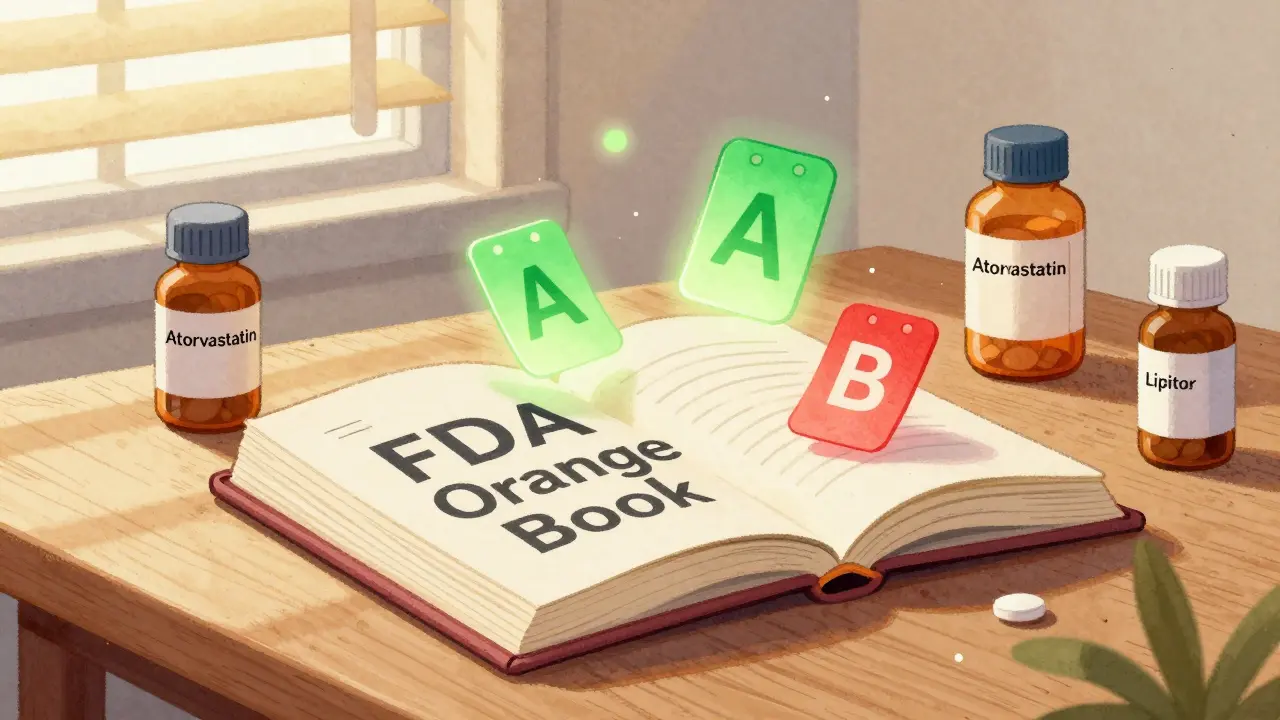
The FDA Orange Book is the official government list that tells you which generic drugs are approved and can be safely swapped for brand-name drugs. It’s not just a directory-it’s the rulebook that keeps the U.S. generic drug market running. If you’ve ever picked up a cheaper version of your prescription and wondered if it’s truly the same, the Orange Book is what makes that swap legal, safe, and reliable.
What Exactly Is the FDA Orange Book?
The full name is Approved Drug Products With Therapeutic Equivalence Evaluations. It’s published by the Food and Drug Administration (FDA) and updated every month. Think of it as the backbone of generic drug competition in the U.S. It lists every approved drug-both brand-name and generic-that meets the FDA’s standards for safety and effectiveness.
It started in 1984 under the Hatch-Waxman Act, a law designed to speed up generic drug approvals without cutting corners on quality. Before this law, generic companies had to repeat expensive clinical trials just to prove their drug worked. The Orange Book changed that by letting them prove bioequivalence instead-meaning their drug delivers the same amount of active ingredient into the bloodstream at the same rate as the brand version.
As of late 2023, the Orange Book includes over 16,000 approved drug products. That’s everything from common antibiotics to heart medications and even over-the-counter pain relievers. And here’s the kicker: about 90% of all prescriptions filled in the U.S. are for generic drugs. The Orange Book makes that possible.
How Generic Drugs Get Listed
Generic drugs don’t get approved the same way brand drugs do. Brand-name companies submit a New Drug Application (NDA) with full clinical data. Generic companies submit an Abbreviated New Drug Application (ANDA). The word “abbreviated” isn’t a shortcut-it’s a smart workaround.
To get listed in the Orange Book, a generic drug must prove it’s therapeutically equivalent to a specific brand-name drug, called the Reference Listed Drug (RLD). The RLD is the original product that the generic is copying. The FDA picks the RLD based on which version was first approved and has the most complete data.
Each generic drug listed in the Orange Book is tied to one RLD. You’ll see a column labeled “RLD” in the database-yes means it’s the original brand, no means it’s a generic copy. The FDA doesn’t list generics unless they’ve passed strict bioequivalence tests. That means the generic must deliver the same amount of medicine into your body, within a very tight range, as the brand version.
Not every generic gets listed right away. Some get “tentative approval”-meaning the FDA thinks they’re good to go, but a patent or exclusivity period is still blocking them from being sold. These appear on Drugs@FDA but not in the Orange Book until they’re cleared to enter the market.
Therapeutic Equivalence (TE) Codes: The Secret Code
One of the most important parts of the Orange Book is the Therapeutic Equivalence (TE) code. This two-letter code tells pharmacists whether a generic can be automatically substituted for the brand.
Here’s how it works:
- A codes mean the drug is therapeutically equivalent. It’s a direct swap. Most generics fall into this category.
- B codes mean the drug may not be equivalent. This could be because of formulation issues-like a patch that doesn’t absorb well or an inhaler with inconsistent dosing. These aren’t banned, but pharmacists can’t substitute them without a doctor’s OK.
- BN codes mean it’s a single-source drug-no generics exist yet, usually because of patent protection.
These codes are critical. In many states, pharmacists are legally allowed to swap an A-code generic for the brand without asking the doctor. But if it’s a B-code, they can’t. That’s why pharmacies and insurance companies rely on the Orange Book to automate substitutions.
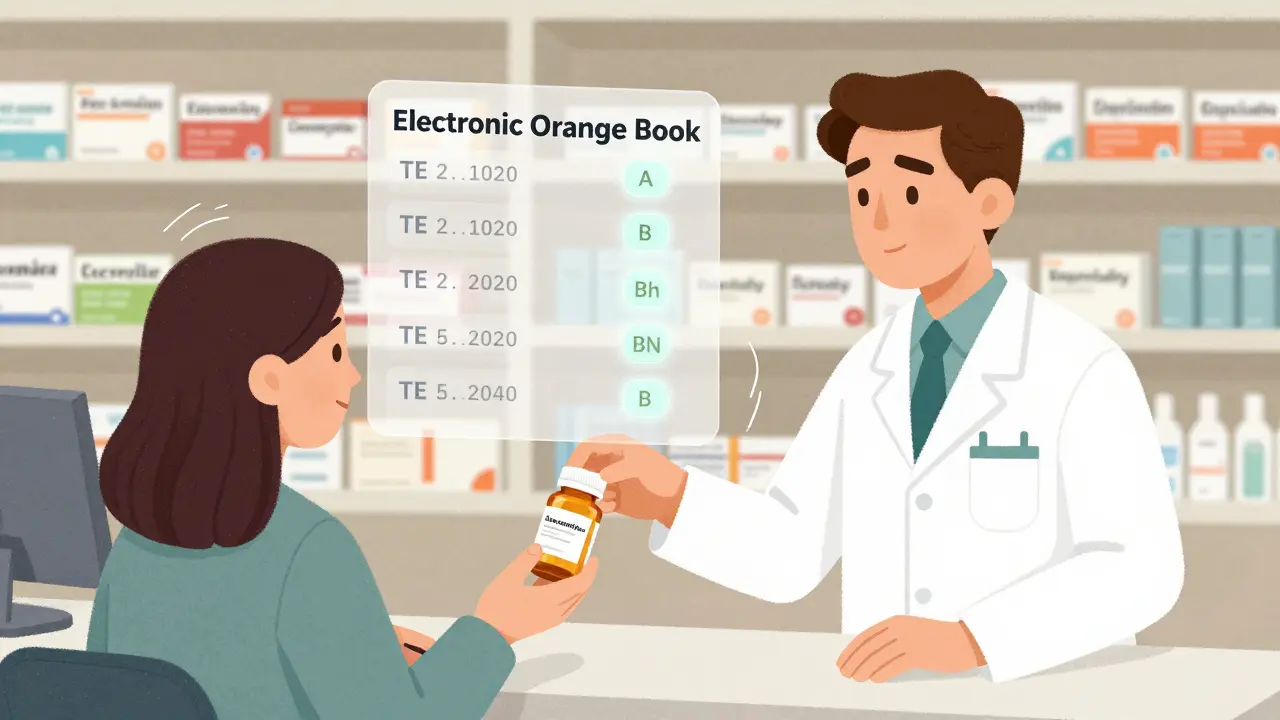
Authorized Generics: The Hidden Copies
There’s another kind of generic you won’t find in the Orange Book: authorized generics. These are brand-name drugs sold under a different label, made by the same company, and using the exact same formula.
For example, if Pfizer makes Lipitor, they might also sell an “authorized generic” version of atorvastatin under a private label. It’s the same pill, just cheaper and without the brand name. These are listed in a separate FDA database, not the Orange Book, because they’re marketed under the original NDA, not an ANDA.
Why does this matter? Authorized generics often hit the market before true generics do. They’re a way for brand companies to keep market share while still lowering prices. But they don’t show up in the Orange Book’s therapeutic equivalence ratings-so if you’re looking for a generic substitution, you won’t see them there.
Patents and Exclusivity: The Gatekeepers
The Orange Book doesn’t just list drugs-it lists patents. When a brand company gets approval for a drug, they must tell the FDA about any patents covering the drug’s active ingredient, formulation, or specific medical uses.
These patents get listed in the Orange Book with a patent number, expiration date, and a use code (like U-123). This triggers something called a 30-month stay. If a generic company challenges one of these patents, the FDA can’t approve their drug for 30 months unless a court rules in their favor.
There’s controversy here. Some companies list dozens of patents on one drug-covering everything from the pill’s color to how it’s packaged. Critics call this “patent evergreening,” a tactic to delay generics. The FDA has cracked down on this since 2023, tightening rules so only patents that directly affect the drug’s use can be listed.
Exclusivity periods also block generics. For example, if a drug gets orphan drug status or is the first to treat a rare condition, the FDA gives the maker 7 years of market protection-even if no patents exist. The Orange Book shows these exclusivity periods so everyone knows when generics can enter.
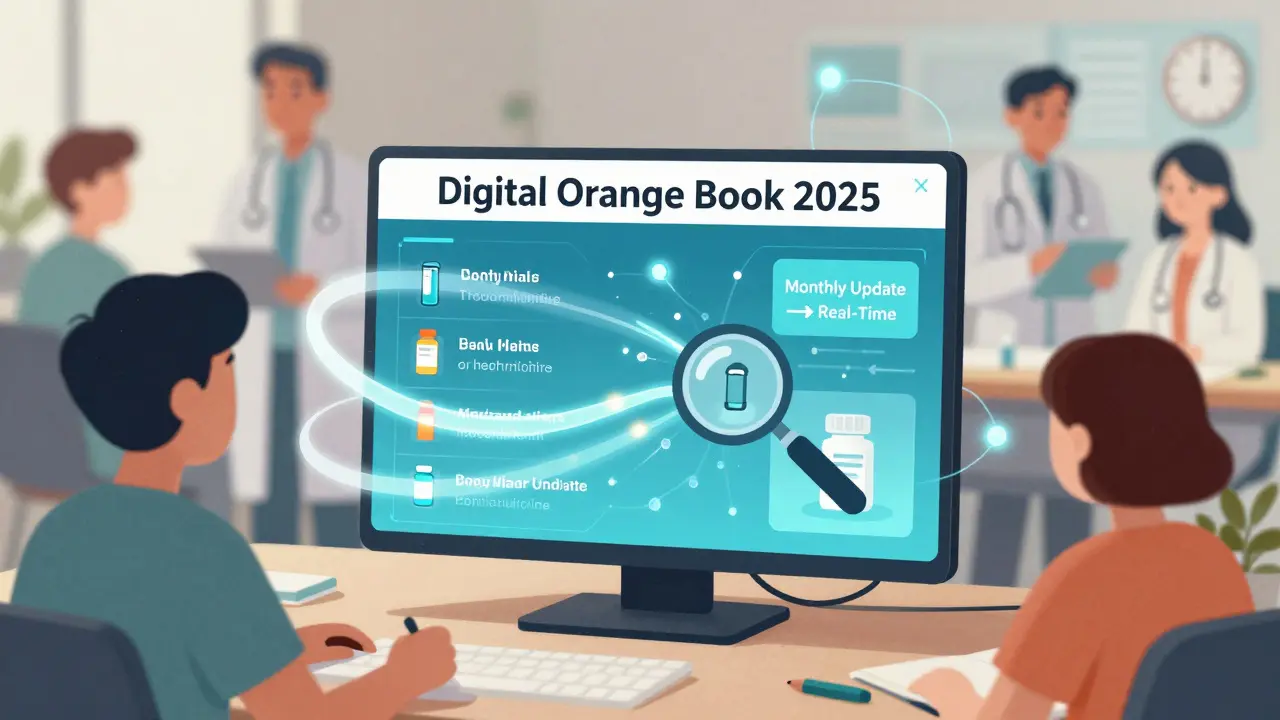
How to Use the Orange Book
The Electronic Orange Book is free and publicly available. You can search by:
- Drug name (brand or generic)
- Active ingredient
- Manufacturer
- Application number
- Patent number
Here’s a real-world example: You’re looking for a generic version of Advair Diskus. You search by the brand name. The results show the RLD (Advair) and several generics. Each generic has a TE code-most are “A,” meaning they’re interchangeable. But if you look closely, you’ll see some are “B” because inhaler delivery systems are hard to match exactly. That’s why some pharmacists won’t swap them without a doctor’s note.
Pharmacists and pharmacy software systems use the Orange Book daily. About 78% of U.S. pharmacies integrate its data directly into their systems to auto-approve substitutions. But it’s not foolproof. A 2023 survey found that 62% of pharmacists have run into situations where the Orange Book listing didn’t match state substitution laws, leading to confusion at the counter.
What’s Changing in 2025?
The FDA is working on a “Digital Orange Book” set to launch in 2025. This new version will update in real time, not monthly. It will also have better search tools, clearer TE code explanations, and APIs that let health systems pull data directly into their software.
Why? Because drugs are getting more complex. Inhalers, injectables, and topical gels are harder to copy exactly. The old system was built for pills. Now, the FDA is testing new ways to rate equivalence for these tricky products.
At the same time, Congress is pushing for more transparency. A 2023 law requires the FDA to publish a list of all authorized generics and update it quarterly. This helps patients and providers understand why some generics appear faster than others.
Why It Matters to You
If you take a generic drug, the Orange Book is why you’re paying less. It’s why your insurance covers it. It’s why your pharmacist can swap your brand for a cheaper version without calling your doctor.
But it’s not perfect. Sometimes, a generic with an “A” code still doesn’t work the same for you. That’s not the Orange Book’s fault-it’s biology. People react differently to fillers, coatings, and delivery methods. If a generic doesn’t work for you, tell your doctor. You’re not alone-many patients report differences even with equivalent drugs.
The Orange Book isn’t magic. It’s a tool. A powerful, necessary one. It balances innovation with access. It lets generics enter the market without compromising safety. And as drug prices keep rising, it’s one of the few systems that actually keeps competition alive.
Is the FDA Orange Book the same as Drugs@FDA?
No. Drugs@FDA lists all applications submitted to the FDA, including those still under review. The Orange Book only includes drugs that are fully approved and available on the market. Tentative approvals appear on Drugs@FDA but not in the Orange Book until they’re cleared.
Can I trust a generic drug just because it’s in the Orange Book?
Yes. If a generic is listed in the Orange Book with an “A” therapeutic equivalence code, the FDA has confirmed it works the same as the brand-name drug in your body. Millions of people take these every day with no issues. But if you notice side effects or feel it’s not working the same, talk to your doctor. Individual reactions can vary.
Why are some generics not listed in the Orange Book?
They might be authorized generics (listed separately), still under patent protection, or only tentatively approved. Some complex products like inhalers or ophthalmic suspensions may not yet have a final therapeutic equivalence rating. Others are discontinued and moved to the Discontinued Products List.
Do all states allow pharmacists to substitute generics based on the Orange Book?
Most do, but not all. State laws vary. Some require the prescriber to allow substitution, others don’t. Even if the Orange Book says an “A” code is interchangeable, your state may require the doctor to check a box on the prescription. Always check your state’s pharmacy rules.
How often is the Orange Book updated?
Monthly. New approvals, patent changes, and discontinued products are added or removed each month. The Electronic Orange Book is updated on the first business day of every month. If you’re using it for business or clinical decisions, always check the latest version.


Kelly McRainey Moore, January 20, 2026
Love how the Orange Book keeps things real. I’ve had generics work better than brand names-guess my body just prefers the filler. Either way, I save like $40 a month. Win.
Also, shoutout to pharmacists who actually read the TE codes. Not all of them do, sadly.
Amber Lane, January 22, 2026
My grandma takes five generics a day. All listed. All safe. She doesn’t know what the Orange Book is-but it’s keeping her alive.
Ashok Sakra, January 23, 2026
THE FDA IS LYING TO US!!!
My cousin took a generic for blood pressure and his heart almost stopped. They don’t test these things right. Big Pharma owns the Orange Book. I know people who know people. THEY’RE HIDING THE TRUTH.
lokesh prasanth, January 24, 2026
te codes are a joke. why do they even exist? just let doctors decide. the fda is too slow. also patent evergreening is real. i hate it.
Samuel Mendoza, January 24, 2026
Everyone acts like the Orange Book is some sacred text. Newsflash: it’s just a database. You still need to monitor your own reactions. Stop outsourcing your health to a spreadsheet.
shubham rathee, January 26, 2026
you ever notice how the orange book never lists the exact fillers used in generics? like why? are they hiding something? what if the corn starch in one is laced with glyphosate? i read a forum once and it said the fda lets this slide because they get funding from big pharma
also why do authorized generics exist if theyre not in the book? suspicious
MAHENDRA MEGHWAL, January 28, 2026
It is of considerable importance that the therapeutic equivalence codes serve as a standardized mechanism for ensuring pharmacological consistency across the generic drug supply chain. The regulatory rigor applied by the FDA in this context reflects a commendable commitment to public health integrity.
Kevin Narvaes, January 29, 2026
so like… the orange book is just a fancy list? and people die because some generic has a different dye? i mean… i get it but… it’s kinda wild that we trust pills based on letters. like A = good, B = maybe? what even is that? feels like a video game cheat code.
Sangeeta Isaac, January 30, 2026
So the FDA lets them list patents for the color of the pill? That’s not a patent, that’s a fashion choice. And now they’re gonna make a digital version? Cool. Now we can all argue about it in real time like it’s a Twitter thread.
Also, why does no one talk about how some generics taste like chalk? I’ve swallowed more than one that made me question my life choices. TE code A? More like TE code ‘ugh’.
Ben McKibbin, January 31, 2026
People act like generics are risky, but the data says otherwise. Over 90% of prescriptions? That’s not luck. That’s science. The Orange Book isn’t perfect, but it’s the best system we’ve got for balancing access and safety. Stop fearing it-use it.
Also, if your generic doesn’t work, it’s not the FDA’s fault. It’s your body. Talk to your doctor. Don’t blame the list.
Melanie Pearson, February 2, 2026
It is unacceptable that foreign manufacturers are permitted to supply active pharmaceutical ingredients for U.S. generics without full transparency. The Orange Book must be expanded to include supply chain provenance. National security is at stake.
Uju Megafu, February 2, 2026
YOU THINK THIS IS ABOUT HEALTH? NO. THIS IS ABOUT MONEY. THE FDA IS A BRANCH OF BIG PHARMA. THEY LET THE BRAND COMPANIES CONTROL THE PATENTS SO THEY CAN KEEP PRICES HIGH. THE ORANGE BOOK IS A SMOKESCREEN. I SAW A VIDEO ON TIKTOK WHERE A PHARMACIST SAID THEY’RE FORCED TO SUBSTITUE EVEN WHEN PATIENTS SAY NO. THIS IS CONTROL.
Barbara Mahone, February 3, 2026
I’ve used the Orange Book to check my meds for years. Never had an issue. I appreciate how detailed it is-even the difference between inhaler types. It’s not flashy, but it’s reliable.
MARILYN ONEILL, February 5, 2026
Of course the FDA lists generics. But do you know who actually reads this? People who don’t have insurance. The rich? They just get the brand. The Orange Book is for the working class. It’s not a tool-it’s a consolation prize.