
Mood Stabilizer Interaction Checker
Check Your Medication Interactions
When you're managing bipolar disorder, finding the right mood stabilizer isn't just about controlling highs and lows-it's about keeping your body in balance while avoiding dangerous drug clashes. Three older but still widely used medications-lithium, valproate, and carbamazepine-each work differently and each carries unique risks when mixed with other drugs. These aren’t theoretical concerns. Real people end up in hospitals because of unnoticed interactions. Understanding how these medications behave in your body can prevent serious harm.
Lithium: The Renal Risk
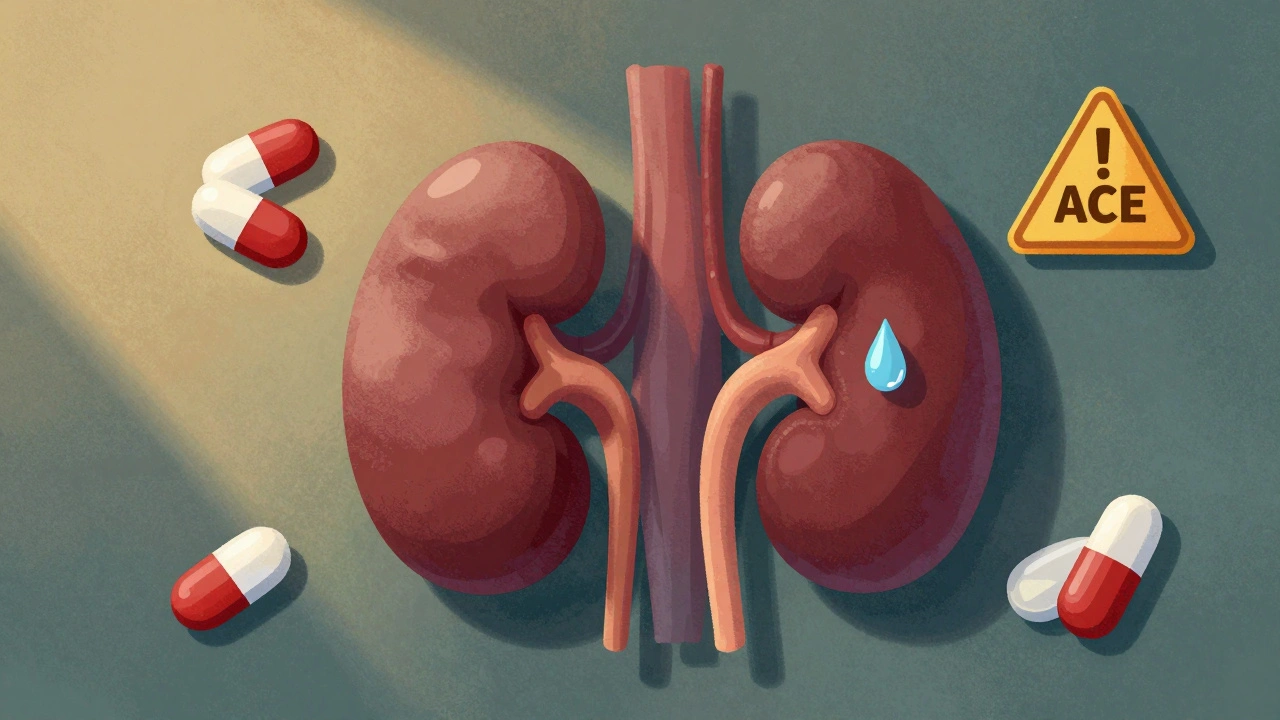
Lithium doesn’t get broken down by your liver. It doesn’t bind to proteins. It just floats in your blood, filtered out by your kidneys. That simplicity makes it effective-but also fragile. Anything that changes how your kidneys work can send lithium levels soaring.
Nonsteroidal anti-inflammatory drugs (NSAIDs) like ibuprofen or naproxen are the most common culprits. A 25-30% increase in lithium levels can happen within just a few days. That’s enough to push someone from a safe level of 0.8 mmol/L to a toxic 1.3 mmol/L. Symptoms? Hand tremors, confusion, nausea, even seizures. One patient on the NAMI forum described starting ibuprofen for a headache and waking up three days later with shaking hands and blurred vision. Their lithium level had jumped without any dose change.
Diuretics-especially thiazides-are another silent danger. They make you pee more, which lowers sodium levels. Lithium and sodium are handled by the same kidney pathways. Less sodium means your kidneys hold onto more lithium. Levels can rise by 25-40%. That’s why doctors tell people on lithium to avoid salt-free diets and stay well-hydrated.
Even common blood pressure meds like ACE inhibitors (lisinopril, enalapril) can interfere. They reduce kidney filtration rate, causing lithium to build up. The 2020 International Society for Bipolar Disorders guidelines now recommend checking lithium levels just five to seven days after starting any of these drugs. And if you’re on lithium, your target level should be kept low-between 0.6 and 0.8 mmol/L-when other meds are added.
Valproate: The Double-Edged Sword
Valproate works differently. It’s mostly processed by the liver through three separate pathways. That gives it more flexibility-but also more complexity. It binds tightly to proteins in the blood, and at higher doses, that binding becomes unpredictable. Above 100 mcg/mL, free (active) drug levels can spike suddenly.
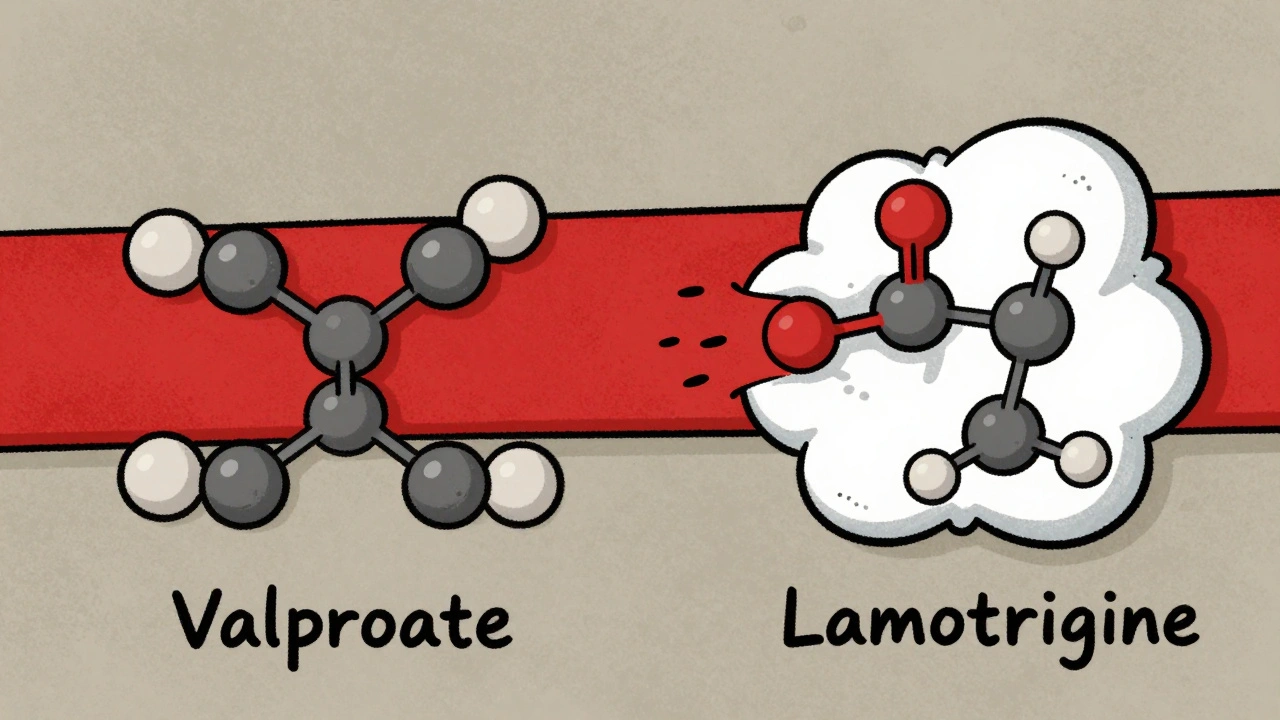
One of its most dangerous traits? It blocks the metabolism of other drugs. Lamotrigine, a common mood stabilizer used alongside valproate, can double or even triple in concentration when taken together. That’s why many patients need to cut their lamotrigine dose in half when switching from carbamazepine to valproate. One Reddit user shared that their neurologist dropped their lamotrigine from 400 mg to 200 mg overnight after adding valproate. Without that adjustment, they could have developed a life-threatening skin rash.
But valproate isn’t immune to being affected itself. Carbamazepine speeds up valproate’s breakdown, cutting its levels by 30-50%. That means someone stable on valproate for months might suddenly start having mood episodes if carbamazepine is added. Their doctor might not realize the cause-thinking the bipolar disorder is worsening, not realizing the drug levels have crashed.
And then there’s the bigger picture: valproate carries serious risks for women of childbearing age. The FDA issued a boxed warning in 2013 after studies showed a 10.7% rate of major birth defects-more than four times the background risk. IQ scores in children exposed in utero dropped by 7-10 points by age six. Because of this, prescriptions for women in that group have dropped by 65% since 2013. Many now avoid it entirely unless no other option exists.
Carbamazepine: The Metabolic Storm
Carbamazepine is a metabolic powerhouse. It doesn’t just get broken down-it forces your liver to break down everything else faster. It’s a strong inducer of CYP3A4, the enzyme responsible for metabolizing about half of all prescription drugs.
That means if you’re on carbamazepine, your birth control pills might not work. Studies show oral contraceptive levels drop by 50-70%. That’s not a small risk. Many women on carbamazepine become pregnant unintentionally because they didn’t realize their pills were being cleared too fast.
It also knocks down levels of antipsychotics like risperidone and haloperidol by 40-60%. A patient stabilized on risperidone for psychosis might suddenly relapse-not because their illness is getting worse, but because carbamazepine is burning through the drug too quickly.
But here’s the twist: carbamazepine doesn’t just affect other drugs. It affects itself. In the first few weeks of treatment, it speeds up its own metabolism. What starts as a 35-hour half-life drops to 12-17 hours. That’s why doctors often start with a low dose and slowly ramp up. If you don’t, you might get side effects early on, then feel fine for a while-only to have symptoms return weeks later because your body is now processing it faster.
And then there’s the valproate interaction. For years, everyone thought valproate increased carbamazepine’s toxic metabolite (CBZ-E) by blocking one enzyme. But research from 1997 showed it’s more complicated. Valproate blocks *two* pathways that clear CBZ-E. The result? CBZ-E levels jump 40-60%, even though carbamazepine itself doesn’t change. That’s why patients on both drugs often report dizziness, unsteadiness, or confusion. The British Association for Psychopharmacology recommends lowering the carbamazepine dose by 25% when adding valproate-and checking CBZ-E levels to keep them under 3.5 mcg/mL.
What You Need to Monitor
There’s no one-size-fits-all approach. Each drug needs its own monitoring plan.
- Lithium: Check serum levels every 3-6 months normally, but within 5-7 days after starting or stopping NSAIDs, diuretics, or ACE inhibitors. Watch for tremors, confusion, or frequent urination. Keep sodium levels above 135 mmol/L.
- Valproate: Monitor levels regularly, especially if you’re on other meds. Watch for signs of liver stress-nausea, fatigue, yellowing skin. Women should be counseled on birth control and pregnancy risks. Avoid if planning pregnancy.
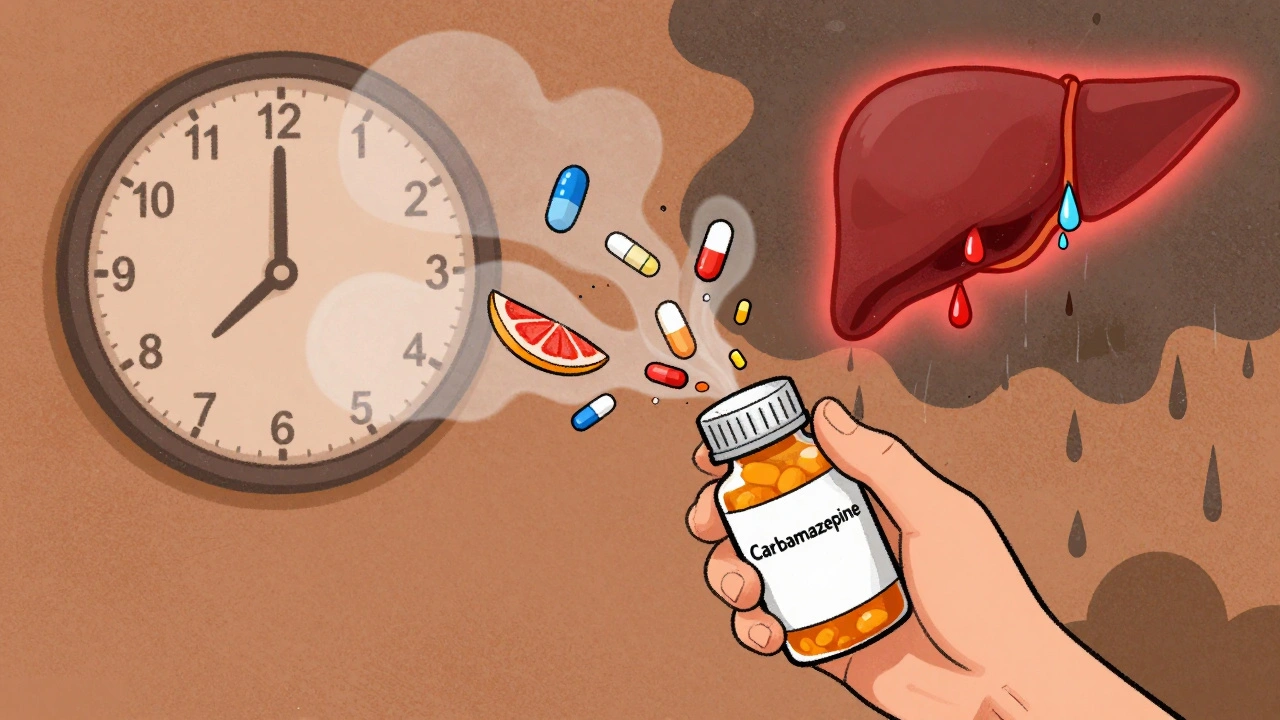
- Carbamazepine: Check both carbamazepine and CBZ-E levels when combined with valproate. Monitor for dizziness, double vision, or loss of coordination. Check for drug interactions with antifungals, antibiotics, or seizure meds. Avoid grapefruit juice-it can interfere with metabolism.
Many patients don’t realize their symptoms are drug-related. A tremor? Maybe it’s lithium and ibuprofen. Dizziness? Could be carbamazepine and valproate. Confusion? Might be lithium and an ACE inhibitor. The key is to connect the dots.
Why Newer Drugs Are Taking Over
Lithium prescriptions have dropped from 35% of new starts in 2012 to just 15% in 2022. Valproate has fallen from 55% to 40%. Carbamazepine is holding steady at 10%. Why? Because newer options like lamotrigine, lurasidone, and cariprazine have fewer interactions, better safety profiles, and don’t require constant blood tests.
But they’re not always accessible. Generic lithium costs about $30 a month. Brand-name valproate can run $350. Many patients stick with the older drugs because insurance won’t cover the newer ones-or they’ve been stable on them for years.
Still, the trend is clear: when possible, doctors now avoid combining these three. Lithium and valproate together can be effective for rapid-cycling bipolar disorder-but only with tight monitoring. Carbamazepine and valproate? That combo is a red flag. Most psychiatrists now avoid it unless absolutely necessary.
What to Do If You’re on One of These
If you’re taking lithium, valproate, or carbamazepine:
- Keep a list of every medication, supplement, and OTC drug you take-including painkillers, cold meds, and herbal teas.
- Ask your doctor or pharmacist: “Could this interact with my mood stabilizer?” Don’t assume it’s safe just because it’s over-the-counter.
- Know your target levels. Ask for a copy of your last blood test results.
- Learn the warning signs: tremors, confusion, dizziness, nausea, unusual fatigue.
- Never stop or change your dose without talking to your prescriber.
There’s no shame in needing help. These drugs are powerful, and their interactions are complex. Even experienced clinicians miss them. The goal isn’t to scare you-it’s to empower you with knowledge so you can speak up when something feels off.
What’s Next?
Research is moving fast. In 2023, scientists identified a gene (EPHX1) linked to carbamazepine resistance. Methylation of this gene might explain why some people don’t respond-or have bad reactions. By 2027, genetic testing before starting carbamazepine could become standard.
Also in development: new formulations. Lithobid, an extended-release lithium, helps smooth out blood levels and reduces interaction risks. Valproate microbeads (Depakote Sprinkle) offer more consistent absorption.
But for now, the best tool remains the same: awareness, monitoring, and communication. Your body’s chemistry is unique. What works for someone else might not work for you. And what’s safe today might become risky tomorrow if you add a new medication.
Don’t wait for a crisis to ask questions. Talk to your doctor. Track your symptoms. Know your numbers. These drugs can save your life-but only if you understand how they play with the rest of your body.
Can I take ibuprofen with lithium?
No, not without close monitoring. Ibuprofen and other NSAIDs can increase lithium levels by 25-30%, raising the risk of toxicity. Symptoms include tremors, confusion, nausea, and dizziness. If you need pain relief, talk to your doctor about alternatives like acetaminophen (Tylenol), which doesn’t affect lithium. If you must take ibuprofen, get a blood test within 5-7 days to check your lithium level.
Why does valproate make lamotrigine levels go up?
Valproate blocks the liver enzyme (UGT) that breaks down lamotrigine. This can cause lamotrigine levels to double or even triple. That increases the risk of a serious skin rash called Stevens-Johnson syndrome. If you start valproate while on lamotrigine, your doctor will likely cut your lamotrigine dose in half and increase it slowly over weeks. Never adjust the dose yourself.
Can carbamazepine and valproate be taken together safely?
It’s possible, but risky. Valproate increases the toxic metabolite of carbamazepine (CBZ-E) by 40-60%, which can cause dizziness, loss of coordination, and confusion-even if carbamazepine levels look normal. The British Association for Psychopharmacology recommends lowering the carbamazepine dose by 25% when adding valproate and checking CBZ-E levels to keep them under 3.5 mcg/mL. Most doctors avoid this combo unless no other option exists.
Does lithium affect birth control?
No, lithium does not interfere with hormonal birth control. Unlike carbamazepine, lithium doesn’t induce liver enzymes that break down hormones. However, lithium carries its own risks during pregnancy-it’s classified as Category D, meaning it may harm the fetus. Women of childbearing age should discuss contraception and pregnancy planning with their doctor before starting lithium.
How often should I get blood tests on these meds?
For lithium: every 3-6 months if stable, but within 5-7 days after starting or stopping any new medication (especially NSAIDs, diuretics, or blood pressure drugs). For valproate: every 3-6 months, or more often if levels are unstable or you’re on other interacting drugs. For carbamazepine: every 3-6 months, but check both the drug and its metabolite (CBZ-E) if you’re also taking valproate. Always follow your doctor’s specific schedule.
Are there safer alternatives to these three drugs?
Yes. Lamotrigine has fewer interactions and is often preferred for bipolar depression. Lurasidone, cariprazine, and quetiapine are newer options with simpler profiles. They don’t require as much blood monitoring and have lower risks of organ toxicity. But they’re often more expensive. Insurance coverage and cost matter, but safety and ease of use are increasingly guiding treatment choices over the older, more complex options.


Yatendra S, December 13, 2025
Lithium + ibuprofen = bad news. I learned this the hard way. One weekend headache pill and I was shaking like a leaf. ER visit. Blood test showed 1.4. Scary shit. 🤯
kevin moranga, December 14, 2025
This is such an important post. Seriously. So many people think OTC meds are harmless, but lithium doesn’t play nice with NSAIDs, diuretics, even some blood pressure pills. I’ve seen patients crash because they didn’t know. Your doc should be checking levels within a week of any new med. Don’t wait for symptoms. Prevention > panic. 💪
Lara Tobin, December 15, 2025
I’m so glad someone wrote this. My sister was on valproate and lamotrigine and they didn’t adjust her dose right. She got that rash… it was terrifying. Took months to heal. Please, if you’re on this combo, ask for a level check. It’s not overreacting-it’s staying alive. 🫂
Keasha Trawick, December 17, 2025
Carbamazepine is a metabolic gremlin. It doesn’t just metabolize-it *annihilates* other drugs. I was on risperidone for psychosis, felt stable… then carbamazepine got added for seizures. Three weeks later, I was hallucinating again. Turns out my risperidone levels had plummeted by 60%. My psych said ‘relapse’-I said ‘pharmacokinetic sabotage.’ We fixed it. But only because I dug into the literature. Knowledge is armor.
Bruno Janssen, December 18, 2025
I’ve been on lithium for 12 years. I don’t trust doctors anymore. They forget. I check my own levels. I keep a spreadsheet. I know my sodium. I know my creatinine. I know the exact day I started that new antibiotic last year. I’m not paranoid. I’m just tired of being the only one paying attention.
Tom Zerkoff, December 20, 2025
While the clinical data presented here is accurate and well-sourced, one must acknowledge the structural barriers to optimal care. Many patients lack access to regular monitoring, and cost disparities render newer agents inaccessible. This is not merely a pharmacological issue-it is a public health inequity. The burden of vigilance should not fall solely on the patient.
Alvin Montanez, December 20, 2025
People think they can just ‘manage’ these drugs like coffee. You’re not a biochemist. You’re not a pharmacist. You’re not even a nurse. You’re a patient. Trust the process. If your doctor says don’t take ibuprofen, don’t. If they say your levels are fine, believe them. Stop reading Reddit and start listening. Your life isn’t a forum thread.
Himmat Singh, December 22, 2025
The assertion that newer agents are inherently safer is a marketing myth propagated by Big Pharma. Lithium has been used since 1949. It is the most studied mood stabilizer in history. The decline in its use is not due to efficacy-it is due to profit margins. Lamotrigine is not ‘safer’-it is merely less monitored. The real danger lies in the erosion of clinical rigor.
John Fred, December 23, 2025
If you're on carbamazepine and valproate together? Yeah, it's a mess. But I’ve seen it work-when done right. My doc lowered my carbamazepine by 25%, checked CBZ-E levels every 2 weeks, and we tweaked until I stopped feeling like I was drunk all the time. 🙌 It’s not impossible. Just needs attention. And yeah, grapefruit juice? Avoid like the plague. 🍊❌
Scott Butler, December 24, 2025
America’s obsession with ‘newer = better’ is why we’re dying. We used to respect the old drugs. Lithium, valproate, carbamazepine-they’ve saved millions. Now we’re chasing expensive brand-name pills because insurance won’t cover the generics. It’s not science. It’s capitalism. And we’re the ones paying with our brains.
Ronan Lansbury, December 24, 2025
You think this is about drug interactions? Think deeper. The real danger is the pharmaceutical-industrial complex using these meds to control the population. Lithium was used in the 1950s to suppress aggression in prisons. Valproate was tested on institutionalized patients. Carbamazepine? Originally developed as an anti-seizure drug… but the same enzyme pathways are used in mind control experiments. Don’t trust the system. Check your blood. But also… question everything.
Rawlson King, December 25, 2025
If you’re taking lithium and you’re not getting your levels checked every 3 months, you’re playing Russian roulette with your kidneys. And if you’re a woman on valproate and you’re not on triple contraception? You’re a danger to potential children. This isn’t opinion. It’s protocol. And if you’re ignoring it, you’re not brave-you’re reckless.