
Beta-Lactam Allergy Assessment Tool
Assess Your Reaction Risk
Based on medical evidence: 95% of people labeled penicillin-allergic don't actually have a true allergy. This tool helps evaluate your specific reaction history.
Next Steps
Based on your history:
More than 10% of people in the U.S. say they’re allergic to penicillin. But here’s the truth: 95% of them aren’t. That’s not a typo. Most of those labels were given after a childhood rash, a stomach upset, or a vague reaction decades ago-none of which were true allergies. And that mislabeling is costing lives, money, and effective treatment options.
What Actually Counts as a Beta-Lactam Allergy?
Beta-lactam antibiotics include penicillins (like amoxicillin and penicillin G) and cephalosporins (like ceftriaxone and cephalexin). They all share a core structure called the beta-lactam ring. That’s why people worry about cross-reactivity-if you’re allergic to one, will you react to the other? But here’s the catch: not every bad reaction is an allergy. A rash from a virus? Not an allergy. Nausea after taking pills on an empty stomach? Not an allergy. A true beta-lactam allergy means your immune system has made IgE antibodies specifically targeting the drug. These cause immediate reactions-within minutes to an hour-like hives, swelling, wheezing, or even anaphylaxis. Most people labeled “penicillin-allergic” never had a real IgE reaction. They got a label after a mild rash as a kid and never got tested again. That label sticks for life. And it changes everything.Penicillin Reactions: What They Look Like and How Common
If you have a true penicillin allergy, symptoms usually show up fast:- Hives (urticaria): happens in about 90% of cases
- Swelling of lips, tongue, or throat (angioedema): about 50%
- Wheezing or trouble breathing: around 30%
- Anaphylaxis: rare-only 0.01% to 0.05% of courses, but life-threatening
Cephalosporin Reactions: Less Risk Than You Think
For decades, doctors were told that if you’re allergic to penicillin, you have a 10-30% chance of reacting to cephalosporins. That number was never accurate. Modern studies show the real cross-reactivity rate is closer to 1-3%-and even lower for newer cephalosporins. Why? Because later-generation cephalosporins (like ceftriaxone and cefdinir) have very different side chains than penicillins. The beta-lactam ring is the same, but the parts that trigger immune responses? Not so much. A patient allergic to amoxicillin can often safely take ceftriaxone for a serious infection. Still, many hospitals won’t give cephalosporins to anyone with a penicillin label. That’s outdated thinking. The CDC now says: don’t automatically avoid cephalosporins. Evaluate the risk based on the reaction history and the specific drug.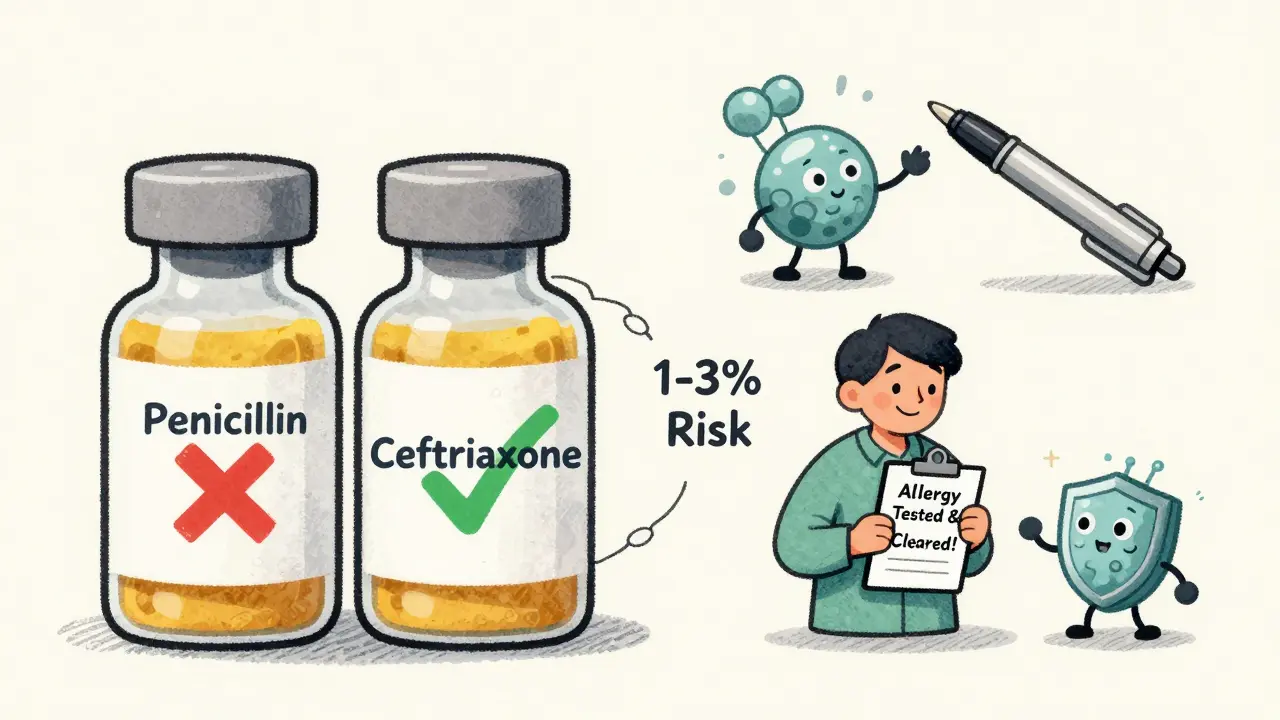
Testing Is the Key-And It Works
If you’ve been told you’re allergic to penicillin, the best thing you can do is get tested. Here’s how it works:- Start with a detailed history. Was the reaction immediate? Did you have hives or trouble breathing? Or was it just a rash weeks later? Immediate reactions are the only ones that matter for IgE testing.
- Then, skin testing. A tiny amount of penicillin and its breakdown products (major and minor determinants) is placed on the skin. If you’re allergic, you’ll get a raised bump.
- If the skin test is negative, you get an oral challenge. You take a full dose of amoxicillin under observation. If nothing happens, you’re not allergic.
What If You Really Are Allergic?
If you’ve had a true anaphylactic reaction to penicillin, you need to avoid it. But even then, there’s a way forward. Desensitization is a procedure where you’re given tiny, increasing doses of penicillin over 4-8 hours under close medical supervision. Your immune system gets temporarily “reset.” It doesn’t cure the allergy-it just lets you take the drug when you absolutely need it. This is critical for conditions like syphilis during pregnancy or neurosyphilis. Penicillin is the only treatment that works. Without desensitization, patients get less effective drugs-and worse outcomes. Desensitization requires an inpatient setting with emergency equipment on hand. It’s not something you do in a clinic. But it’s safe. Success rates are over 80%.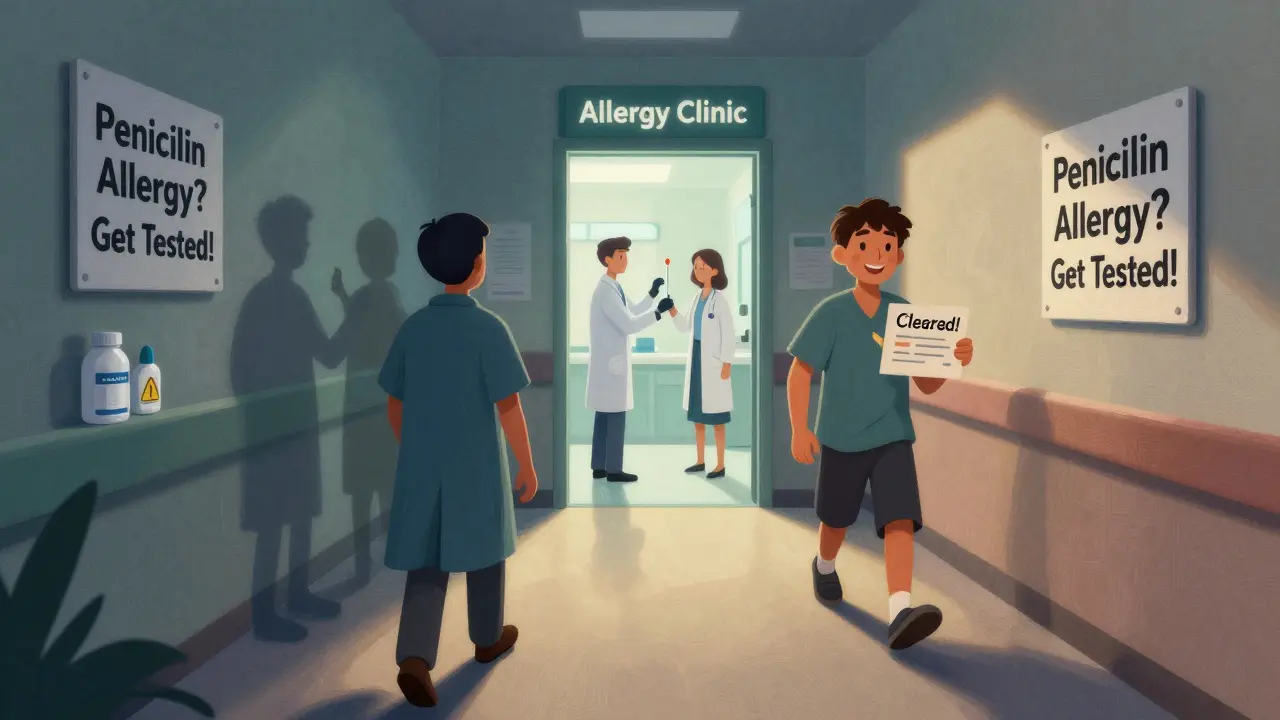
Why This Matters More Than You Realize
Mislabeling penicillin allergies isn’t just inconvenient. It’s dangerous and expensive. - Patients labeled penicillin-allergic get broader-spectrum antibiotics 70% more often. - They have 30% higher rates of surgical site infections. - Each mislabeled patient adds $2,000-$4,000 in extra healthcare costs annually. Hospitals that run formal delabeling programs cut vancomycin use by 28% and C. difficile infections by 17%. That’s not just savings-it’s fewer deaths. And yet, only 35% of U.S. hospitals have any kind of systematic penicillin allergy evaluation program. In rural areas, access to allergists is even worse-only 28% have them.What You Can Do
If you or someone you know has a penicillin allergy label:- Ask: When did it happen? What exactly happened? Was it a rash? A stomach ache? Or trouble breathing?
- If it was a mild rash more than 10 years ago, you’re very likely not allergic.
- Ask your doctor if you can be referred for allergy testing.
- Don’t assume cephalosporins are off-limits. Ask which one and why.
- If you need penicillin for a serious infection (like syphilis), ask about desensitization.
Future of Allergy Testing
Researchers are working on faster, cheaper ways to test. A 2023 study identified IL-4 and IL-13 as blood markers that might predict IgE-mediated penicillin allergy-no skin test needed. The NIH is funding a $12.5 million study to test streamlined protocols in community clinics. Results come in 2026. The goal? Make testing as easy as a blood draw. So no one has to avoid penicillin out of fear, not fact.Can I outgrow a penicillin allergy?
Yes. About 80% of people who had a true penicillin allergy lose their sensitivity after 10 years. That’s why a label from childhood often doesn’t mean anything today. Testing is the only way to know for sure.
Is a cephalosporin safe if I’m allergic to penicillin?
For most people, yes. The risk of cross-reactivity is only 1-3%, and it’s even lower with newer cephalosporins like ceftriaxone. The old rule of avoiding all cephalosporins is outdated. Your doctor should assess your specific reaction history and choose the right drug.
What should I do if I had a rash after taking amoxicillin?
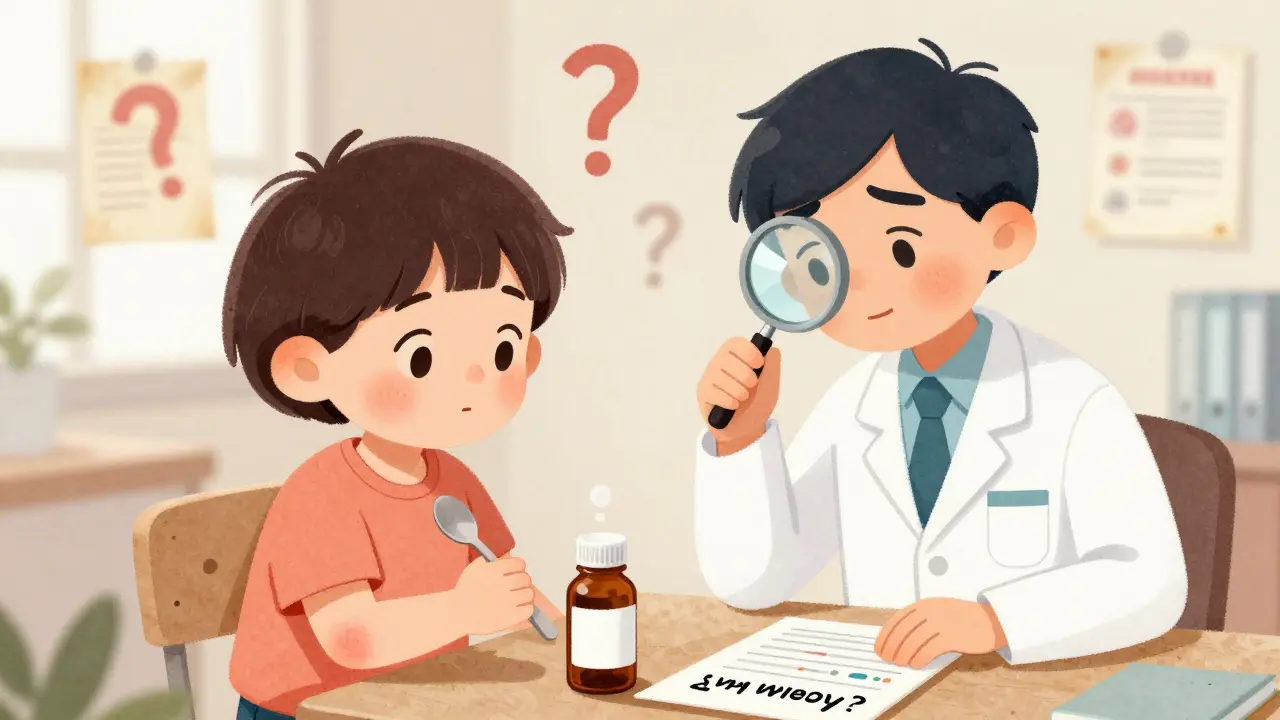
If the rash appeared more than a week after starting the drug, wasn’t itchy, and didn’t involve swelling or breathing trouble, it was likely a viral rash-not an allergy. Many kids get rashes with viruses like EBV or CMV while on amoxicillin. Don’t assume it’s an allergy. Get it checked.
Can I take amoxicillin if I’m allergic to penicillin?
Amoxicillin is a type of penicillin. If you have a confirmed IgE-mediated allergy to penicillin, you should avoid it. But if your allergy label is unverified, you might be able to take it safely after testing. Most people who think they’re allergic to penicillin can tolerate amoxicillin without issue.
Are there alternatives to penicillin if I’m truly allergic?
Yes-macrolides like azithromycin, tetracyclines like doxycycline, or fluoroquinolones like levofloxacin. But these aren’t always better. They’re often less effective, more expensive, and carry higher risks like C. difficile or tendon damage. The best alternative is penicillin itself-if you can safely take it after testing or desensitization.


Stephen Craig, January 4, 2026
It's wild how a simple mislabel can ripple through decades of care. I've seen people denied life-saving antibiotics because of a rash they got at 7. No one ever questioned it. We treat labels like facts, not hypotheses.
Jack Wernet, January 5, 2026
While the medical evidence presented here is compelling, it is imperative that healthcare systems implement structured protocols for allergy re-evaluation. The ethical and economic implications of misclassification are too significant to be addressed ad hoc.
Charlotte N, January 7, 2026
So... wait... if I got a rash after amoxicillin when I was 5... and it was just a few spots... and no swelling... and I've taken it again later and been fine... does that mean I'm not allergic... or do I just got lucky...? I'm confused... like... really confused... I think I need to get tested... maybe...? I don't know... I'm scared... but also... maybe not?
Catherine HARDY, January 8, 2026
They’ve been lying to us for decades. Why? Because Big Pharma makes more money off vancomycin and fluoroquinolones. Penicillin’s too cheap. Too simple. Too old. They don’t want you to know you can just get tested. They want you scared. They want you dependent. They want you paying $2000 extra every year. Look at the numbers. It’s not medicine-it’s a business model.
bob bob, January 9, 2026
My grandma was told she was allergic to penicillin after a rash in the 60s. She never took it again. Then she got sepsis in 2018 and they had to use some weird antibiotic that messed up her kidneys. If someone had tested her back then... she might’ve been fine. This is insane. I'm getting myself tested next week.
Vicki Yuan, January 9, 2026
The data here is unequivocal: false penicillin allergy labels contribute significantly to antimicrobial resistance, increased healthcare costs, and preventable complications. Formal delabeling programs should be standard of care, not experimental initiatives. Clinicians must be educated, and patients must be empowered to question their labels.
melissa cucic, January 9, 2026
It is, indeed, a profound irony that the very drugs designed to save lives are often withheld due to outdated, poorly understood, and frequently incorrect diagnostic assumptions. The persistence of these mislabelings reflects not only a failure in clinical education, but also a systemic neglect of longitudinal patient follow-up. We must move beyond the myth of the permanent allergy, and toward a culture of evidence-based reassessment.
Akshaya Gandra _ Student - EastCaryMS, January 11, 2026
i read this and i think about my cousin she had rash after amoxi and now she cant take any beta lactam and she got infiction after surgery and doc gave her vancomycin and she got diarrhea bad... why no one test her before? its so sad
saurabh singh, January 12, 2026
Bro this is wild. I thought I was allergic to penicillin because I got a rash as a kid. Turns out it was just a virus. I got tested last year and now I can take amoxicillin like it’s candy. My dentist was shocked. We need to stop treating allergies like superstitions. Test. Don’t assume. Save lives. 🙌
Dee Humprey, January 13, 2026
My sister got anaphylaxis from penicillin at 19. She’s terrified. But I showed her the desensitization info. She’s going to talk to her allergist next week. If it works, she can finally get the right treatment for her Lyme. I’m so proud of her for being brave enough to ask. 💪
Siobhan Goggin, January 15, 2026
This is one of those topics that should be taught in every high school biology class. Imagine if we all knew that a childhood rash didn’t mean a lifetime of restricted treatment. Simple knowledge could prevent so much suffering.
Vikram Sujay, January 15, 2026
It is a matter of considerable concern that the medical community continues to perpetuate outdated dogmas regarding beta-lactam cross-reactivity. The evidentiary basis for revised guidelines has been robust for over a decade. Institutional inertia, rather than clinical uncertainty, remains the principal barrier to patient safety.
Jay Tejada, January 16, 2026
So let me get this straight... we’re telling people they’re allergic to penicillin because they got a rash while sick with mono... and then we give them antibiotics that can kill them... and we call it medicine? Yeah. I’m out.