

When you pick up a prescription, you might get a small paper booklet tucked into the bag. It’s not a receipt. It’s not a coupon. It’s a Medication Guide-and it could literally save your life.
What Exactly Is a Medication Guide?
A Medication Guide is a printed handout that comes with certain prescription drugs. It’s not something your doctor writes. It’s not something your pharmacy makes up. It’s a government-mandated safety document, approved by the U.S. Food and Drug Administration (FDA), and required by law for specific high-risk medications. These guides aren’t just extra paperwork. They’re designed for people like you-not doctors or pharmacists-who need to understand what a drug can do, what it can’t do, and what might go wrong. The FDA only requires them for drugs where the risks are serious enough that patients need to know them clearly. That includes things like opioid painkillers, certain antidepressants, biologic treatments for autoimmune diseases, and some cancer drugs. The rules are strict. Manufacturers must create the guide, the FDA must review and approve it, and pharmacists must give it to you every time you fill or refill the prescription. If you don’t get one when you should, that’s a violation of federal law.Why Do These Guides Even Exist?
Back in the 1990s and early 2000s, too many people ended up in the hospital-or worse-because they didn’t understand the risks of their meds. Some took a drug with alcohol and had a dangerous reaction. Others didn’t realize they couldn’t drive while on it. Some missed warning signs of a rare but deadly side effect because the information was buried in dense medical jargon. The FDA stepped in. They realized that standard prescription labels-just “take one pill twice daily”-weren’t enough. So they created Medication Guides to fill that gap. These aren’t just warnings. They’re education tools. Think of it this way: Your doctor might tell you the basics. Your pharmacist might explain how to take it. But if you forget what they said, or if you’re stressed, tired, or overwhelmed, that information vanishes. The Medication Guide stays with you. You can read it at home, show it to a family member, or bring it to your next appointment.What’s Actually in a Medication Guide?
Every Medication Guide has to include the same key pieces of information, no matter what drug it’s for:- The brand name and generic name of the drug
- What it’s approved to treat (not off-label uses)
- Serious side effects you need to watch for
- What to avoid (like other drugs, alcohol, or certain foods)
- Who shouldn’t take it (contraindications)
- How to store it safely
- How to dispose of unused pills properly
How Is This Different From a Package Insert?
You might have seen those thick booklets that come with meds. Those are package inserts. But those aren’t for you. Those are for doctors and pharmacists. They’re full of clinical trial data, dosing tables, lab values, and technical terms like “CYP3A4 inhibition” or “pharmacokinetic parameters.” Medication Guides are the opposite. They’re stripped down. Focused. Made for people who just want to know: “What should I watch out for?” A 2022 study in the Journal of the American Pharmacists Association found that patients with low health literacy understood Medication Guides 37% better than standard pharmacy handouts. That’s not a small difference. That’s the difference between recognizing a dangerous symptom and ignoring it.Do People Actually Read Them?
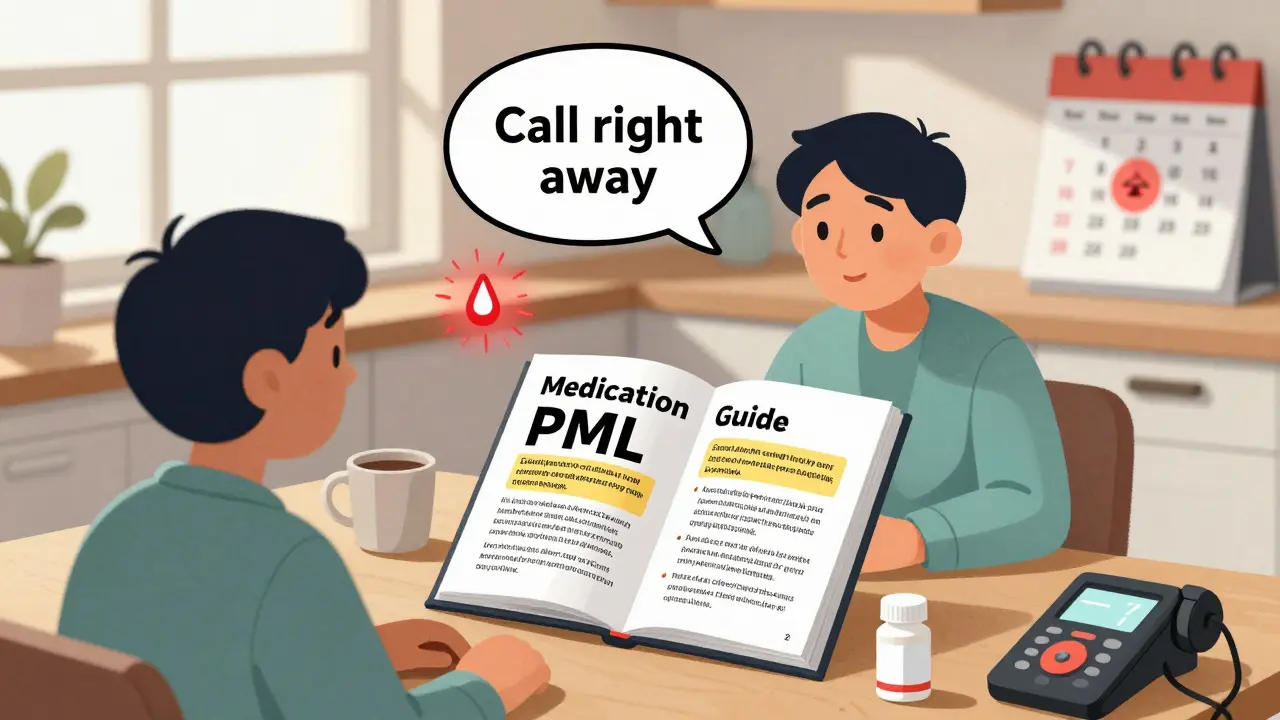
Let’s be honest: many don’t. A 2020 study in JAMA Internal Medicine found that only 52% of patients even remembered being given a Medication Guide. Of those, just 38% said they read it. On Reddit, pharmacists say most patients toss them in the drawer without looking. But here’s what’s missing from that story: the ones who do read them. There’s a post on PatientsLikeMe from someone named “MSWarrior42.” They got their Tysabri guide, read it, and noticed the symptoms of PML. They called their doctor right away. Early detection meant treatment started before permanent damage. They’re alive today because they read the guide. And it’s not just anecdotes. A 2023 meta-analysis in The Lancet reviewed 17 studies and found that when Medication Guides were used properly, serious adverse events dropped by nearly 20%. That’s thousands of hospitalizations avoided every year.What If You Don’t Get One?
If you’re prescribed a drug that requires a Medication Guide-and you don’t get one-you have a right to ask for it. Pharmacists are legally required to provide it. If they say, “We’re out,” that’s not okay. The manufacturer is responsible for making sure guides are available. If your pharmacy runs out, they should order more. If they refuse, you can report it to the FDA’s MedWatch program. Some drugs with guides include:- Insulin glargine (Lantus)
- Fluoxetine (Prozac)
- Warfarin (Coumadin)
- Abilify (aripiprazole)
- Januvia (sitagliptin)
- Humira (adalimumab)
How to Make the Most of Your Guide
Don’t just take it and put it away. Here’s how to use it:- Read it before you take your first dose. Don’t wait until you feel something weird.
- Highlight the red flags. Circle or write down the symptoms that mean “call your doctor now.”
- Ask your pharmacist to explain one thing. Even if you read it, hearing it spoken helps. Say: “Can you tell me the one thing I should never ignore?”
- Keep it with your meds. Put it in the same spot as your pill organizer.
- Bring it to appointments. Show it to your doctor. They might spot something you missed.
What’s Changing With Medication Guides?
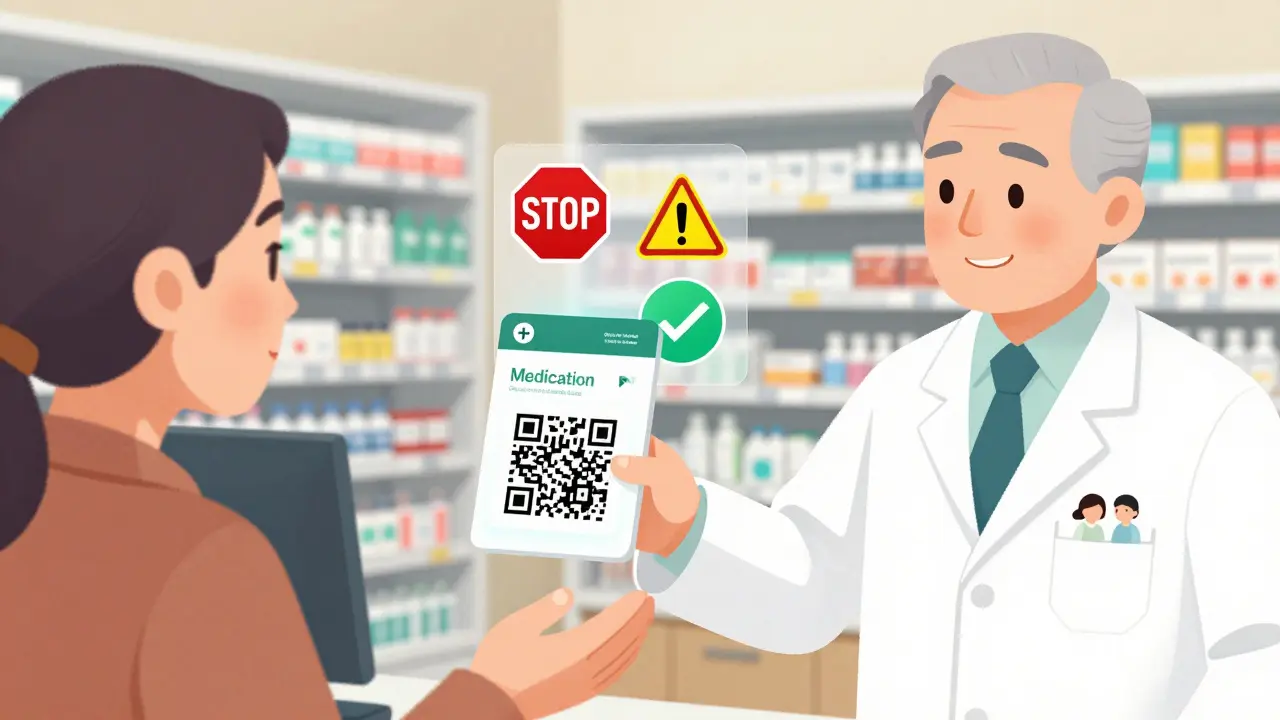
The FDA knows printed guides aren’t perfect. That’s why they’re making changes. Since 2023, you can now get Medication Guides electronically-if you ask for them. Some pharmacies offer QR codes on the paper guide that link to videos, interactive risk checkers, or audio versions in Spanish or other languages. New guides approved after January 2024 must prove they actually change patient behavior. That means manufacturers can’t just write a document and call it a day. They have to test it with real people to see if it works. And by 2025, all new guides must include visual icons for risk levels-like traffic lights. Red = stop and call your doctor. Yellow = watch closely. Green = normal.Bottom Line: Don’t Ignore It
Medication Guides aren’t junk mail. They’re not marketing fluff. They’re your last line of defense against preventable harm. You don’t need to be a medical expert to use them. You just need to care enough to open them. One page. One minute. That’s all it takes. If you’re on a high-risk medication, this guide could be the reason you avoid a hospital stay. Or worse. Don’t let it sit unread.Are Medication Guides required for all prescription drugs?
No. Only about 150 out of the roughly 3,000 prescription drugs in the U.S. require a Medication Guide. These are drugs with serious safety risks-like opioids, certain antidepressants, biologics, and cancer treatments. The FDA decides which drugs need them based on how dangerous the side effects are and whether patient understanding can prevent harm.
Can I get a Medication Guide electronically instead of on paper?
Yes. Since 2023, the FDA allows electronic delivery if you ask for it. Some pharmacies offer QR codes on the paper guide that link to digital versions. You can also request a PDF or video version by phone or through a pharmacy app. But you have to ask-pharmacists won’t offer it unless you request it.
What should I do if I don’t understand something in the guide?
Call your pharmacist or doctor. Don’t guess. Medication Guides are written to be simple, but if something’s confusing, you’re not alone. Ask for clarification. You can also look up the drug’s name plus “Medication Guide” online-the FDA posts all approved versions on their website.
Why do some guides look different even for the same drug?
They shouldn’t. All Medication Guides for the same drug must be identical and approved by the FDA. If you see two different versions, one might be outdated or fake. Always check the FDA’s official list to confirm you have the correct, current guide. If you’re unsure, ask your pharmacist to verify it.
Do Medication Guides replace advice from my doctor or pharmacist?
No. They’re meant to support, not replace, professional advice. Your doctor knows your health history. Your pharmacist knows how your meds interact. The guide gives you consistent, reliable safety info you can refer to anytime. Use all three together for the best protection.


Brittany Wallace, January 4, 2026
Just read my Tysabri guide last night after years of ignoring it. Turned out I didn’t know PML could start with just a weird balance issue. I called my neurologist today. They said I caught it just in time. 🙏
Palesa Makuru, January 5, 2026
Ugh, another one of those ‘read the tiny paper’ lectures. Like my doctor didn’t already explain it in 3 minutes while scribbling on a napkin? 😒
Lori Jackson, January 6, 2026
Let’s be real-most of these guides are performative compliance. The FDA mandates them because they’re terrified of liability, not because patients actually comprehend them. The language is simplified to the point of being infantilizing, and the formatting? Aesthetic minimalism that screams ‘we don’t care if you read this.’
Meanwhile, the real issue is systemic: doctors don’t have time to counsel, pharmacists are overworked, and patients are drowning in polypharmacy. A 6th-grade pamphlet won’t fix a broken healthcare ecosystem. You need structured patient education programs, not cardboard safety nets.
Wren Hamley, January 7, 2026
Man, I used to toss these things in the trash until my buddy got hospitalized from mixing warfarin with OTC cold meds. The guide? It said ‘AVOID NSAIDs AND COLD REMEDIES WITH DECONGESTANTS’ in bold. He didn’t read it. I did. Now I keep mine taped to my pill organizer with a sticky note that says ‘DON’T BE AN IDIOT.’
Also-QR codes? Genius. I scanned mine and got a 90-second video in Spanish. My abuela finally gets it now. 🙌
Sarah Little, January 9, 2026
Did you know the FDA requires the guide for Humira because of the TB reactivation risk? Most patients don’t realize you need a negative PPD before starting. That’s not in the label. It’s in the guide. And if you miss it? You could end up with miliary TB. Just saying.
innocent massawe, January 11, 2026
Back home in Nigeria, we don’t get these guides. Sometimes we don’t even get the right dosage. I wish more people here had access to something like this. Simple words. Clear warnings. No jargon. It’s not just about safety-it’s about dignity.
Tru Vista, January 12, 2026
52% remember getting it? LMAO. More like 12%. And 38% read it? Please. Most people just look at the bold parts and think they’re covered. I’ve seen folks ignore ‘DO NOT CONSUME ALCOHOL’ because they thought ‘alcohol’ meant beer, not wine or hand sanitizer. 🤦♀️
Vincent Sunio, January 12, 2026
While the concept is laudable, the implementation remains fundamentally flawed. The FDA’s requirement for sixth-grade readability, though well-intentioned, undermines the cognitive complexity necessary to convey nuanced pharmacological risk. Moreover, the absence of standardized metadata-such as risk stratification codes or cross-referenced adverse event timelines-renders these documents epistemologically inadequate. A truly effective patient communication tool must be evidence-based, linguistically calibrated, and cognitively optimized-not merely sanitized.
Shanahan Crowell, January 13, 2026
THIS. THIS RIGHT HERE. 🙏 I used to think these guides were boring junk… until my sister almost died from an interaction with her antidepressant. She didn’t know grapefruit could kill her. The guide said it. In bold. She didn’t read it. I did. Now I carry a printed copy in my purse. I hand it to strangers in the pharmacy. I’m not ashamed. Life is too short for assumptions. If you’re on one of these meds-OPEN THE DAMN PAPER. One minute. One page. It could be the difference between ‘I’m fine’ and ‘I’m gone.’