
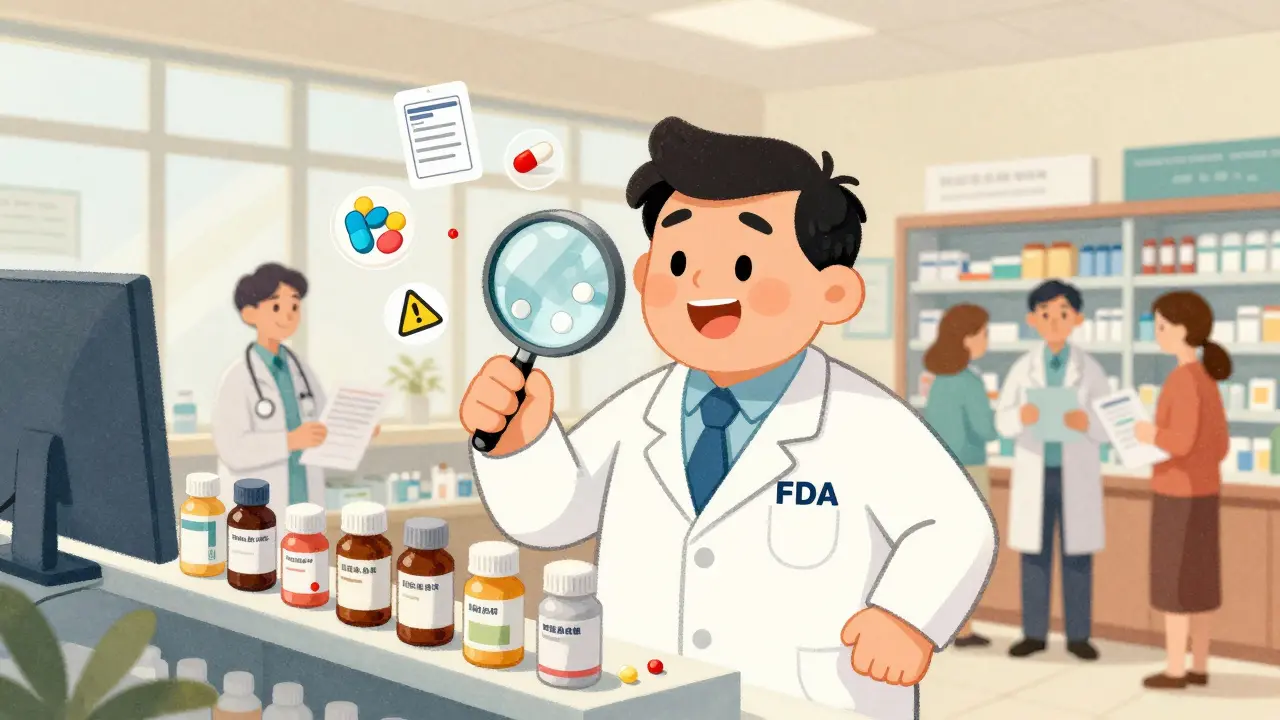
When you pick up a generic pill at the pharmacy, you expect it to work just like the brand-name version. But how does the FDA make sure it’s safe after it’s on the shelf? Unlike brand-name drugs, which go through years of clinical trials before approval, generic drugs are approved based on one key fact: they’re bioequivalent. That means they deliver the same active ingredient at the same rate and amount. But bioequivalence doesn’t guarantee real-world safety forever. That’s where post-approval surveillance comes in.
What Happens After a Generic Drug Gets Approved?
The FDA doesn’t just approve a generic drug and walk away. Once it’s on the market, the real monitoring begins. The Center for Drug Evaluation and Research’s Office of Generic Drugs (OGD) runs a dedicated team called the Clinical Safety Surveillance Staff (CSSS). This group of doctors, chemists, and data analysts tracks about 1.2 million adverse event reports every year. These reports come from doctors, pharmacists, patients, and manufacturers. But not every report means something’s wrong. The real challenge is figuring out which ones matter.The Weber Effect: Why New Generics Spark More Reports
When a new generic drug hits the market, something predictable happens: reports of problems spike-sometimes by 300% to 400%. This is called the Weber Effect. It’s not because the drug is suddenly dangerous. It’s because everyone’s watching. Doctors and patients who never noticed issues with the brand-name version suddenly start reporting every odd sensation, every tablet that didn’t dissolve, every patch that fell off. The FDA expects this surge. That’s why they have a special watch list for newly approved generics. For the first 6 to 12 months, these products get extra scrutiny.How the FDA Finds Real Problems in a Sea of Noise
The FDA doesn’t just read reports. They analyze them with tools built for this exact purpose. The Drug Quality Reporting System (DQRS) collects around 45,000 to 60,000 quality complaints each year. These aren’t vague complaints like “I didn’t feel better.” They’re specific: “Tablets crumbled in the bottle,” “Liquid medicine had cloudy particles,” or “Patch didn’t stick past 12 hours.” Each complaint gets sorted using a custom SAS program. The system looks for patterns: Is this happening only with one manufacturer’s lot? Is it tied to a specific batch number? Is the issue happening far more often than the market share would suggest? For example, if a generic version holds 25% of the market but shows up in 70% of complaints about disintegration, that’s a red flag. About 5% to 7% of complaints are reviewed by a medical officer. These are the cases where someone might have been seriously hurt. If a patient ended up in the hospital because a generic didn’t work, that’s a Health Hazard Evaluation (HHE). The CSSS does 120 to 150 of these each year. They rate the likelihood of harm and how severe it was. That helps decide if a recall is needed.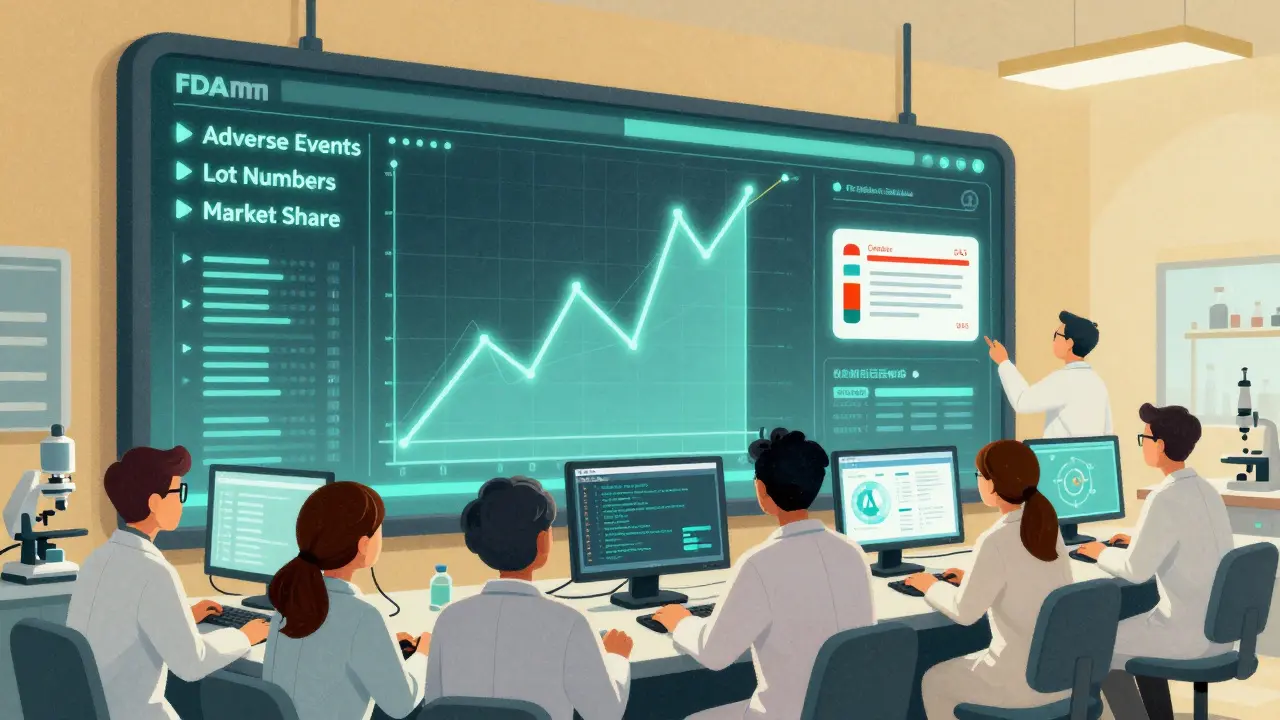
It’s Not Just About the Active Ingredient
Brand-name drug safety monitoring focuses mostly on the active ingredient. But with generics, the devil’s in the details. The same active ingredient can behave differently depending on the fillers, binders, coatings, or how it’s manufactured. A tablet might look identical, but if the coating doesn’t dissolve properly, the drug won’t absorb. A patch might have the right medicine, but if the adhesive changes, it won’t stick long enough. That’s why the FDA pays close attention to complex products-like inhalers, patches, or extended-release pills. Between 2018 and 2022, 12% of all post-market safety issues came from these harder-to-make generics. One Reddit user reported that a specific brand of extended-release metformin stopped working after 18 hours, not 24. That’s exactly the kind of issue the surveillance system was built to catch.Where the System Falls Short
The FDA is great at spotting manufacturing flaws. But it’s not as good at catching subtle differences in how well a drug works. Dr. Robert Temple, a former top FDA official, admitted that the system is “excellent for detecting quality defects but less sensitive to subtle efficacy differences.” Here’s the problem: once a generic is approved, there’s no requirement to test it again for bioequivalence. That’s fine for most drugs. But for drugs with a narrow therapeutic index-like warfarin, levothyroxine, or lithium-even a tiny change in absorption can cause serious harm. A 2021 Government Accountability Office report found that only 65% of potential therapeutic inequivalence signals got proper follow-up. In one case, 217 patient reports about inconsistent thyroid medication effects took 18 months to investigate. Many doctors think the FDA does routine post-approval testing. They don’t. A 2018 survey found 63% of family physicians believed the FDA rechecks bioequivalence after approval. That’s not true. And patients? Only 28% of those who reported problems through MedWatch felt they ever got a clear answer on what happened.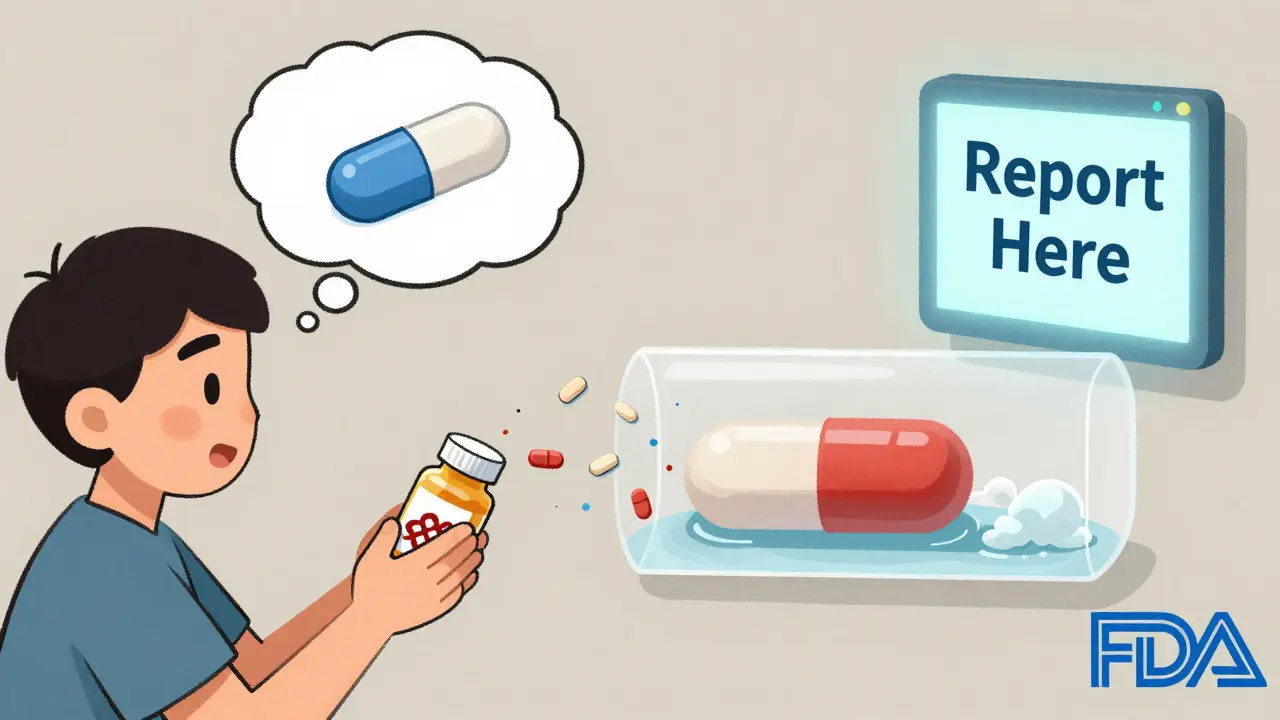
Who’s Reporting and What They’re Seeing
Healthcare professionals file about 68% of the reports. Pharmacists make up 42% of those. That’s because they’re the ones seeing patients complain about pills that don’t dissolve, liquids that cloud up, or patches that fall off. Common issues include:- Tablets not dissolving properly (17% of quality complaints)
- Precipitates in oral liquids (12%)
- Patches falling off too soon (9%)
What’s Changing Now
The FDA isn’t standing still. In 2023, they started using AI to help sort through reports. The new algorithms cut false positives by 27%. That means fewer wasted investigations and faster action on real problems. By late 2024, they plan to integrate real-time pharmacy claims data. That will let them see not just what’s being reported, but how many people are actually using each generic. If a drug is prescribed to 500,000 people and only 100 report problems, that’s very different from 10,000 prescriptions and 100 reports. In 2025, the FDA plans to propose a rule requiring post-approval bioequivalence testing for narrow therapeutic index drugs. That’s a big shift. And by early 2025, they’ll launch a patient portal where anyone can directly report if a generic didn’t work like it should.Why This Matters
Generic drugs make up 90% of all prescriptions in the U.S. But they account for only 23% of total drug spending. That’s why the system works: it saves billions. But it only works if the surveillance keeps up. The FDA’s Generic Drug User Fee Amendments (GDUFA) program gives them $630 million through 2027 to fund this work. A third of that-$220 million-is dedicated to safety monitoring. The system isn’t perfect. It’s slow on efficacy issues. It’s uneven across manufacturers. And patients still feel ignored. But it’s the most comprehensive post-market surveillance system for generics in the world. It catches manufacturing errors before they hurt people. It forces companies to fix problems. And it’s getting smarter every year.If you’ve ever wondered why your generic medication suddenly felt different, you’re not imagining it. The FDA is listening. And now, more than ever, they’re building tools to hear you better.
Does the FDA test generic drugs after they’re approved?
The FDA doesn’t routinely retest generic drugs for bioequivalence after approval. Instead, they rely on post-market surveillance-collecting and analyzing reports of side effects, quality issues, and therapeutic failures. They only require new testing if a safety signal emerges that suggests a problem with the product’s performance.
Can a generic drug be less effective than the brand name?
Legally, a generic must be bioequivalent, meaning it delivers the same amount of active ingredient at the same rate. But for drugs with a narrow therapeutic index-like thyroid meds or blood thinners-even small differences in absorption can affect how well they work. While rare, these cases do happen. The FDA’s surveillance system is designed to catch them, but it’s not always fast enough.
Why do I hear more complaints about a new generic than an old one?
This is called the Weber Effect. When a new generic enters the market, everyone starts paying attention. Doctors, pharmacists, and patients report every small change-even ones that aren’t actually caused by the drug. This creates a spike in reports that has nothing to do with safety. The FDA expects this and monitors new generics more closely during their first year.
What kinds of problems are most common with generics?
The most common issues are physical or delivery-related: tablets that don’t dissolve, liquids that become cloudy, patches that fall off too soon, or extended-release pills that don’t last the full 24 hours. These are usually tied to the inactive ingredients or manufacturing process-not the active drug itself.
How can I report a problem with my generic medication?
You can report issues through MedWatch, the FDA’s online reporting system. You can also call 1-800-FDA-1088. Be sure to include the drug name, manufacturer, lot number, and what happened. Even if you’re not sure it’s serious, your report helps the FDA spot patterns. Patient reports make up a growing part of their surveillance system.
Are generic drugs from big companies safer than those from small ones?
Not necessarily. All generics must meet the same FDA standards. But smaller manufacturers are more likely to have delays in responding to safety signals-68% of delayed responses come from them. This isn’t because they’re cutting corners, but because they often lack the resources to track and fix issues as quickly as larger companies.


franklin hillary, January 30, 2026
The FDA’s system is way more sophisticated than most people realize. They’re not just waiting for complaints-they’re using AI to filter out noise and spot real patterns. That 27% drop in false positives? That’s huge. It means fewer unnecessary recalls and faster fixes for the real problems. We’re talking about a system that’s literally saving lives by catching a crumbling tablet before it kills someone. And yet, most folks think generics are just cheap knockoffs. Nope. It’s science. Hard science. And it’s working.
Bob Cohen, February 1, 2026
So let me get this straight-we spend billions on brand-name drugs, then switch to generics to save money… but the FDA still has to monitor them like they’re radioactive? Sounds like a glorified babysitting job. 😅
Ishmael brown, February 2, 2026
Bro. I took that generic metformin last year. Felt like I swallowed a rock. Then my blood sugar spiked. I reported it. Nothing. Then my friend had the same thing. Then another. Then a third. We all used the same lot. The FDA didn’t care. Until we made a subreddit. Then they responded. 🤡
Aditya Gupta, February 3, 2026
India makes half the world’s generics. We know how to make them right. But small US companies? They cut corners. Not because they’re evil-just no money. FDA needs to help them, not punish them. Also, patients need to report. Every time. Even if it’s ‘just weird.’
Lilliana Lowe, February 5, 2026
It’s astonishing how many people conflate bioequivalence with therapeutic equivalence. The FDA’s entire surveillance framework is predicated on a fundamental misunderstanding of pharmacokinetics. The fact that they only intervene when a safety signal emerges-rather than proactively auditing formulations-is a regulatory failure disguised as pragmatism.
vivian papadatu, February 6, 2026
I’ve been a pharmacist for 22 years. I’ve seen generics that worked better than the brand. And I’ve seen ones that made patients cry because they couldn’t sleep, or got dizzy, or felt like they were drowning. It’s not about trust. It’s about attention. The FDA listens. But we have to keep talking. Keep reporting. Even if it feels like shouting into the void. Someone’s listening.
Melissa Melville, February 7, 2026
My grandma’s thyroid med switched generics last month. She started zoning out at breakfast. We thought it was dementia. Turned out the new pill didn’t dissolve. She took it with a glass of water and it just sat in her throat. We reported it. They fixed it in 3 weeks. So yeah, the system works… if you care enough to complain.
Deep Rank, February 7, 2026
Let’s be real. The FDA doesn’t give a damn about your generic metformin unless someone dies. They’re a bureaucracy. They don’t move fast. They don’t care about your 18-hour pill. They care about lawsuits and headlines. And don’t get me started on how they ignore patient reports unless they come from a doctor with a fancy title. I’ve seen 12 people with the same issue. No one did anything. Until the news picked it up. Then boom-recall. Classic.
Bryan Coleman, February 8, 2026
My dad’s on warfarin. Switched generics last year. INR went wild. Took 6 weeks to fix. No one told us it could happen. I’m just glad we caught it. The system’s not perfect, but it’s the best we’ve got. And honestly? I’m impressed they even track this stuff at all.