
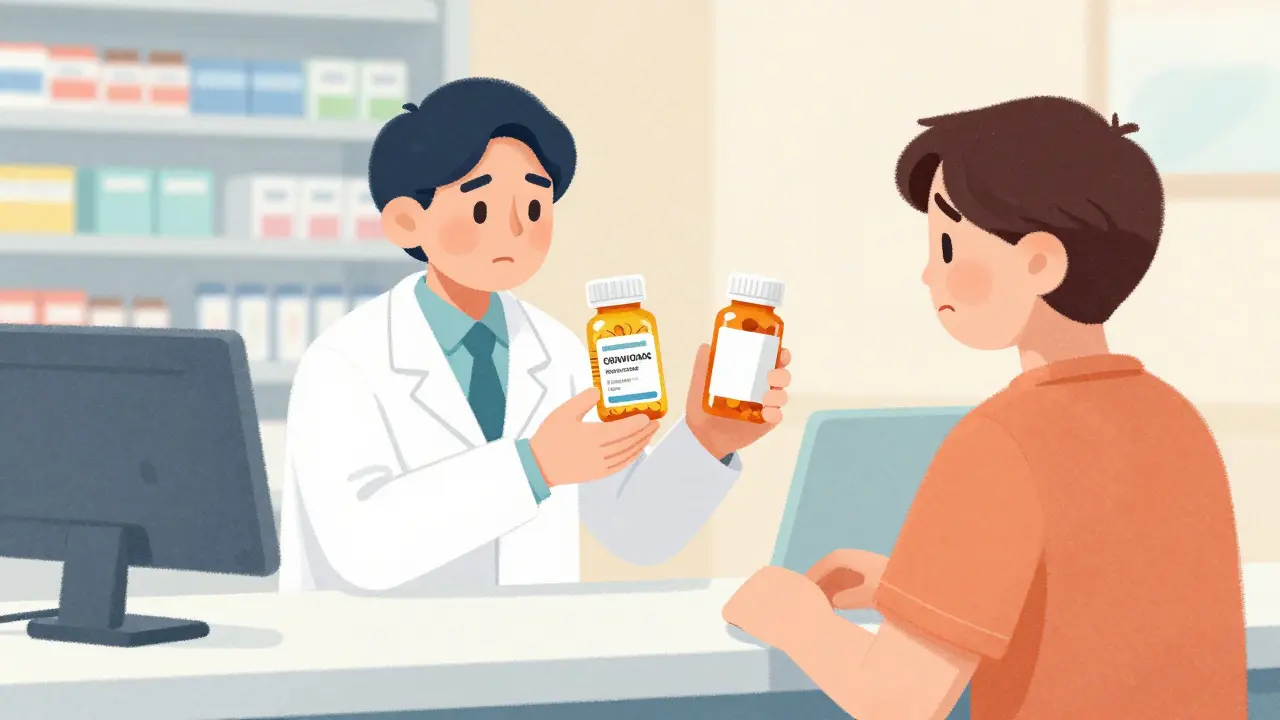
You’ve probably been there: you go to the pharmacy to pick up your prescription, and the pharmacist tells you they’ve substituted your usual brand for a generic version. For some, this is a relief because it saves money. For others, it triggers an immediate sense of worry. Is it actually the same medicine? Does the lower price mean it’s lower quality? Could it just not work as well?
The truth is that generic drugs are designed to be nearly identical to the brands they replace, but the nuance lies in the details. While the vast majority of people experience no difference, there are specific scenarios where a switch can actually impact your health. Understanding the gap between the myths and the medical reality is the only way to make an informed choice about your treatment.
The Core Truth: What Exactly Is a Generic?
To get rid of the mystery, we first need to define what we're talking about. Generic Drugs is a pharmaceutical product containing the same active ingredients, dosage form, strength, and route of administration as a brand-name drug. They enter the market after the original patent for a brand-name drug expires, which is why they are so much cheaper-the generic manufacturer didn't have to spend billions on the initial research and development.
In the United States, these drugs are approved via the Abbreviated New Drug Application (ANDA) pathway. This means the manufacturer doesn't have to redo all the clinical trials to prove the drug works; they only have to prove that their version is "bioequivalent" to the original.
The Science of Bioequivalence: How We Know They Work
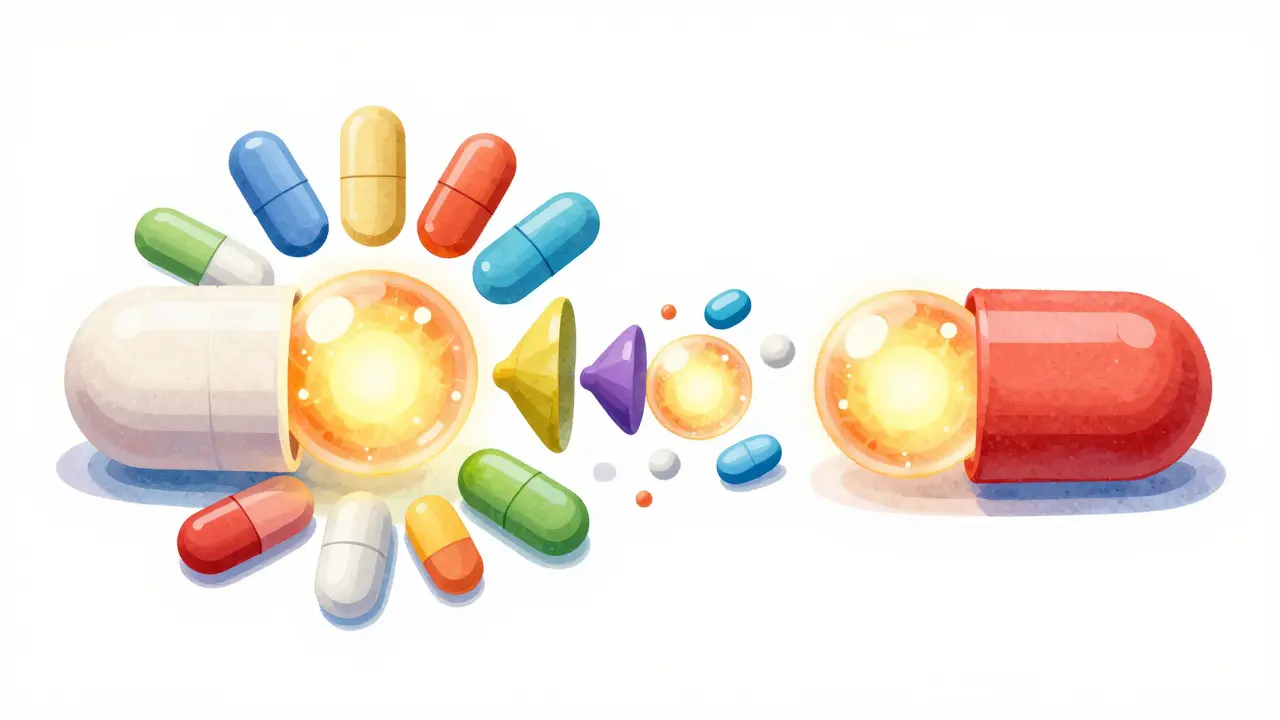
When people worry that generics are "watered down," they are ignoring the strict math the FDA (Food and Drug Administration) requires. For a drug to be approved as a generic, it must demonstrate bioequivalence. This means the rate and extent to which the active ingredient is absorbed into the bloodstream must fall within a specific range-typically a 90% confidence interval between 80% and 125% of the brand-name drug's profile.
Basically, the FDA checks two main things: the AUC (Area Under the Curve), which shows the total drug exposure over time, and the Cmax, which is the peak concentration of the drug in your blood. If these numbers match the brand name closely enough, the drug is considered therapeutically equivalent.
Manufacturing standards are also identical. Generic facilities must follow Current Good Manufacturing Practices (CGMP) . In 2022, about 98.7% of generic plants passed FDA inspections, which is actually slightly higher than the pass rate for brand-name facilities (97.3%).
Common Myths vs. Medical Realities
Let's clear up some of the most common misconceptions that circulate in waiting rooms and on internet forums.
| Feature | Brand-Name Drug | Generic Drug |
|---|---|---|
| Active Ingredient | Original formula | Identical to brand |
| Inactive Ingredients | Specific binders/colors | May vary (fillers, flavors) |
| FDA Standards | Full Clinical Trials | Bioequivalence (ANDA) |
| Cost | High (Premium) | Usually 80-85% lower |
| Effectiveness | The gold standard | Therapeutically equivalent |
Myth: Generics take longer to work.
Reality: Because they have the same active ingredient and must be bioequivalent, the onset of action is typically the same. While a different filler might slightly change how a pill dissolves, the actual therapeutic effect happens at the same speed in the vast majority of cases.
Myth: They are made in "lower quality" factories.
Reality: As mentioned, the CGMP standards are the same for both. Whether a drug is made by a global giant or a smaller generic firm, the FDA's quality requirements don't change based on the price tag.
Myth: You can't trust a drug that's 80% cheaper.
Reality: The cost difference isn't due to lower quality; it's due to the lack of marketing costs and the absence of the original R&D burden. Generic companies aren't paying for the 10 years of failed trials that preceded the brand's success.
The "Gray Area": When Generics Might Actually Differ
It would be dishonest to say that generics are *always* identical in every single patient. While the active ingredient is the same, the inactive ingredients (excipients) like binders, dyes, and preservatives can vary. For most people, this doesn't matter. But for someone with a severe allergy to a specific dye or a sensitivity to a certain filler, a generic switch could cause an adverse reaction.
The real concern arises with Narrow Therapeutic Index (NTI) drugs . These are medications where a tiny change in dosage or absorption can lead to either a toxic overdose or a complete failure of the treatment. Examples include Warfarin (a blood thinner) and Levothyroxine (for thyroid issues).
For NTI drugs, the FDA uses a much tighter bioequivalence window (90-112% instead of 80-125%). Even with this, some patients report "breakthrough" symptoms when switching. For instance, some people on generic levetiracetam for seizures have reported a higher risk of recurrence compared to the brand name. If you are taking a drug for a critical, fragile condition, your doctor might suggest sticking to one specific manufacturer rather than letting the pharmacy rotate generics.

What the Data Says: Successes and Failures
When we look at the big picture, the data overwhelmingly supports generics. A 2020 study in Nature looked at 17 cardiovascular drugs and actually found that generics were, in some cases, superior to brand names, with fewer deaths observed for 10 of those 17 medications. This suggests that for many, the generic version is just as safe, if not safer.
However, there are outliers. A Harvard Health study noted that after certain blood pressure medications like losartan switched to generics, emergency room visits for those patients increased by about 8%. This doesn't mean the drug was "bad," but it highlights how different individuals react to different formulations. One person might thrive on a generic, while another might find their blood pressure isn't as controlled.
These anomalies are rare, but they happen. In some reported clinical cases, patients failed to resolve infections with generic ciprofloxacin but improved immediately after switching back to the brand name Ciproxin. This is why keeping a log of your medication's specific manufacturer (not just the name) is a pro tip for anyone with chronic health issues.
Practical Tips for Managing Your Medications
If you're worried about a switch, don't just guess. Use these steps to ensure your treatment stays on track:
- Ask for the "Orange Book": The FDA's Orange Book lists all approved generics and their therapeutic equivalence ratings. Your pharmacist can check this to confirm if a substitute is truly equivalent.
- Request "Dispense as Written": If you've had a bad experience with a generic, your doctor can write "DAW" on the prescription. This tells the pharmacy they cannot substitute the brand for a generic.
- Stay Consistent: If you find a generic manufacturer that works for you, ask your pharmacy to stick with that specific company. Switching between different generic brands every month can sometimes cause fluctuations in blood levels.
- Monitor Your Symptoms: When switching, be hyper-aware of any changes in how you feel for the first 30 days. If you notice a return of symptoms, contact your doctor immediately.
Are generic drugs less potent than brand names?
No. The FDA requires generic drugs to have the same strength, quality, purity, and potency as the brand-name version. They must deliver the same amount of active ingredient to your bloodstream in the same amount of time.
Why are some generics so much cheaper?
Brand-name companies spend huge sums on research, clinical trials, and marketing. Generic companies don't have these costs because the drug has already been proven safe and effective. They compete on price, which drives costs down for the consumer.
Can inactive ingredients cause an allergic reaction?
Yes. While the active medicine is the same, the fillers, dyes, and preservatives (inactive ingredients) vary. If you have a known allergy to a specific dye or additive, you should check the label or ask your pharmacist for the full list of ingredients.
What is a "Narrow Therapeutic Index" drug?
These are drugs where a very small difference in dose can lead to a huge difference in effect (either too little or too much). For these specific drugs, the FDA enforces even stricter standards to ensure that the generic version is almost exactly the same as the brand.
Should I ever insist on the brand-name version?
In most cases, generics are the best choice. However, if you have a history of adverse reactions to fillers, or if you are taking an NTI drug and notice your symptoms returning after a generic switch, you should discuss the brand-name option with your doctor.


Arthur Luke, April 21, 2026
The explanation about the 90% confidence interval is actually really helpful for understanding why there's a range and not just a perfect one-to-one match.
Quinton Bangerter, April 22, 2026
Oh please, give me a break with the "FDA approved" nonsense. You really think the government is just looking out for us? It is a revolving door between big pharma and the regulators. The whole bioequivalence window is a joke designed to let companies shave off costs while pretending the quality is the same. Wake up people. They don't want you to know that the manufacturing sites in other countries often cut corners that the FDA just ignores because it's too expensive to fly inspectors out every week. The "Orange Book" is just a brochure for a system that prioritizes corporate profit over actual patient safety.
Valorie Darling, April 24, 2026
honestly who cares about the orange book just trust your gut if it doesnt work stop taking it lol
Ms. Sara, April 24, 2026
It's so important to emphasize the part about the Narrow Therapeutic Index drugs. I've seen so many people struggle with thyroid meds specifically because they kept switching generic brands every single month without realizing that tiny fluctuations in absorption can totally wreck your energy levels and mood. If you're on something like Levothyroxine, please just insist on the same manufacturer every time to keep your levels stable.
Tokunbo Elegbe, April 25, 2026
I completely agree with the point about consistency...!!! It is absolutely vital for patients to advocate for themselves in the pharmacy...!!!
Tanya Rogers, April 27, 2026
The superficial fascination with "cost-saving" is typical of the modern consumerist mindset. One must wonder if the pursuit of the cheapest possible pill has blinded the public to the subtle, almost metaphysical difference between a curated brand and a mass-produced generic. While the chemistry may be equivalent, the psychological reassurance of a brand is a variable the FDA cannot quantify in a lab. It's quite quaint that people believe a percentage range in a study equates to a lived human experience.
Brigid Prosser, April 28, 2026
Absolute rubbish. If you've got the coin, go for the brand, but for the vast majority of us, these generics are a godsend. I've been on generic blood pressure meds for a decade and I'm fit as a fiddle. Stop overthinking the fillers and just be glad we aren't paying a thousand bucks a month for a fancy label and a colorful pill. It's a total scam that people still think brand name is the only way to go.
caesar simpkins, April 29, 2026
OH MY GOD, the drama of the pharmacy switch is real!! I remember the first time they gave me a generic and I felt like my whole world was collapsing because the pill was a different color!! Like, how am I supposed to trust a yellow pill when my old one was white?! Absolutely heartbreaking for my anxiety at the time!
Akshata Kembhavi, May 1, 2026
This is very similar to how things work in India, where generics are incredibly common and widely trusted. It really helps make healthcare accessible for everyone.
Cynthia Didion, May 1, 2026
American standards are the gold standard. Period.
Bob Collins, May 2, 2026
I think it's fair to say that for 95% of people, this is a non-issue. Just keep an eye on your symptoms and you'll be fine.
William Young, May 2, 2026
I've always preferred the generic options myself, mainly because the cost difference allows me to afford other supplements that help my overall health. It just makes more sense financially when the efficacy is essentially the same.