
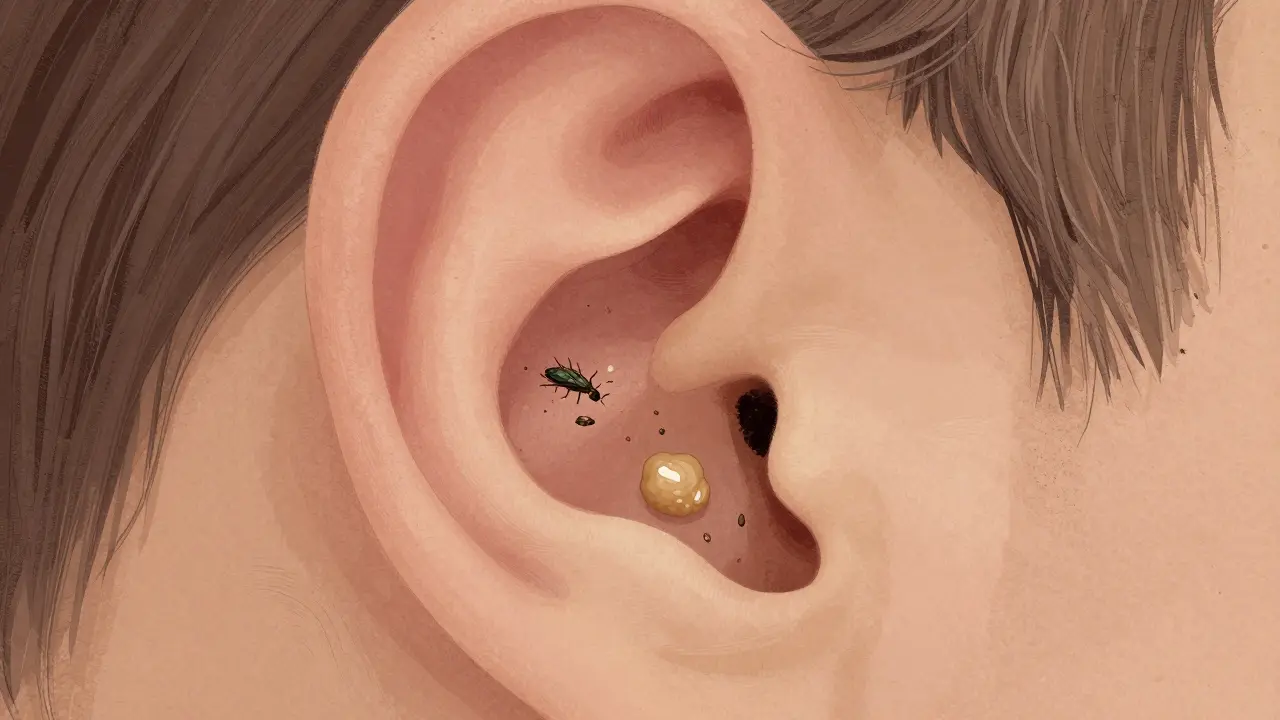
Have you ever felt like your ears are plugged with cotton wool? Maybe your hearing seems muffled, or there’s a persistent pressure that just won’t go away. You’re not alone. Earwax impaction, also known as cerumen blockage, is a common condition where wax builds up in the ear canal, causing discomfort and potentially affecting your hearing. While it might seem like a minor annoyance, ignoring it or trying to fix it with the wrong tools can lead to serious complications, including permanent damage to your eardrum.
The good news? Most cases of earwax buildup can be managed safely at home or resolved quickly by a healthcare professional. But first, you need to know what you’re dealing with. This guide breaks down the symptoms, the safest removal methods, and why that Q-tip in your bathroom drawer is probably doing more harm than good.
What Is Earwax Impaction?
To understand impaction, we first need to appreciate what earwax actually does. Cerumen (the medical term for earwax) is not dirt; it’s a protective substance produced by glands in your outer ear canal. It traps dust, bugs, and debris, preventing them from reaching your sensitive eardrum. It also has antibacterial properties that keep infections at bay.
In a healthy ear, this wax migrates outward naturally. Every time you chew or talk, the jaw movement helps push old wax out, where it dries up and falls off. However, sometimes this self-cleaning mechanism fails. The wax gets trapped, hardens, and accumulates until it blocks the canal. This is earwax impaction.
According to the American Academy of Family Physicians, about 6% of the general population suffers from this issue. The number jumps to 12% among older adults and up to 30% for individuals with developmental disabilities. It’s a widespread problem, but it’s entirely manageable if handled correctly.
Symptoms: How Do You Know If You Have a Blockage?
Not everyone with extra wax needs treatment. In fact, many people have visible wax during routine checkups without any issues. True impaction is diagnosed when the wax causes specific symptoms or prevents a doctor from examining the eardrum.
Here are the most common signs that you might have a blockage:
- Muffled Hearing: This is the most frequent complaint, reported in about 65% of cases. It often feels like you’re listening through water or thick fabric.
- Ear Fullness: A sensation of pressure or fullness in one or both ears occurs in nearly 60% of patients.
- Tinnitus: Ringing, buzzing, or roaring sounds in the ear affect roughly 29% of those with impactions.
- Itching or Discomfort: About a third of people experience itching, while others report mild pain.
- Dizziness: If the wax presses against the eardrum, it can disrupt your balance, leading to vertigo or lightheadedness.
- Coughing: Surprisingly, a dry cough can be a symptom. This happens because the ear canal shares nerve pathways with the throat.
If you notice drainage or an unusual odor coming from your ear, stop everything and see a doctor. These could be signs of an infection rather than simple wax buildup.
The Cotton Swab Trap: Why You Should Stop Digging
Let’s address the elephant in the room: cotton swabs. They are marketed as cleaning tools, but they are arguably the biggest enemy of ear health. Data from NHS England suggests that 60-70% of earwax impactions are caused by people trying to clean their ears with swabs.
Here’s what happens when you insert a swab into your ear:
- You remove some surface wax, which feels satisfying.
- You push the rest of the wax deeper into the canal, packing it tightly against the eardrum.
- You irritate the delicate skin of the ear canal, triggering more wax production as a defense mechanism.
- In worst-case scenarios, you puncture the eardrum or cause an infection.
Dr. William Luxford, a renowned ear specialist, notes that 90% of impaction cases result from well-intentioned but misguided cleaning attempts. The rule of thumb is simple: never insert anything smaller than your elbow into your ear. Your ears are designed to clean themselves; your job is to stay out of the way.
Safe At-Home Remedies for Mild Buildup
If you suspect mild wax buildup but don’t have severe pain or hearing loss, you can try softening the wax at home. The goal here isn’t to remove the wax immediately but to loosen it so your body can expel it naturally over the next few days.
| Remedy | Effectiveness | Notes |
|---|---|---|
| Olive or Almond Oil | High | Safe for most users. Avoid almond oil if you have nut allergies. |
| Carbamide Peroxide Drops | High | Available over-the-counter (e.g., Debrox). Fizzes to break up wax. |
| Hydrogen Peroxide (3%) | Moderate | Can be irritating to sensitive skin. Dilute with equal parts water. |
| Warm Water Irrigation | Variable | Only use bulb syringes carefully. Do not use if you have a perforated eardrum. |
How to apply drops safely:
- Lie on your side with the affected ear facing up.
- Instill 2-3 drops of your chosen solution (olive oil, mineral oil, or commercial drops).
- Stay in that position for 5-10 minutes to let the liquid penetrate.
- Repeat this process 3-4 times a day for 3-5 days.
- After a few days, gently wipe the outer ear with a damp cloth. Do not insert the cloth into the canal.
If the wax doesn’t come out after five days, or if your symptoms worsen, it’s time to see a professional.
Professional Removal Options
When home remedies fail, or if you have significant blockage, a healthcare provider can help. There are three main methods used by doctors and ENT specialists:
1. Microsuction
This is currently considered the gold standard for earwax removal. A doctor uses a tiny vacuum device under direct vision (usually with a microscope) to suck the wax out. It’s quick, dry, and very safe. Studies show it has a 96% success rate with minimal complications. It’s particularly useful for people who have had ear surgery or have perforated eardrums, as it doesn’t involve water.
2. Manual Instrumentation
A clinician may use small tools like curettes or forceps to gently scoop or pull the wax out. This requires skill and good lighting. It’s highly effective (92% single-visit resolution) but carries a slight risk of scratching the ear canal if not done carefully.
3. Irrigation
This involves flushing the ear with warm water or saline using a syringe or specialized irrigation tool. While effective (85% success rate), it’s not suitable for everyone. If you have a history of eardrum perforation, ear tubes, or recent ear surgery, irrigation is contraindicated because it can cause severe pain, dizziness, or infection.
What to Avoid: Dangerous Myths and Trends
In the age of social media, dangerous trends pop up frequently. Here are two things you should absolutely avoid:
Ear Candling: Despite its popularity in spas, ear candling is ineffective and dangerous. The FDA has classified ear candles as misbranded devices. The process involves inserting a hollow candle into the ear and lighting it, supposedly creating suction to pull out wax. In reality, it creates no meaningful suction. Instead, it poses risks of burns, ear canal obstruction from candle wax, and even eardrum perforation. Thousands of injuries are reported annually due to this practice.
Unregulated "Ear Scoops": You’ve likely seen videos on TikTok or Instagram showing people digging deep into their ears with metal scoops or loop tools. These videos generate billions of views, but they promote unsafe behavior. Without proper training and visualization, you risk pushing wax deeper, damaging the skin, or injuring the eardrum. Johns Hopkins researchers have highlighted the growing risk associated with these viral trends.
When to See a Doctor Immediately
While earwax impaction is usually benign, certain symptoms indicate a more serious underlying issue. Seek immediate medical attention if you experience:
- Sudden or severe hearing loss.
- Sharp, intense ear pain.
- Bleeding or pus draining from the ear.
- Persistent dizziness or vertigo.
- Fever accompanying ear symptoms.
These could be signs of an ear infection (otitis externa or media), a ruptured eardrum, or other conditions that require prescription medication or urgent care.
Prevention Tips for Long-Term Ear Health
Once your ears are clear, how do you keep them that way? Prevention is key, especially if you’re prone to buildup.
- Keep Ears Dry: Moisture can soften wax and make it stickier. After swimming or showering, tilt your head to let water drain out and dry the outer ear with a towel.
- Limit Hearing Aid Use Time: If you wear hearing aids, they can trap wax. Remove them daily and clean the devices according to the manufacturer’s instructions. Consult your audiologist for wax guards.
- Regular Check-Ups: If you have a history of impaction, ask your doctor about periodic maintenance cleaning during annual exams.
- Use Preventative Drops: For those with narrow ear canals or excessive hair, using olive oil drops once a week can prevent wax from hardening.
Does earwax really need to be removed?
No. Earwax serves a vital protective function. Removal is only necessary if the wax becomes impacted and causes symptoms like hearing loss, pain, or tinnitus. Asymptomatic wax buildup is normal and should be left alone.
Is hydrogen peroxide safe for earwax removal?
Yes, in moderation. Hydrogen peroxide (3% solution) can help break up wax, but it can also irritate the sensitive skin of the ear canal. It’s best to dilute it with equal parts water and limit use to a few days. If you experience stinging or redness, stop immediately.
Can earwax impaction cause permanent hearing loss?
Generally, no. Hearing loss from earwax is conductive and temporary. Once the wax is removed, hearing typically returns to normal. However, if the impaction leads to a chronic infection or eardrum damage, there could be long-term effects. Prompt treatment prevents these complications.
Why do I produce so much earwax?
Wax production varies by genetics, age, and anatomy. Some people naturally produce more wax, while others have narrower ear canals that trap it. Using cotton swabs can also stimulate more production as the ear tries to protect itself from irritation.
Is microsuction painful?
Most patients find microsuction to be painless. You may feel a slight cooling sensation from the air stream or hear a humming sound from the suction device. It is generally more comfortable than irrigation, which can cause dizziness or pressure.