

For someone living with Crohn’s disease, every day can feel like walking a tightrope. One week you’re feeling okay, the next you’re in pain, exhausted, and stuck at home. It’s not just about stomach cramps or frequent bathroom trips-it’s a full-body battle. The inflammation doesn’t stop at your gut. It creeps into your joints, your skin, even your eyes. And when standard treatments like steroids or immunomodulators fail, doctors turn to something powerful: biologic therapy.
What Makes Crohn’s Disease Different?
Crohn’s disease isn’t just "bad digestion." It’s a chronic condition where the immune system attacks the digestive tract, turning it into a war zone. Unlike ulcerative colitis, which only affects the colon’s inner lining, Crohn’s can strike anywhere-from your mouth to your anus-and it digs deep, tearing through all layers of the intestinal wall. About 70-80% of cases involve the end of the small intestine (terminal ileum) and the beginning of the colon. But it doesn’t care where it lands. It just wants to burn. What triggers this? No single cause. It’s a mix. You might have genes that make you more vulnerable-like mutations in the NOD2/CARD15 gene, found in 30-40% of families with Crohn’s. Then there’s your gut bacteria. Normally harmless, but in Crohn’s, the immune system sees them as enemies. Environmental factors like smoking, diet, and even antibiotics in childhood can tip the scale. The result? Immune cells flood the gut, releasing inflammatory chemicals like TNF-alpha, IL-12, and IL-23. These molecules keep the fire going, even when there’s no real threat. Over time, this constant attack causes damage. Ulcers form. The intestinal wall thickens. Scar tissue builds up, narrowing passages-what doctors call strictures. Some people develop fistulas: abnormal tunnels between organs, often leading to abscesses or infections. About half of people with Crohn’s will face one of these complications within 10 years.Why Biologics? The Game Changer
Before biologics, treatment was reactive. You waited for a flare, then hit it with steroids. But steroids don’t fix the problem-they just silence it temporarily. And long-term use? Dangerous. Bone loss, weight gain, diabetes, mood swings. Not a sustainable plan. Biologics changed everything. These are lab-made proteins designed to block specific parts of the immune system that drive inflammation. Instead of blasting the whole system, they aim precisely. Think of them like sniper rifles instead of grenades. There are two main types used for Crohn’s:- Anti-TNF agents: These block tumor necrosis factor-alpha, the main inflammatory signal. Examples include infliximab (Remicade), adalimumab (Humira), and certolizumab (Cimzia). They work fast-some patients feel better in as little as two weeks.
- Non-anti-TNF biologics: These target other pathways. Vedolizumab (Entyvio) stops immune cells from entering the gut by blocking a molecule called α4β7 integrin. It’s gut-specific, so it’s less likely to cause infections elsewhere. Ustekinumab (Stelara) blocks IL-12 and IL-23, two key cytokines linked to chronic inflammation.
How Do You Know Which Biologic Is Right for You?
There’s no one-size-fits-all. Your doctor doesn’t just pick the newest or most expensive drug. They look at your disease pattern, your risks, and your life.- If you have fistulas or deep ulcers, anti-TNF drugs are usually first-line. They’re proven to heal those.
- If you’ve had a bad reaction to anti-TNFs or have conditions like multiple sclerosis, vedolizumab is safer because it doesn’t affect the brain or nervous system.
- If you’re young and want to avoid long-term steroid use, starting a biologic early-what doctors call "top-down" therapy-can cut your risk of surgery by half.
Monitoring and Managing Side Effects
Biologics aren’t risk-free. The biggest concern? Infections. Because they quiet your immune system, you’re more vulnerable to TB, hepatitis B, and serious bacterial infections. That’s why every patient gets screened before starting: a TB test (Quantiferon Gold), a hepatitis panel, and sometimes a heart check. Some people develop skin rashes, headaches, or nausea. A rare but serious side effect is lupus-like syndrome-reported by users on Reddit after using Humira for over a year. Others experience infusion reactions: chills, fever, or itching during or right after an IV treatment. About 35% of patients report these. But here’s the secret weapon: therapeutic drug monitoring. Doctors don’t just give you a fixed dose and hope for the best. They check your blood levels. For infliximab, the target is 3-7 μg/mL. For adalimumab, it’s 5-12 μg/mL. If your levels are too low, you’re more likely to relapse. If they’re too high, you risk side effects. Adjusting your dose based on these numbers can triple your chance of staying in remission.Real Life: What Patients Actually Experience
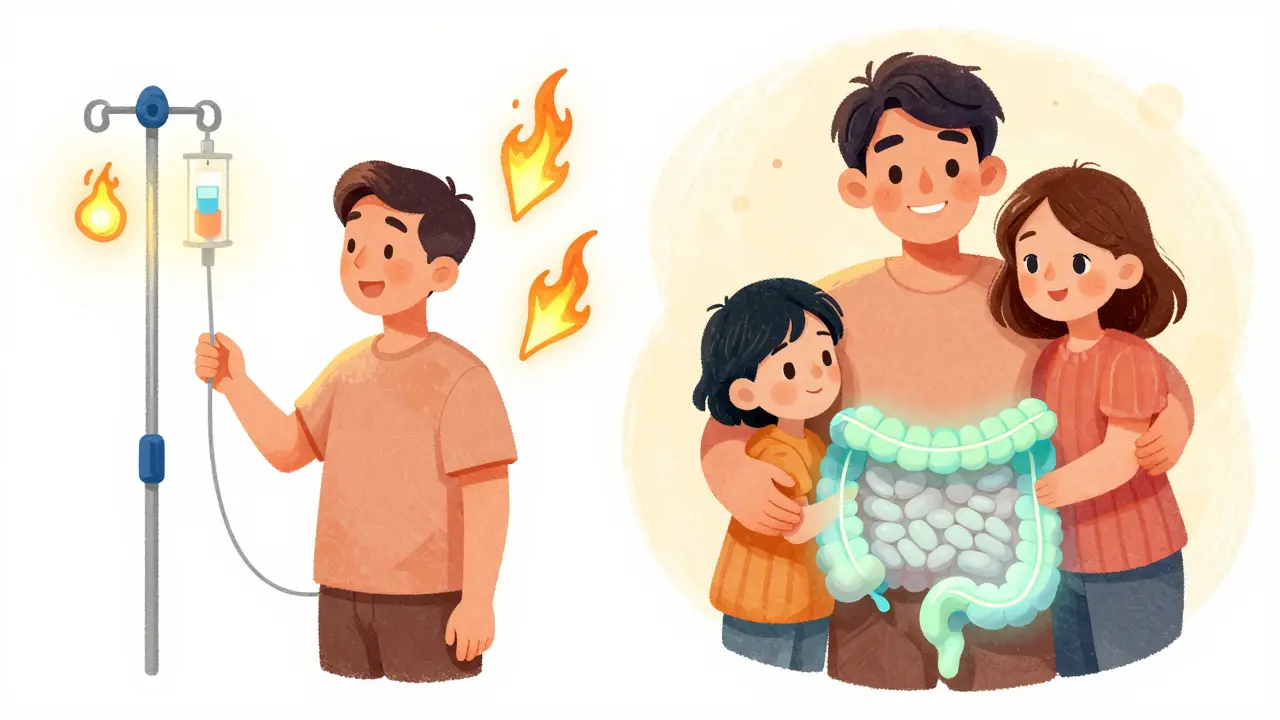
On Reddit’s r/Crohns_Disease forum, one user wrote: "Infliximab took me from 15 bowel movements a day to 2 after three infusions. I got my job back. I hugged my kids again." That’s the dream. But another wrote: "I developed a lupus-like reaction on Humira. I was hospitalized for months. It took six months of steroids to recover." That’s the nightmare. A 2023 survey of over 1,200 patients found 78% felt their quality of life improved on biologics. Most reported fewer hospital visits, less steroid use, and the ability to keep working. But 65% struggled with cost. One in four said they felt anxiety before infusions or injections. That’s not just physical-it’s emotional. Some clinics now offer counseling to help with "infusion anxiety."What Comes Next?
The future is bright. New drugs are on the horizon. Ozanimod, a pill that traps immune cells in lymph nodes, showed 37% remission in trials. Mirikizumab, which blocks just IL-23 (a more precise target than ustekinumab), achieved 40% endoscopic improvement. These could mean fewer injections, better results, and fewer side effects. Biosimilars are already changing the game. More people are getting access because prices are falling. And guidelines now push for earlier use-not as a last resort, but as a first step for high-risk patients. The goal isn’t just to reduce symptoms. It’s to stop the damage before it starts. To heal the gut lining. To prevent surgery. To let people live without fear.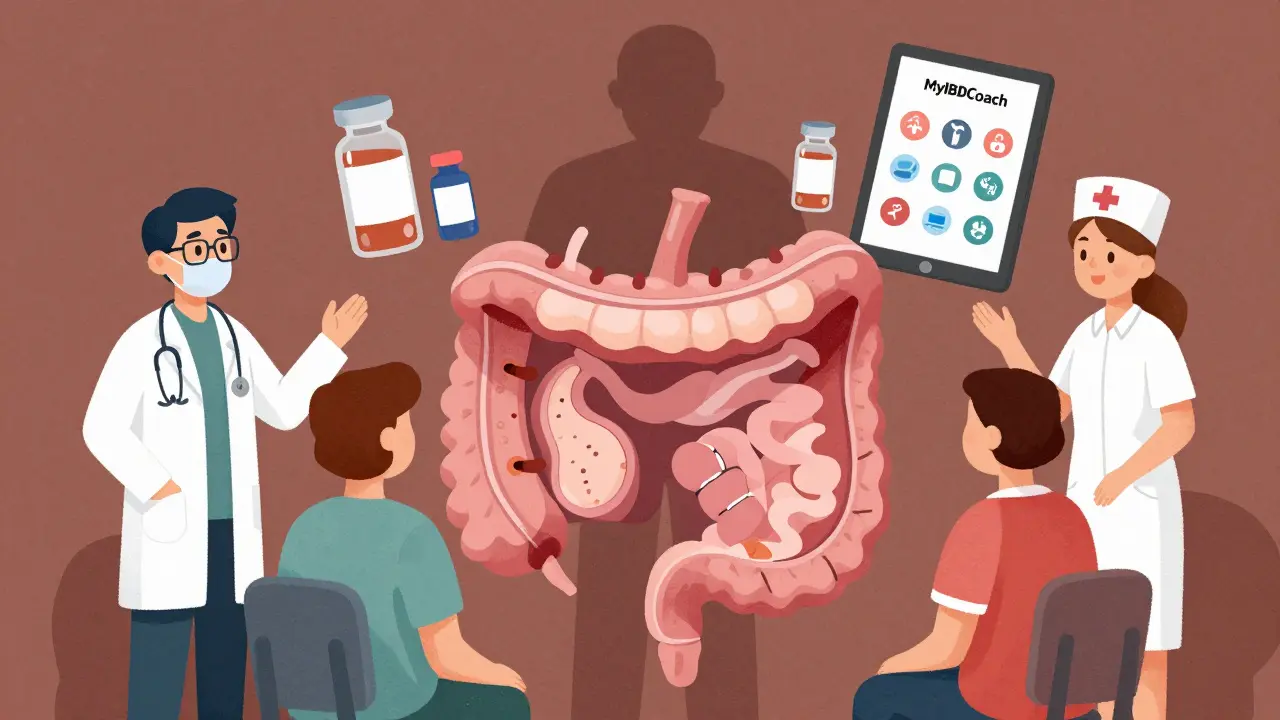
Practical Tips for Starting Biologic Therapy
If you’re starting biologics, here’s what helps:- Get organized: Use apps like MyIBDCoach to track symptoms, doses, and side effects. 45% of users say it helps them spot flare patterns early.
- Learn self-injection: If you’re on adalimumab or certolizumab, nurses will train you. Most people master it after two or three tries.
- Plan around work: Infusions take 2-4 hours. Schedule them on Fridays or days off. Many employers now accommodate medical appointments.
- Know your support: IBD nurse specialists are available at 92% of major centers. They’re your lifeline for questions, side effect management, and insurance help.
- Don’t skip screenings: TB and hepatitis tests aren’t red tape-they’re life-saving.
When Biologics Don’t Work
Sometimes, despite everything, biologics fail. That doesn’t mean you’re out of options. Doctors can switch to another class-like going from an anti-TNF to vedolizumab or ustekinumab. Some patients respond better to one than the other. Combination therapy (biologic + immunomodulator like azathioprine) can help if your body is breaking down the drug too fast. If all biologics fail, surgery may be needed. But even then, biologics can help afterward-reducing the chance of recurrence.Final Thoughts
Crohn’s disease is not a death sentence. It’s a long road, but it’s not walked alone. Biologic therapy isn’t magic, but it’s the most powerful tool we have. It doesn’t cure-but it can restore. It doesn’t erase the disease-but it can silence it long enough for you to live. The key? Start early. Monitor closely. Work with your team. And don’t let cost or fear stop you from asking for help. There are programs, support groups, and people who’ve been where you are-and made it through.Can biologic therapy cure Crohn’s disease?
No, biologic therapy cannot cure Crohn’s disease. It doesn’t remove the underlying genetic or immune triggers. But it can induce and maintain long-term remission, heal intestinal damage, prevent complications like strictures and fistulas, and significantly reduce the need for steroids and surgery. For many, it means living a near-normal life.
How long does it take for biologics to start working?
It varies by drug. Anti-TNF agents like infliximab and adalimumab often show improvement within 2 to 4 weeks. Vedolizumab takes longer-typically 10 to 14 weeks for noticeable results. Ustekinumab usually works by 8 weeks. Full benefit may take up to 3 months. Patience is key, but if there’s no sign of improvement by 12 weeks, your doctor may switch therapies.
Are biologics safe during pregnancy?
Yes, most biologics are considered safe during pregnancy. Infliximab and adalimumab cross the placenta in the third trimester, so doctors often stop them around week 30 to avoid exposing the baby to too much medication. Vedolizumab and ustekinumab are less likely to cross the placenta, making them preferred options for later pregnancy. Always consult your gastroenterologist and OB-GYN before planning pregnancy.
What are the biggest risks of biologic therapy?
The main risks are serious infections (like tuberculosis or sepsis), reactivation of hepatitis B, and a slightly increased risk of certain cancers (like lymphoma). Rarely, patients develop autoimmune reactions like lupus-like syndrome or nervous system disorders. Regular blood tests, TB screening, and hepatitis checks before and during treatment reduce these risks significantly.
Can I switch from one biologic to another if the first one stops working?
Absolutely. Many patients switch successfully. If you lose response to an anti-TNF drug, switching to vedolizumab or ustekinumab often works well because they target different pathways. Even switching to another anti-TNF can help in some cases. Your doctor will test for antibodies and adjust based on your history and disease behavior.
Do biologics cause weight gain or hair loss?
Biologics themselves don’t typically cause weight gain or hair loss. Weight gain is more often linked to steroid use before starting biologics. Hair loss is rare but can occur if you’re also on immunomodulators like methotrexate. If you notice unusual hair thinning or weight changes, talk to your doctor-it could signal another issue, like thyroid problems or nutritional deficiencies common in Crohn’s.
How often do I need to get infusions or injections?
It depends on the drug. Infliximab is given as an IV infusion every 8 weeks after an initial loading dose. Adalimumab is a self-injected subcutaneous shot every 2 weeks. Vedolizumab is an IV infusion every 8 weeks after starting with doses at weeks 0, 2, and 6. Ustekinumab is injected every 8 weeks after an initial dose. Your schedule will be personalized based on your response and drug levels.


josue robert figueroa salazar, December 27, 2025
Biologics are just fancy steroids with a price tag and a side of fear.
Joanne Smith, December 27, 2025
I’ve been on Humira for 3 years. Got my life back. Then got lupus-like rash. Now I’m on vedolizumab. Still alive. Still working. Still pissed at Big Pharma.
jesse chen, December 28, 2025
I just want to say... thank you... for writing this... with such clarity... and heart... I’ve been waiting for someone to explain this without jargon... and you did it...
carissa projo, December 29, 2025
You know what’s wild? The body doesn’t know the difference between a rogue bacterium and your own gut lining. It’s not malice-it’s a misfire. Biologics don’t fix the broken compass... they just mute the alarm. And sometimes... that’s enough to let you breathe again. You’re not broken. You’re just wired differently. And that’s not a flaw-it’s a quiet kind of strength.
Ryan Cheng, December 30, 2025
If you’re scared to start biologics, you’re not alone. I waited two years because I was terrified of infections. Then I got a fistula. Now I’m on infliximab. Got my job back. Hugged my niece for the first time in a year. The fear doesn’t vanish-but you learn to carry it. And that’s victory.
Michael Bond, December 30, 2025
Cost is the real disease here. I’m on a biosimilar now. Saved $12k a year. Still works. Still alive. Still fighting insurance.
Jody Kennedy, December 31, 2025
You’re not weak for needing help. You’re not broken for needing meds. You’re not a burden for asking for support. You’re a warrior. And warriors don’t fight alone. You’ve got a whole damn army behind you right now-don’t forget that.
Prasanthi Kontemukkala, December 31, 2025
In India, access is hard. But I found a patient group online. We share dosing tips, insurance hacks, even where to get free TB tests. You’re not alone. Even if you feel like it.
christian ebongue, January 1, 2026
So you mean to tell me we pay $70k for a drug that makes you not die... but also makes you scared to sneeze? Sounds like capitalism with a stethoscope.
Alex Ragen, January 2, 2026
Ah, yes... the noble pursuit of immunological precision... a modern-day alchemy... where the philosopher-king (the gastroenterologist) transmutes the base metal of suffering into the gold of remission... yet the cost... the cost is the true heresy of our age...
Sarah Holmes, January 2, 2026
I find it deeply concerning that this article romanticizes pharmaceutical intervention without sufficient ethical scrutiny. The commodification of immune modulation, the normalization of lifelong dependency on biologics-this is not healing. This is institutionalized chemical pacification disguised as progress.
Lori Anne Franklin, January 4, 2026
i started on stelara and thought i was gonna die from the first shot… but then i felt like a human again? like… i could eat pizza without crying? that’s worth every penny. also i spelled stelara wrong like 3 times but it worked lol
Bryan Woods, January 4, 2026
The data is compelling. The clinical outcomes are statistically significant. The patient-reported quality-of-life improvements are consistent across multiple longitudinal studies. It is a rational, evidence-based approach to chronic inflammatory disease management.
Matthew Ingersoll, January 5, 2026
In my family, we don’t talk about illness. But I brought this article to my dad. He read it. Sat silent for ten minutes. Then said, ‘You’re not alone.’ That was the first time he ever said it.