
Tramadol Seizure Risk Estimator
Patient Profile & Factors
Risk Assessment
Select factors above to calculate potential seizure risk.
Potential Interactions Detected:
- No specific interactions selected.
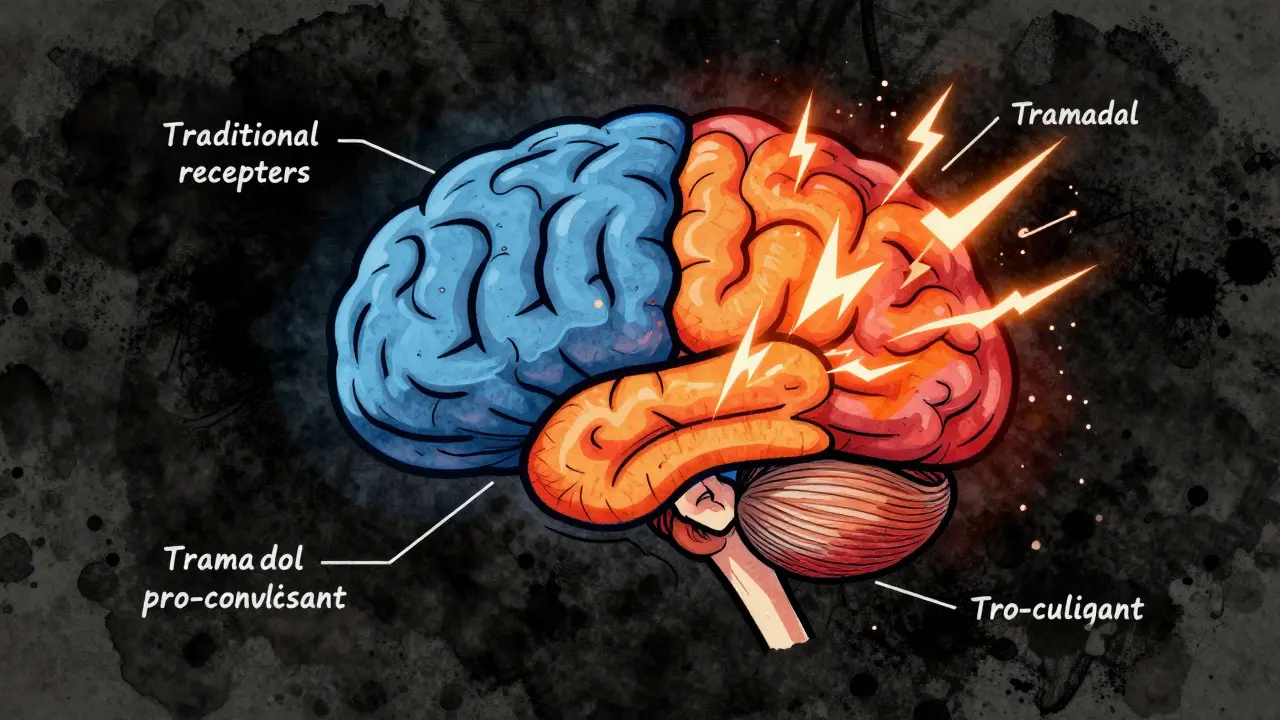
Tramadol is often prescribed as a "gentler" alternative to stronger opioids like morphine or oxycodone. Many patients assume that because it carries a lower risk of addiction, it is also safer in every other way. This assumption can be dangerous. Tramadol is a synthetic opioid analgesic that significantly lowers the seizure threshold, posing a serious risk for individuals with epilepsy or predisposing factors. Unlike traditional opioids, tramadol has a unique chemical profile that makes it pro-convulsant, meaning it actively encourages seizures rather than preventing them.
If you have a history of seizures, take certain antidepressants, or consume alcohol regularly, taking tramadol could trigger a tonic-clonic seizure even at standard therapeutic doses. Understanding this specific risk is not just about reading a warning label; it is about recognizing how your body processes this specific medication compared to others.
How Tramadol Works Differently from Other Opioids
To understand why tramadol causes seizures, you need to look at its dual mechanism of action. Most opioids work primarily by binding to mu-opioid receptors in the brain to block pain signals. Morphine, for example, typically has anticonvulsant properties at low doses, though it can become pro-convulsant at very high toxic levels.
Tramadol does something else entirely. In addition to weak mu-opioid activity, it inhibits the reuptake of serotonin and norepinephrine. This means it affects the same neurotransmitters targeted by many antidepressants. The (+) enantiomer of tramadol stimulates serotonin release, while the (-) enantiomer inhibits norepinephrine reuptake. This serotonergic and noradrenergic activity disrupts the balance of electrical activity in the brain, lowering the barrier for a seizure to occur. This unique pharmacological profile is why tramadol stands out among opioids as a significant seizure risk.
The Dose-Response Paradox: Safe at Low Doses?
You might wonder if sticking to the lowest possible dose eliminates the risk. The answer is complicated. Preclinical studies in rats show that tramadol actually has anti-convulsant effects at normal analgesic doses but becomes pro-convulsant at medium-to-high doses. However, human clinical data tells a different story for susceptible individuals.
Seizures have been documented both above and below the recommended maximum daily dose of 400mg. A case report published in PMC (2016) described a patient experiencing seizures at a normal therapeutic dose of 75mg per day. This proves that for people with a lowered seizure threshold due to genetics, prior brain injury, or concurrent medications, even small amounts of tramadol can be enough to trigger an event. The bioavailability of tramadol also increases with repeated dosing-from 68% after a single dose to 90-100% after multiple doses-due to the saturation of first-pass hepatic metabolism. This means the drug accumulates in your system more efficiently over time, potentially increasing seizure risk even if your individual pill count stays the same.
| Feature | Tramadol | Morphine/Oxycodone |
|---|---|---|
| Primary Mechanism | Mu-opioid agonist + Serotonin/Norepinephrine reuptake inhibitor | Mu-opioid agonist |
| Seizure Threshold Effect | Lowers threshold (Pro-convulsant) | Raises threshold at low doses (Anti-convulsant); lowers at toxic doses |
| Risk at Therapeutic Doses | High for susceptible individuals | Low |
| Interaction with Antidepressants | Significant risk of serotonin syndrome and seizures | Minimal direct interaction |
Dangerous Drug Interactions: The Polypharmacy Problem
The risk of seizures skyrockets when tramadol is mixed with other medications. A 3-year study examining 28 subjects with tramadol-associated seizures found that 57.1% were taking other drugs concurrently. The most dangerous combinations involve medications that also affect serotonin or lower the seizure threshold independently.
- Tricyclic Antidepressants (TCAs): Drugs like amitriptyline or nortriptyline are known to lower the seizure threshold. Combining them with tramadol creates a synergistic effect. The Medsafe New Zealand report documented three patients on TCAs who experienced seizures when added to tramadol, with two cases occurring specifically when the tramadol dose was increased.
- Selective Serotonin Reuptake Inhibitors (SSRIs): Since tramadol inhibits serotonin reuptake, adding an SSRI like fluoxetine or sertraline can lead to serotonin syndrome, a condition that includes seizures as a severe symptom.
- Antipsychotics: Certain antipsychotic medications can lower the seizure threshold. When combined with tramadol, the risk becomes additive.
- Pethidine and Cyclizine: Intravenous administration of tramadol following or with these drugs has been linked to seizure events in clinical reports.
If you are currently taking any psychiatric medication, you must disclose this to your prescriber before starting tramadol. The interaction is not always immediate; some patients had been stable on their antidepressants for years until the introduction of tramadol triggered their first seizure.
Who Is Most at Risk?
While anyone can experience a tramadol-induced seizure, certain demographic and medical profiles carry higher risks. Data from the 2013 study indicated that 92.8% of seizure cases occurred in males, with a mean age of 28.4 years. However, this does not mean females are safe; 7.2% of cases were female, and the absolute risk remains significant regardless of gender.
The highest risk groups include:
- Patients with pre-existing seizure disorders: Current guidelines from institutions like UCSF Pain Management Education explicitly contraindicate tramadol in patients with a history of epilepsy. The drug should not be used in these patients under any circumstances.
- Individuals with renal impairment: Kidney function is crucial for clearing tramadol and its metabolites. A Medsafe report highlighted a patient with renal failure who received 300mg IV and subsequently seized. Impaired kidneys allow the drug to accumulate to toxic levels faster.
- Young children: Tramadol is contraindicated in children younger than 12 years due to unpredictable metabolism and higher sensitivity to adverse effects.
- Alcohol and illicit drug users: Co-ingestion of alcohol significantly increases the risk. Alcohol itself lowers the seizure threshold, and combining it with tramadol creates a volatile neurochemical environment.
What Happens During a Tramadol-Induced Seizure?
Understanding the clinical presentation helps in early recognition. Tramadol-induced seizures are typically generalized tonic-clonic seizures. They are often short and self-limiting, similar to other drug-related seizures. However, the onset can be rapid.
In the 2013 study, 89.3% of seizures occurred within the first 24 hours of tramadol intake. Electroencephalogram (EEG) findings revealed abnormalities in 42.9% of cases during this initial 24-hour period. The good news is that these neurological effects are usually transient. Only 3.6% of patients showed abnormalities in follow-up EEGs one week later, and structural brain changes (like white matter lesions) were rare, appearing in only 3.6% of neuroimaging cases. This suggests that while the acute event is frightening and dangerous, it rarely causes permanent structural brain damage if treated promptly.
Safer Alternatives and Clinical Guidelines
If you have a seizure disorder or are at high risk, there are safer alternatives for pain management. Non-opioid options such as acetaminophen, NSAIDs (like ibuprofen or naproxen), or topical agents may be appropriate depending on the type of pain. For moderate to severe pain requiring opioids, doctors may consider medications with a lower seizure risk profile, such as hydromorphone or fentanyl, though all opioids carry risks and require careful monitoring.
It is critical to advocate for yourself during medical appointments. If you have a history of seizures, head trauma, or are taking antidepressants, ask your doctor: "Is tramadol safe given my specific medical history?" Do not accept a prescription without discussing this specific interaction. The reclassification of tramadol to a Schedule IV controlled substance in 2014 reflected growing recognition of its risks, including its potential for abuse and adverse neurological events.
Can tramadol cause seizures if I have never had one before?
Yes. While the risk is highest in those with pre-existing seizure disorders, tramadol can induce seizures in individuals without a prior history, especially if they are taking interacting medications like antidepressants, consuming alcohol, or have underlying metabolic issues like renal impairment. The drug lowers the seizure threshold, which can unmask latent susceptibility.
How long after taking tramadol do seizures usually occur?
Most tramadol-induced seizures occur within the first 24 hours of intake. Studies show that approximately 89% of cases happen during this window. The risk is highest shortly after ingestion or dose increases, particularly if the drug is accumulating in the system due to repeated dosing or impaired kidney function.
Is it safe to take tramadol with SSRIs like Zoloft or Prozac?
Combining tramadol with SSRIs (Selective Serotonin Reuptake Inhibitors) is risky. Both drugs increase serotonin levels in the brain. This combination can lead to serotonin syndrome, a potentially life-threatening condition that includes symptoms like agitation, confusion, rapid heart rate, and seizures. Doctors generally avoid prescribing tramadol to patients on SSRIs unless no other options exist and close monitoring is possible.
Does tramadol damage the brain permanently?
In most cases, no. Research indicates that tramadol-induced seizures are typically transient. Follow-up EEGs and neuroimaging studies show that abnormalities usually resolve within a week, and structural brain lesions are rare (occurring in less than 5% of cases). However, the physical trauma from falling during a seizure can cause injury, so prevention is key.
What should I do if I suspect a tramadol-induced seizure?
If someone experiences a seizure after taking tramadol, seek emergency medical attention immediately. Keep the person safe by moving objects away from them and placing them on their side to prevent choking. Do not put anything in their mouth. Medical professionals will monitor vital signs, administer benzodiazepines if necessary to stop the seizure, and evaluate for other complications like serotonin syndrome or overdose.