

SSRI/SNRI Withdrawal Timeline Estimator
Key Estimates
...
Expected Symptom Duration Guide
Based on your duration of use:
*Note: Individual experiences vary significantly. Consult your doctor.
Stopping antidepressants isn't as simple as just putting the pills away. For many people, ending treatment with selective serotonin reuptake inhibitors (SSRIs) or serotonin-norepinephrine reuptake inhibitors (SNRIs) triggers a wave of physical and emotional symptoms known as Antidepressant Discontinuation Syndrome, often referred to simply as withdrawal. If you’ve been prescribed these medications for anxiety or depression, understanding what happens when you stop is crucial. It’s not just about willpower; it’s about biology, timing, and how your body has adapted to the medication.
The goal here is clear: get off the medication if that’s your choice, but do it without suffering through unnecessary pain or mistaking withdrawal for a relapse of your original condition. This guide breaks down exactly what to expect, why timelines vary so wildly between different drugs, and how to create a tapering plan that actually works for your body.
Why Your Body Reacts When You Stop
To understand the timeline, you first need to understand the mechanism. SSRIs and SNRIs work by keeping more neurotransmitters-specifically serotonin and sometimes norepinephrine-available in your brain. Over time, your brain adapts to this chemical environment. It might reduce the number of receptors or change how sensitive those receptors are. This process is called neuroadaptation.
When you suddenly remove the drug, your brain is left in a state of imbalance. It hasn’t had time to readjust to the lower levels of neurotransmitter activity. This sudden shift causes Discontinuation Symptoms. These aren’t signs that you’re "addicted" in the traditional sense, nor do they necessarily mean your depression is back. They are physiological reactions to the absence of the drug. Studies suggest that anywhere from 20% to 80% of patients experience some form of these symptoms, depending on the specific medication and how long they’ve taken it.
The Critical Role of Half-Life
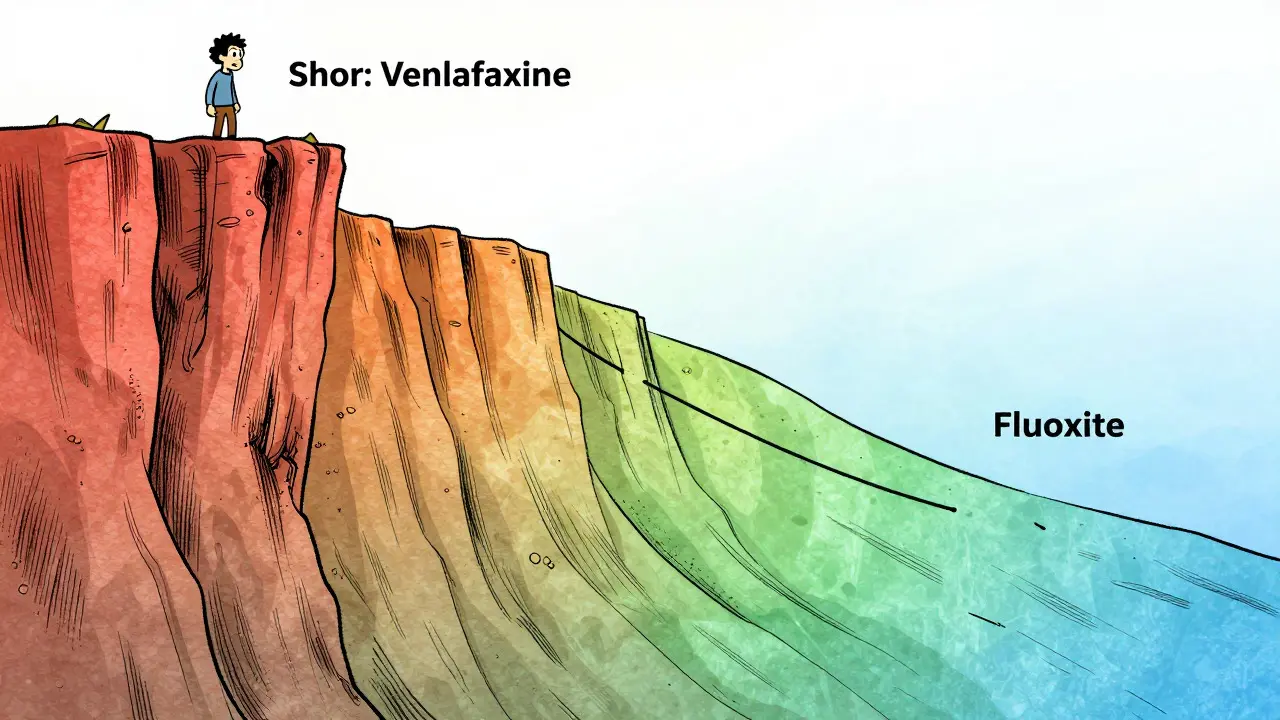
The single biggest factor determining your discontinuation timeline is the medication’s Half-Life. This is the time it takes for half of the drug to leave your system. The shorter the half-life, the faster the drug clears out, and the sooner-and often more severely-you’ll feel the effects.
| Medication | Type | Half-Life | Typical Symptom Onset |
|---|---|---|---|
| Venlafaxine (Effexor) | SNRI | 5 hours | Within 24-48 hours |
| Paroxetine (Paxil) | SSRI | 24 hours | 1-3 days |
| Sertraline (Zoloft) | SSRI | 26 hours | 1-3 days |
| Duloxetine (Cymbalta) | SNRI | 12 hours | 1-3 days |
| Escitalopram (Lexapro) | SSRI | 27-32 hours | 3-5 days |
| Fluoxetine (Prozac) | SSRI | 4-6 days | Weeks (delayed onset) |
Notice the difference? Venlafaxine leaves your body incredibly fast. Patients often report feeling symptoms within a day or two of missing a dose. Fluoxetine, on the other hand, stays in your system for weeks. This acts as a natural buffer, meaning withdrawal symptoms are much less common and appear much later. If you are taking a short-half-life drug like venlafaxine or paroxetine, your tapering schedule needs to be significantly slower than someone on fluoxetine.
Common Symptoms: What to Expect
Knowing what’s coming can help you distinguish between withdrawal and a mental health relapse. Withdrawal symptoms typically peak within the first week after a dose reduction and then gradually fade. Common experiences include:
- Brain Zaps: A sensation of electric shocks in the head. This is highly specific to SSRI/SNRI withdrawal and rarely occurs in untreated depression.
- Dizziness and Vertigo: Feeling unsteady or lightheaded, especially when standing up.
- Gastrointestinal Issues: Nausea, vomiting, or diarrhea.
- Sensory Disturbances: Tingling sensations or heightened sensitivity to light and sound.
- Mood Changes: Irritability, anxiety, or low mood. However, unlike depressive relapse, these mood shifts usually come with the physical symptoms listed above.
- Sleep Problems: Vivid dreams, nightmares, or insomnia.
If you experience suicidal thoughts, severe agitation, or confusion, seek medical attention immediately. While rare, these can be serious complications during discontinuation.
Tapering Strategies: Slow and Steady Wins
The old advice was often to taper over 2-4 weeks. Modern clinical understanding suggests this is too fast for many people. The current gold standard is Hyperbolic Tapering. This approach recognizes that your brain reacts more strongly to percentage changes in serotonin transporter occupancy at lower doses.
Here’s how it works in practice:
- Start with Larger Reductions: When you are on a high dose, reducing by 10-20% might feel manageable.
- Slow Down as You Go Lower: As you reach lower doses, each pill represents a larger percentage of your total intake. Reducing from 10mg to 5mg is a 50% drop. This is where most people hit a wall.
- The 10% Rule: Aim to reduce your dose by no more than 10% every 4-8 weeks. If you feel significant symptoms, pause. Wait until they stabilize before making the next cut.
- Micro-Tapering: For the final stages, standard tablets aren’t precise enough. Many patients use liquid formulations or compound pharmacies to make reductions of 1-2%. This can take months but significantly reduces suffering.
Don’t be afraid to go slow. A taper that takes 6-12 months is not a failure; it’s a successful strategy to minimize trauma to your nervous system. Some patients, particularly those on short-half-life SNRIs, may benefit from switching to fluoxetine temporarily because its long half-life provides a smoother exit ramp.

Withdrawal vs. Relapse: How to Tell the Difference
This is the hardest part for many patients. If you feel depressed again, is it because you’re sick, or because you’re withdrawing? Here are key distinctions:
- Timing: Withdrawal symptoms start quickly (days) after a dose change. Relapse tends to develop more slowly over weeks or months.
- Physical Symptoms: Withdrawal almost always includes physical symptoms like dizziness, nausea, or brain zaps. Pure depression or anxiety relapse typically does not cause these physical neurological glitches.
- Response to Dose Increase: If you increase your dose slightly and the physical symptoms vanish within 24-48 hours, it was likely withdrawal. If the mood issues persist despite stabilizing the physical side, it may be a relapse.
Keep a symptom journal. Track your mood, sleep, and any physical sensations daily. This data is invaluable for you and your doctor when deciding whether to hold steady, taper slower, or restart treatment.
Practical Tips for a Smoother Exit
Preparation makes a huge difference. Here are actionable steps to support your body during this transition:
- Stabilize First: Don’t start tapering if your life is currently chaotic. Wait for a period of relative stability.
- Communicate with Your Provider: Not all doctors are updated on modern tapering protocols. Bring this information to them. Ask specifically about hyperbolic tapering or micro-dosing options.
- Support Your Nervous System: Prioritize sleep hygiene, gentle exercise like walking or yoga, and stress-reduction techniques. Avoid alcohol and caffeine, which can exacerbate anxiety and sleep issues.
- Consider Omega-3s: Some emerging evidence suggests omega-3 fatty acids may support neuronal membrane health during withdrawal, though you should discuss supplements with your doctor first.
- Have a Support Network: Tell friends or family what you’re going through. Having someone who understands that your irritability might be chemical, not personal, can ease social friction.
How long does SSRI withdrawal last?
For most people, acute withdrawal symptoms resolve within 1-3 weeks after a dose reduction. However, about 10-20% of patients experience protracted withdrawal symptoms that can last for several months. The duration depends heavily on the medication's half-life and the speed of the taper. Shorter tapers generally lead to longer recovery periods.
Can I switch from an SSRI to an SNRI to stop easier?
Sometimes, yes. Doctors may cross-taper you from a short-half-life drug like paroxetine or venlafaxine to fluoxetine (an SSRI with a very long half-life). Fluoxetine’s long presence in the body can smooth out the withdrawal process. From there, you can taper off fluoxetine more gradually. This is a clinical decision that requires careful monitoring to avoid serotonin syndrome.
What are "brain zaps" and are they dangerous?
Brain zaps are a common, albeit unsettling, symptom of SSRI/SNRI withdrawal. They feel like brief electric shocks in the head, often triggered by eye movement. While they can be distracting and uncomfortable, they are not physically dangerous and do not indicate brain damage. They usually subside as your brain adjusts to the lower medication levels.
Is it better to quit cold turkey or taper slowly?
Tapering slowly is almost always better. Quitting cold turkey shocks your nervous system and significantly increases the risk of severe withdrawal symptoms, including prolonged psychological distress. Even for medications with long half-lives like fluoxetine, a gradual reduction is recommended to minimize discomfort and improve the chances of successful discontinuation.
Will my depression come back after stopping?
There is a risk of relapse, especially if the underlying condition hasn’t fully resolved or if life stressors are high. However, many people successfully discontinue medication and maintain their mental health through therapy, lifestyle changes, and coping strategies. Working with a therapist during the tapering process can provide tools to manage emotions without relying solely on medication.