
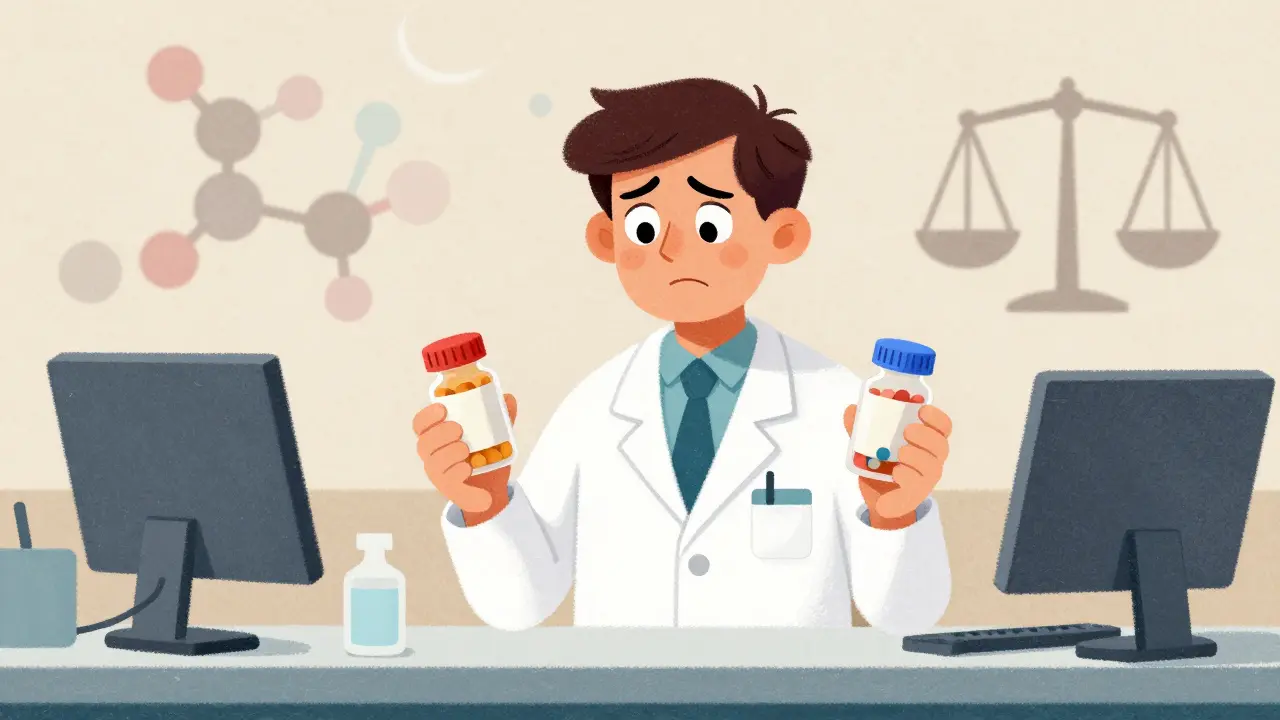
Imagine a medication where the difference between healing and harming is measured in milligrams. That is the reality for patients taking Narrow Therapeutic Index (NTI) drugs, medications with such a tight safety margin that tiny changes in dose or blood concentration can lead to serious failure or toxicity. For pharmacists, these drugs represent a unique challenge, especially when it comes to substituting brand-name versions with generic alternatives. While generics save money and improve access, NTI generics demand extra caution because small variations in bioavailability-the amount of drug that actually reaches your bloodstream-can have major clinical consequences.
The debate isn't new, but it has intensified. Since the Hatch-Waxman Act of 1984 established the modern pathway for generic approval, pharmacists have voiced concerns about switching NTI drugs. The conversation gained urgency after the FDA released its 2014 guidance on bioequivalence recommendations for specific products. Today, as we move through 2026, those concerns remain loud and clear. According to a 2024 survey by the American Society of Health-System Pharmacists (ASHP), 68% of pharmacists report active worries about NTI generic substitution. This isn't just theoretical anxiety; it's grounded in real-world experiences with patient outcomes.
What Makes NTI Drugs Different?
To understand why pharmacists are cautious, you need to understand what makes an NTI drug special. Most medications have a wide therapeutic window. If you take slightly more or less than prescribed, your body adjusts without major issues. But with NTI drugs, that buffer doesn't exist. The FDA defines these drugs as requiring therapeutic drug monitoring because small changes in dose or blood concentration may lead to serious therapeutic failures or adverse drug reactions.
Common examples include warfarin, levothyroxine, phenytoin, carbamazepine, and cyclosporine. Warfarin, a blood thinner, is perhaps the most well-known. A slight increase in its effectiveness can cause dangerous bleeding, while a slight decrease can allow clots to form. Levothyroxine, used for thyroid conditions, similarly requires precise dosing to maintain hormonal balance. These aren't minor inconveniences; they are life-altering risks.
The core issue lies in bioequivalence. For standard generics, the FDA accepts a range of 80-125% compared to the reference brand product. This means a generic could deliver significantly less or more drug than the original, yet still be considered equivalent. However, for certain NTI drugs, the FDA recommends a much narrower range of 90-111%. Even this tighter standard leaves room for variation that some clinicians argue is too risky for consistent patient care.
The Bioequivalence Debate: Standards vs. Reality
The technical specifications for NTI generics are stricter, but are they strict enough? The University of Minnesota's Center for Infectious Disease Research and Policy reported in 2024 that 42 drugs currently have recommended narrower bioequivalence ranges. Of those, 15 have actual therapeutic consequences if substitution occurs outside these ranges. This gap between recommendation and enforcement is a key source of tension.
Consider warfarin again. A comparative study from the University of Florida College of Pharmacy found that 34% of pharmacists would not automatically substitute warfarin generics, compared to only 8% for non-NTI drugs. Why the hesitation? Because a 10% difference in bioavailability, which might be acceptable statistically, can be clinically significant for an individual patient. The American Society of Consultant Pharmacists emphasized this point in their 2024 position paper, noting that such differences can lead to therapeutic failure or toxicity.
Furthermore, the complexity increases when multiple manufacturers produce the same NTI drug. The FDA reported in 2024 that 23% of NTI drug shortages were exacerbated by inconsistent switching between different generic manufacturers. When a pharmacy runs out of one manufacturer's version and switches to another, even if both meet bioequivalence standards, the subtle differences can disrupt a patient's stable condition. This creates a cycle of instability that pharmacists must manage.
| Feature | Standard Generics | NTI Generics |
|---|---|---|
| Bioequivalence Range | 80-125% | 90-111% (for select drugs) |
| Clinical Risk of Variation | Low | High (toxicity or failure) |
| Monitoring Required | Routine | Therapeutic Drug Monitoring |
| Substitution Anxiety | Low (8% of pharmacists) | High (34-68% depending on drug) |
| Adverse Events (2020-2024) | 382 reported | 1,247 reported |
Supply Chain Vulnerabilities and Shortages
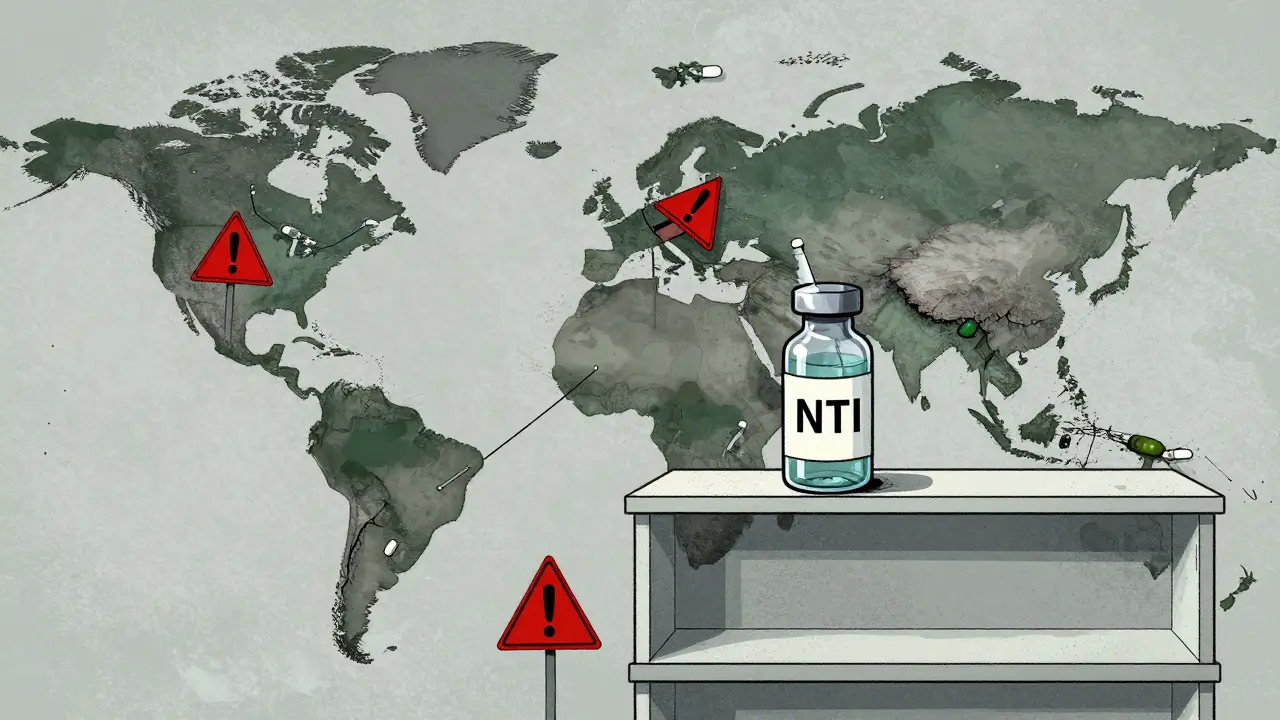
It’s not just about efficacy; it’s about availability. NTI drugs account for a disproportionate share of drug shortages. As of Q1 2025, NTI drugs represented 17% of the 270 active shortages listed in the ASHP Drug Shortage Report, despite making up only 6% of generic prescriptions. This imbalance creates severe operational challenges for pharmacies.
The root of the problem often lies in manufacturing concentration. Stephen W. Schondelmeyer's 2024 Resilient Drug Supply Project highlighted that while 32 of the top 100 brand-name drugs are finished in the U.S., only 12 of these are NTI drugs. The University of Minnesota reported in June 2025 that 80% of generics are finished in foreign countries, with even higher percentages for NTI drugs. This global reliance creates fragility. When a single manufacturer faces regulatory issues or production delays, there are few alternatives.
This scarcity fuels the substitution problem. When the preferred generic is unavailable, pharmacists must switch to whatever is on the shelf. Dr. Michael Ganio, ASHP's Senior Director of Pharmacy Practice and Quality, noted in a 2025 interview that 45% of pharmacists report challenges maintaining consistent NTI drug sources due to supply chain disruptions. The result is a patchwork of brands and manufacturers that patients cycle through, increasing the risk of adverse events.
The Human Element: Pharmacist Perspectives
Behind the statistics are individual stories shared by pharmacists who deal with these issues daily. On the Pharmacy Times Community Forum, a hospital pharmacist with 15 years of experience shared in March 2025: "I've seen multiple cases where switching warfarin generics led to INR fluctuations requiring hospital admission." This sentiment echoes across professional communities. Reddit's r/pharmacy community saw 147 posts specifically about NTI drug concerns in 2024 alone, with top threads discussing phenytoin level instability after generic substitution.
These aren't isolated incidents. The FDA Adverse Event Reporting System (FAERS) recorded 1,247 adverse events linked to NTI generic substitutions between 2020 and 2024, compared to 382 for non-NTI generics. Hospital pharmacists report that 42% have encountered at least one adverse event related to NTI generic switching in the past year. This data validates the intuition of practitioners who feel the current system is flawed.
Yet, there is also recognition of the benefits. Cost savings are real. Generic versions cost 80-85% less than brand-name equivalents. One independent pharmacy owner reported a 35% reduction in patient abandonment for NTI drugs when affordable generics were available. The dilemma is balancing accessibility with safety. Patients need these drugs, but they need them to work consistently.
Regulatory Landscape and State Laws
The regulatory environment adds another layer of complexity. State laws regarding generic substitution vary widely, creating a confusing patchwork for pharmacists operating across borders or serving mobile populations. As of January 2025, only 28 states had specific NTI drug substitution restrictions, according to the National Conference of State Legislatures. Among these, 22 states require prescriber notification before NTI substitution, and 6 states prohibit automatic substitution entirely.
This inconsistency forces pharmacists to navigate different rules depending on location. The American Pharmacists Association's 2024 Member Experience Survey found that 61% of pharmacists would prefer state laws requiring prescriber notification before NTI generic substitution, compared to 29% for non-NTI drugs. They want a say in the decision, recognizing their role as medication experts.
Federal efforts are evolving. In April 2025, the FDA announced a new bioequivalence framework for critical dose drugs, expected to implement stricter standards for 12 high-priority NTI drugs by 2026. This move has been met with cautious optimism. However, critics like Lisa Schwartz, PharmD, from the National Community Pharmacists Association (NCPA), argue that current standards remain insufficient for true therapeutic equivalence. She warned in May 2025 that reimbursement delays under the Medicare Drug Price Negotiation Program (MDPNP) could further destabilize NTI drug availability in community pharmacies.

Best Practices for Managing NTI Generics
Given the constraints, how should pharmacists manage NTI drugs? The University of California, San Francisco's 2024 Pharmacy Practice Guidelines recommend a structured approach. First, maintain a single source for NTI medications whenever possible. The ASHP's 2025 Toolkit suggests that 63% of hospital systems now implement this practice to minimize variability.
Second, engage in proactive communication. Notify prescribers of any necessary switches. Third, monitor patients closely. Therapeutic drug monitoring is essential for drugs like phenytoin and cyclosporine. Finally, educate patients. Let them know why consistency matters and encourage them to report any changes in symptoms.
Training is also critical. An ACCP study found that 78% of hospital pharmacists require additional training beyond standard pharmacy education to manage NTI drugs effectively. In response, 81% of pharmacy residency programs now incorporate specialized NTI drug management training, according to ASHP's 2024 Education Report. This shift reflects a growing recognition that NTI stewardship is a distinct skill set.
Looking Ahead: The Future of NTI Stewardship
The future points toward greater pharmacist involvement. The AMCP's 2025 Emerging Trends Report indicates that 74% of healthcare systems plan to implement pharmacist-led NTI drug stewardship programs by 2027. This model empowers pharmacists to make real-time decisions based on patient-specific factors rather than relying solely on automated substitution protocols.
However, uncertainty remains. A recent ACCP survey found that 62% of pharmacists express concerns about whether current bioequivalence standards adequately protect patients, while 38% believe the system works with proper monitoring and communication. Bridging this divide will require continued dialogue between regulators, manufacturers, and healthcare providers.
For now, the message is clear: NTI generics are not just cheaper versions of brand drugs. They are complex therapeutic tools that demand respect, vigilance, and expertise. By acknowledging the risks and implementing robust management strategies, pharmacists can ensure that patients receive the safe, effective care they deserve.
What are NTI drugs?
NTI stands for Narrow Therapeutic Index. These are drugs where the difference between a therapeutic dose and a toxic dose is very small. Examples include warfarin, levothyroxine, and phenytoin. Small changes in blood concentration can lead to serious adverse effects or treatment failure.
Why are pharmacists concerned about NTI generics?
Pharmacists are concerned because small variations in bioavailability among different generic manufacturers can affect patient outcomes. Unlike standard drugs, NTI drugs require precise dosing. Switching between generics can cause fluctuations in drug levels, leading to toxicity or therapeutic failure.
How do bioequivalence standards differ for NTI drugs?
Standard generics must fall within an 80-125% bioequivalence range of the brand name. For many NTI drugs, the FDA recommends a narrower range of 90-111%. However, even this tighter range allows for variations that some clinicians consider clinically significant.
Do all states regulate NTI generic substitution differently?
Yes. As of early 2025, regulations vary significantly. Some states require prescriber notification before substitution, while others prohibit automatic substitution entirely. Only 28 states have specific NTI drug substitution restrictions, creating a complex legal landscape for pharmacists.
What can patients do to stay safe with NTI generics?
Patients should inform their pharmacist if they are taking NTI drugs and ask about the manufacturer. They should report any unusual symptoms immediately. Consistent monitoring by their healthcare provider is crucial. Patients should also avoid self-switching between brands or generics without professional advice.
Are NTI drug shortages common?
Yes, disproportionately so. NTI drugs account for about 17% of active drug shortages despite representing only 6% of generic prescriptions. This is largely due to limited manufacturing sources and complex supply chains, often concentrated in foreign countries.