
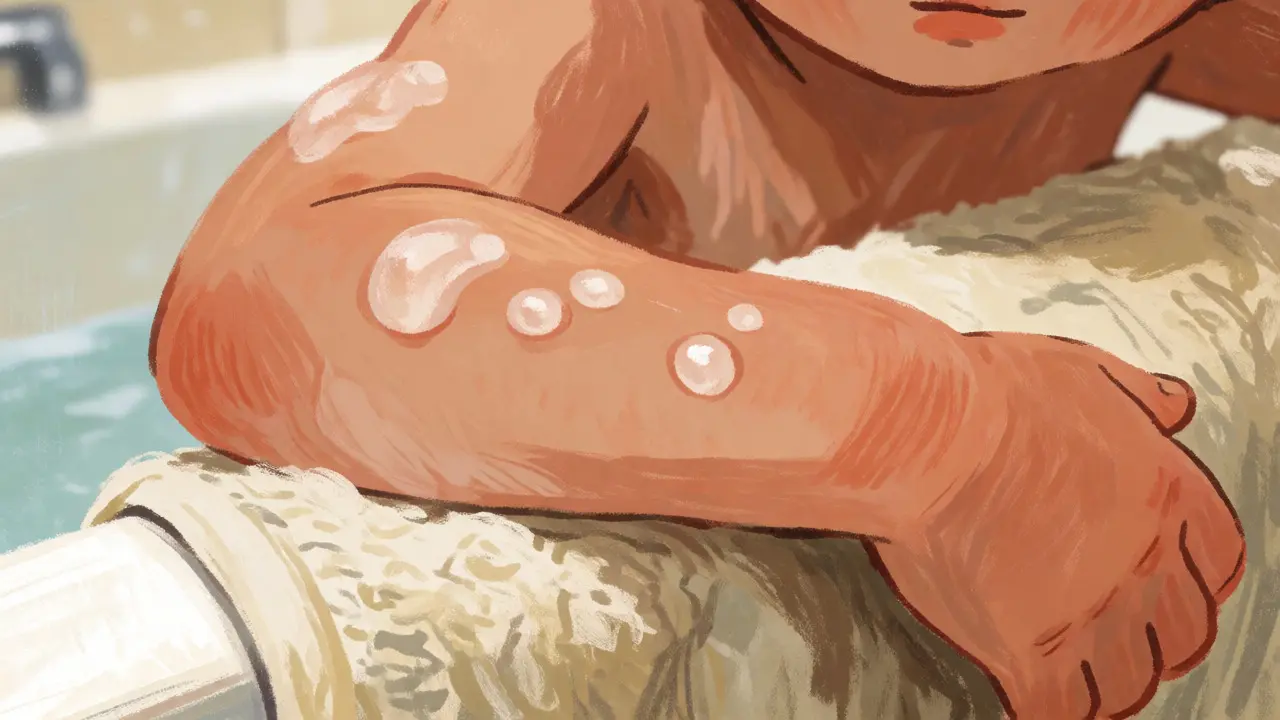
You’re changing your child’s clothes after a bath and spot it: a small, shiny bump on their arm. It looks like a pimple, but there’s no whitehead, just a tiny dimple in the center. You might panic, thinking it’s something serious or contagious that requires immediate action. But here is the reality: Molluscum contagiosum is incredibly common, usually harmless, and often clears up on its own without any medical intervention. Caused by a member of the Poxviridae family, this viral skin infection affects millions of people worldwide, particularly children aged 1 to 10 years. While it can be annoying and sometimes embarrassing, understanding how it spreads and when (or if) to treat it saves you stress, money, and unnecessary pain for your little one.
What Exactly Is Molluscum Contagiosum?
Think of Molluscum contagiosum as a superficial viral infection that infects the top layer of your skin. It doesn’t enter the bloodstream or affect internal organs. The culprit is the Molluscum contagiosum virus (MCV), which belongs to the poxvirus group. Unlike chickenpox, which causes widespread fever and blisters, molluscum stays local. The virus creates small, raised bumps called papules. These aren’t warts, though they look similar at first glance. Warts are rough and caused by HPV; molluscum bumps are smooth, firm, and have a distinctive central dip known as umbilication.
The incubation period-the time between catching the virus and seeing the first bump-is tricky. It ranges from two to six weeks. This means if your child caught it at summer camp in July, you might not see the lesions until August. Because of this delay, pinpointing exactly where someone got infected is nearly impossible. The virus thrives in warm, humid environments and spreads easily through direct skin-to-skin contact or shared items like towels and clothing.
Spotting the Signs: What Do the Bumps Look Like?
If you suspect molluscum, look for specific characteristics. The lesions are typically dome-shaped and range from 2 to 6 millimeters in diameter-about the size of a pencil eraser. In adults with weakened immune systems, such as those with HIV, these bumps can grow larger, sometimes exceeding 30 millimeters, a condition known as giant molluscum.
The color varies. They might appear pink, white, or skin-colored, often with a pearly sheen under bright light. The key identifier is the central umbilication, a small pit or dot in the middle of the bump. If you squeeze a lesion (which you shouldn’t do yourself, as it releases infectious fluid), a white, waxy core comes out. This core contains millions of viral particles, making it highly contagious.
- Shape: Dome-shaped with a central dip.
- Size: Usually 2-6mm; larger in immunocompromised patients.
- Color: Pink, white, or flesh-toned with a pearlescent glow.
- Sensation: Generally painless, though they can itch, especially if the skin around them becomes irritated.
Itching is a major issue. Scratching breaks the skin barrier, spreading the virus to other parts of the body (autoinoculation) or introducing bacteria that cause secondary infections. Studies show that children with eczema are significantly more prone to developing molluscum and experiencing intense itching, creating a vicious cycle of scratch-and-spread.
How Does It Spread? Transmission Risks
Transmission is straightforward: contact. Direct skin-to-skin contact is the primary route. For children, this happens during play, wrestling, or sharing beds. For sexually active adults, genital molluscum is considered a sexually transmitted infection (STI). However, it’s not always sexual; adults can catch it from non-sexual contact or fomites-objects that carry the virus.
Fomites include towels, washcloths, razors, and clothing. If an infected person uses a towel and another person uses it shortly after without washing, transmission is possible. Swimming pools are also a risk factor, though less so than direct contact. The chlorine kills some of the virus, but wet skin is more permeable, and close quarters in locker rooms increase contact risks. Interestingly, household spread rates are high; studies indicate a 60-70% transmission rate among household contacts of infected children.
| Feature | Molluscum Contagiosum | Viral Warts (HPV) | Impetigo (Bacterial) |
|---|---|---|---|
| Cause | Poxvirus (MCV) | Human Papillomavirus | Staphylococcus/Streptococcus bacteria |
| Appearance | Smooth, dome-shaped, central dip | Rough, cauliflower-like surface | Honey-colored crusts, blisters |
| Treatment Need | Often self-resolving | Usually treated for removal | Requires antibiotics |
| Contagiousness | High via contact/fomites | Moderate via contact | Very high via contact |

To Treat or Not to Treat? Management Strategies
This is the biggest debate in dermatology. For healthy children, the American Academy of Dermatology (AAD) recommends "watchful waiting." Why? Because molluscum is self-limiting. Most cases resolve spontaneously within 6 to 24 months. Aggressive treatments like cryotherapy (freezing) or curettage (scraping) can be painful, leave scars, and require multiple visits. A longitudinal study by the University of California San Francisco found that 92% of cases resolved within 18 months without any intervention.
However, "doing nothing" isn't always right. You might choose treatment if:
- Lesions are on the face and causing psychological distress or bullying.
- The patient is immunocompromised, leading to persistent or widespread disease.
- Lesions are in sensitive areas like the genitals.
- There is significant cosmetic concern for the parents or patient.
If you opt for treatment, options vary in invasiveness. Topical agents like cantharidin (a blistering agent derived from beetles) are popular in clinics because they are painless upon application. Potassium hydroxide (KOH) creams are another option, applied at home daily until the lesion inflames and falls off. Cryotherapy uses liquid nitrogen to freeze the bump. While effective, it stings and carries a higher risk of hypopigmentation (lighter skin patches), especially in darker skin tones.
Preventing the Spread: Practical Tips for Families
Since you can’t control the incubation period, prevention focuses on limiting exposure once an infection is identified. Hygiene is your best defense. Do not share towels, washcloths, or razors. Wash bedding and clothes in hot water regularly. If your child has eczema, keep their skin moisturized to reduce itching and scratching.
School and swimming policies have evolved. The CDC updated guidelines in 2023 stating that children should not be excluded from school or swimming solely due to molluscum. Covering lesions with waterproof bandages before swimming helps prevent spread in pools. At home, encourage handwashing. Teach kids not to pick at the bumps. If they do, wash their hands immediately to stop autoinoculation.
Special Considerations for Adults and Immunocompromised Patients
In adults, molluscum is often associated with sexual activity. Genital lesions should be evaluated by a healthcare provider to rule out other STIs. Safe sex practices, including condom use, reduce but do not eliminate the risk, as the virus can exist on skin not covered by a condom.
For individuals with compromised immune systems, such as those with advanced HIV or undergoing chemotherapy, molluscum behaves differently. Lesions can become numerous, large, and resistant to standard treatments. In these cases, treating the underlying immune deficiency is crucial. Antiretroviral therapy for HIV patients often leads to the resolution of molluscum as immune function improves. Ignoring it in immunocompromised patients can lead to progressive disease requiring specialized care.
When to See a Doctor
Most cases don’t need urgent care, but consult a professional if:
- The diagnosis is unclear (it could be a wart, mole, or cyst).
- Signs of bacterial infection appear: increased redness, warmth, pus, or fever.
- Lesions are near the eyes, potentially causing conjunctivitis.
- The patient is immunocompromised.
- Home hygiene measures fail to stop the spread over several months.
Remember, accurate diagnosis matters. Dermatologists can use dermoscopy-a special magnifying tool-to confirm the presence of the characteristic central pore. Avoid DIY squeezing, which spreads the virus and invites bacteria.
Can I pop a molluscum bump myself?
No, you should avoid popping or squeezing molluscum bumps at home. The fluid inside contains high concentrations of the virus, and squeezing it can spread the infection to surrounding skin or other people. Additionally, breaking the skin increases the risk of secondary bacterial infections and scarring.
Does molluscum contagiosum leave scars?
In most cases, molluscum resolves without leaving scars, especially if left untreated or treated gently. However, aggressive treatments like cryotherapy or curettage, or excessive scratching by the patient, can lead to permanent scarring or changes in skin pigmentation.
How long does molluscum last?
The infection is self-limiting. In healthy individuals, lesions typically disappear on their own within 6 to 24 months. In rare cases, or in immunocompromised individuals, it can persist for up to four years or longer until the immune system fights off the virus.
Is molluscum contagiosum dangerous?
For most people, it is benign and not dangerous. It does not cause systemic illness. However, it can be problematic for people with weakened immune systems, where it may become widespread and difficult to treat. It can also cause eye irritation if lesions develop near the eyelids.
Can my child go to school with molluscum?
Yes. Current CDC guidelines recommend that children with molluscum contagiosum do not need to be excluded from school or daycare. They should simply practice good hygiene, such as handwashing and covering lesions if they are oozing or being scratched.


Kimberly Thomas, August 30, 2026
Let's be real here. The article is a bit too optimistic about the "harmless" nature of this. Sure, it clears up on its own for most kids, but telling parents to just wait 24 months while their child gets bullied at school is lazy advice.
I've seen way too many cases where the "watchful waiting" approach leads to massive autoinoculation because the kid can't stop scratching. It's not just about hygiene; it's about the psychological toll. If you have a cluster on the face, you treat it. Period. Don't let your ego or desire to avoid a doctor visit ruin your kid's self-esteem.
Aaron Gragg, August 31, 2026
While the sentiment regarding psychosocial impact is valid, one must consider the epidemiological data presented by the AAD and UCSF studies referenced in the text. The recommendation for watchful waiting is not born out of laziness, but rather a clinical consensus that the morbidity associated with aggressive interventions-specifically cryotherapy-induced hypopigmentation and curettage-related scarring-often outweighs the transient cosmetic inconvenience in pediatric populations.
Furthermore, the viral load within the umbilicated core is indeed high, but the transmission dynamics are heavily influenced by fomite persistence and skin barrier integrity. In immunocompetent hosts, the adaptive immune response typically generates sufficient IgG antibodies to neutralize the Molluscum contagiosum virus (MCV) within the stated 6-24 month window. Intervening prematurely may disrupt this natural seroconversion process without providing long-term immunity benefits, potentially leading to higher recurrence rates upon re-exposure. Therefore, the conservative management strategy remains the gold standard unless specific indications such as periocular involvement or significant immunosuppression are present.
Stuart Lorne, September 1, 2026
oh please spare me the medical jargon lecture nobody asked for you pretentious wanker
the point is simple if it looks gross and spreads then do something about it stop hiding behind statistics
my mate had it all over his back took him two years to clear up and he looked like a spotted cow the whole time no one cares about your igg antibodies when you look like a disease vector
Akeem Feiton, September 3, 2026
Typical elitist garbage from some coastal snob who probably thinks handwashing is optional if they're rich enough. You think stats matter when you're getting stared at in the locker room?? This country used to handle things properly without crying over every little bump! We don't need some professor telling us how to live our lives while we deal with the actual mess!
And yeah Stuart is right stop using big words to confuse people so they feel superior!! Just say freeze it off or scrape it off!!!
Harry Falk, September 3, 2026
Agreed on the practical side. If it bothers the patient, treat it. Simple as that.
Marc-David Mayer, September 5, 2026
Hey everyone! 👋 Just wanted to add a supportive note here. 🌟 Dealing with skin issues can be really stressful emotionally, especially for kids who might not understand why they can't scratch. 💖
If you're choosing to wait, maybe try distraction techniques? 🎨📚 Like keeping hands busy with crafts or games. And remember, kindness goes a long way! 🤗 If you do decide to treat it, cantharidin is actually pretty painless compared to freezing! ❄️😬 Hope everyone stays healthy and happy! ✨🧼
kishhore kumar, September 6, 2026
interesting topic !! i had similar experience with my nephew in mumbai .. the humidity made it spread so fast !!! 😰 we tried home remedies first but failed .. finally dermatologist suggested KOH cream ... it worked slowly but surely !!
one thing missing in article ?? what about dietary changes ?? does vitamin c help boost immunity against poxvirus ?? i read somewhere that antioxidants play role ... would love to know more thoughts on this ??? 🤔🍊
Kristina Rhodes, September 6, 2026
Oh, the eternal struggle between patience and action. It is fascinating how we project our own anxiety onto these tiny biological events. Perhaps the bumps are just reminders that our bodies are fighting battles we cannot see, much like our internal struggles. Waiting requires a certain philosophical acceptance of impermanence, which is rare in our instant-gratification society. But hey, if the itching drives you mad, well, science has solutions, even if they sting a bit. 😏
Anderson Miller, September 6, 2026
Well... I mean... sure... technically... the virus doesn't care about your feelings... but neither does the bully... so... pick your poison... literally... or figuratively... whatever... just wash your hands... seriously... do it... okay???
Also... cantharidin smells weird... just saying... like old cheese... but... effective... mostly...
Adam Cox, September 7, 2026
Let's dissect the logic here. The article claims 92% resolution in 18 months. That means 8% do NOT resolve naturally. Who are those 8%? Are they immunocompromised? Or just unlucky? The article glosses over this critical statistical outlier group. If you fall into that minority, waiting 24 months feels less like 'watchful waiting' and more like neglect. Also, the comparison to warts is flawed. Warts are often treated aggressively because they persist longer. Molluscum is treated conservatively because it resolves faster. But if it DOESN'T resolve, the damage is done. The risk assessment is skewed towards avoiding treatment side effects, ignoring the cumulative social cost of visible lesions over two years. It’s a classic case of minimizing immediate discomfort at the expense of prolonged exposure.
Sarah Leitschuh, September 8, 2026
I appreciate the diverse perspectives here. It seems like there isn't a one-size-fits-all answer, which is totally normal for medical topics. For the folks asking about diet, staying hydrated and eating balanced meals always helps general immunity, though direct antiviral effects are tricky to prove. Let's keep the conversation respectful and focused on shared experiences. Everyone deals with skin stuff differently, and that's okay. 🌈