
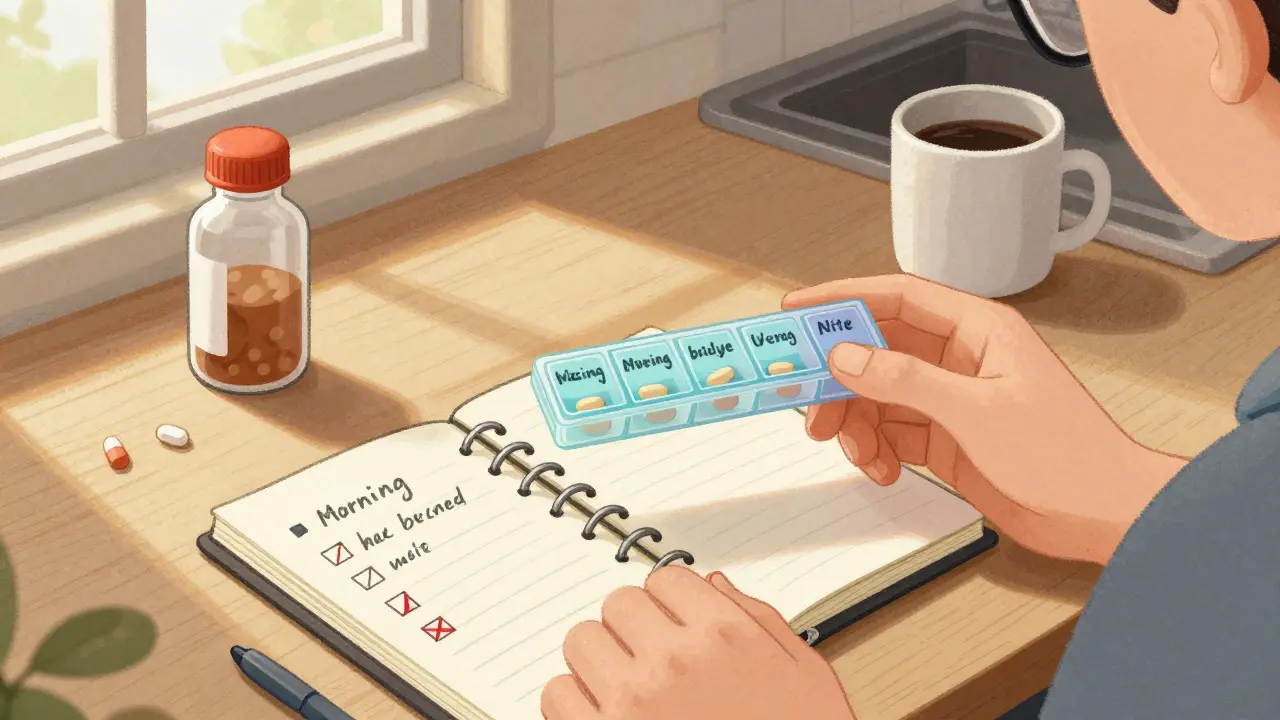
Getting your medicine on time doesn’t mean you’re taking it right. You might fill the prescription, keep the bottle on the counter, even set phone reminders-but if you skip doses, cut pills in half to save money, or stop when you feel better, your treatment isn’t working. And you’re not alone. More than half of people with chronic conditions like high blood pressure, diabetes, or cholesterol don’t take their meds as prescribed. The result? More hospital visits, worse health, and thousands of dollars in avoidable costs every year.
Why Adherence Isn’t Just About Remembering
Medication adherence isn’t about being forgetful. It’s about consistency over weeks, months, even years. The World Health Organization defines it as how closely your actions match what your doctor recommended. That means taking the right dose, at the right time, for the right length of time. Missing one dose here and there might not seem like a big deal, but over time, it adds up. For someone on a blood thinner, skipping a day can raise stroke risk. For someone with diabetes, inconsistent insulin use can lead to nerve damage or kidney failure.The Three Phases of Adherence
Adherence isn’t one thing-it’s three. First, initiation: Did you take your first pill? Second, implementation: Are you taking it the way you’re supposed to, every time? Third, persistence: Did you keep going for the full course? Many people start strong but drop off after a few weeks. That’s why measuring adherence needs to look at more than just whether you picked up the prescription.How to Measure Your Own Adherence
You don’t need fancy devices or clinic visits to track your adherence. Here’s a simple, practical checklist you can use at home-no apps required.- Keep a daily log: Write down each dose you take. Use a notebook, a sticky note, or even your phone’s notes app. Don’t rely on memory. If you skip a dose, note why-was it side effects? Cost? Forgot? This helps you spot patterns.
- Do a weekly pill count: Every Sunday, empty your pill organizer and count what’s left. Compare it to how many you should have taken. If you’re missing more than one or two pills a week, something’s off.
- Check your refill dates: Look at your pharmacy records. If you refill your blood pressure med every 28 days but your prescription is for 30 days, you’re probably taking it daily. If you wait 45 days between refills, you’re missing about 15 days a month. That’s 50% non-adherence.
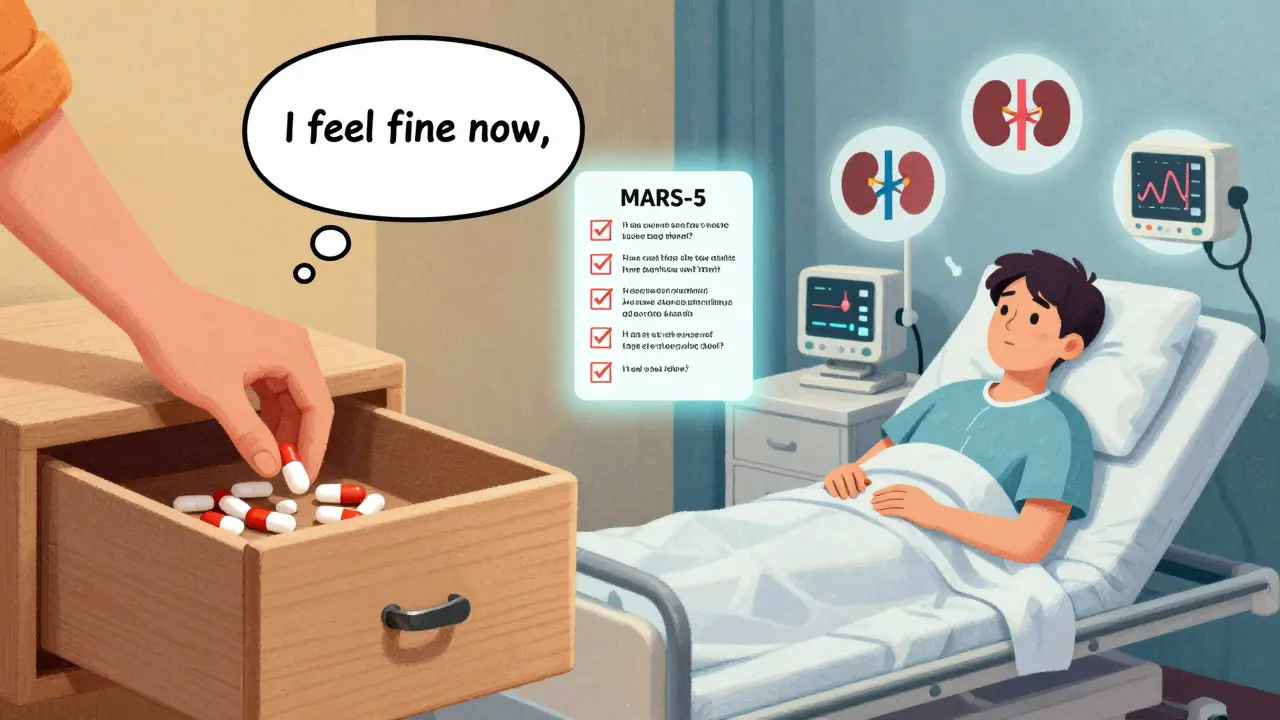
- Use the MARS-5 scale: Answer these five questions honestly:
- How often do you forget to take your medication? (1 = very often, 5 = never)
- How often do you intentionally skip doses? (1 = very often, 5 = never)
- How often do you stop taking it when you feel better? (1 = very often, 5 = never)
- How often do you cut or skip doses to save money? (1 = very often, 5 = never)
- How often do you take it exactly as prescribed? (1 = very often, 5 = never)
Add up your scores. 20-25 = high adherence. 15-19 = moderate. Below 15? You’re at risk. This isn’t a medical test-but it’s a wake-up call.

What the Numbers Really Mean
Doctors and insurers use metrics like Proportion of Days Covered (PDC) to measure adherence. PDC looks at how many days you had your medicine available over a set time-usually a year. If you’re on a 30-day supply and refill on time, you’re at 100%. If you wait 40 days to refill, your PDC drops to 75%. The standard for good control? 80% or higher. That’s the threshold used by Medicare, insurers, and clinical guidelines.But here’s the catch: PDC doesn’t know if you actually took the pills. You might have bought them, but left them in the drawer. That’s why combining PDC with your own log gives you the full picture.
What Doesn’t Work
Don’t trust yourself to remember. Studies show people overestimate their adherence by 30-50%. One study found electronic monitors caught non-adherence in 58% of patients-while self-reports only caught 32%. That means nearly half the people who think they’re doing fine aren’t.Also, don’t rely on pharmacy refill records alone. If you get prescriptions from multiple pharmacies-common among older adults or those on multiple meds-your data is fragmented. One study found over a third of Medicare users use three or more pharmacies. That means your doctor doesn’t see the full picture.
How to Fix It
If your checklist shows you’re falling short, here’s what to do next:- Talk to your pharmacist: They can simplify your regimen-switch from three pills a day to one combo pill. They can also help you find low-cost options or patient assistance programs.
- Use a pill organizer: Not just any one-use one with compartments for morning, afternoon, evening, and night. Set a daily alarm on your phone that plays a sound you can’t ignore.
- Link meds to habits: Take your pill after brushing your teeth, with breakfast, or right before bed. Habit stacking works better than reminders.
- Ask for help: If cost is the issue, say it out loud. Many clinics have social workers who can connect you with free or discounted meds. If side effects are the problem, don’t stop-ask for an alternative.
- Use the BATHE method when talking to your doctor: Tell them the Background (what’s going on), your Affect (how you feel), the Trouble (what’s stopping you), how you’re Handling it, and let them show Empathy. This approach increased honest disclosure by 47% in a Mayo Clinic trial.
What’s New in 2026
Smart pill bottles are getting cheaper. Companies like AdhereTech now make bottles with cellular chips that text you if you miss a dose-and send alerts to your doctor if you go days without opening it. AI tools are also getting better. One system analyzed EHR data and predicted who’d miss doses with 87% accuracy. That means your doctor might soon know you’re struggling before you even say anything.Medicare Part D plans now get bonuses up to $1,200 per person for keeping patients on their meds. That’s why more pharmacies are calling patients directly, offering free delivery, or even sending a nurse to check in.
Final Check: Your Adherence Scorecard
At the end of each month, ask yourself:- Did I refill on time? (Yes/No)
- Did I count more than 2 missing pills? (Yes/No)
- Did I skip a dose because of cost, side effects, or forgetting? (Yes/No)
- Did I tell my doctor or pharmacist about it? (Yes/No)
- Did I use my pill organizer every day? (Yes/No)
If you answered “No” to more than two of these, your adherence is slipping. Don’t wait for a hospital visit to fix it. Talk to someone. Start small. One pill a day, taken right, is better than ten taken half the time.
What is a good PDC score for medication adherence?
A good PDC (Proportion of Days Covered) score is 80% or higher. This means you had your medication available for at least 80% of the days you were supposed to take it over a 12-month period. This is the standard used by Medicare, insurers, and clinical guidelines for chronic conditions like hypertension, diabetes, and high cholesterol. Below 80% is considered suboptimal and increases your risk of complications.
Can I trust my memory to know if I’m taking my meds?
No. Studies consistently show people overestimate their adherence by 30% to 50%. You might think you take your pills every day, but when researchers use electronic monitors or pill counts, they find many people are skipping doses without realizing it. Memory is unreliable-especially when you’re tired, stressed, or dealing with side effects. Use a log or pill organizer instead.
Why do I keep missing doses even when I want to take them?
There are many reasons: side effects, cost, complex schedules, or simply feeling better and thinking you don’t need it anymore. Sometimes it’s not about motivation-it’s about logistics. If you’re juggling five different meds with different times, it’s easy to get overwhelmed. Talk to your pharmacist about simplifying your regimen. Switching to combination pills or once-daily doses can make a big difference.
Does using a pill organizer really help?
Yes, especially if it’s a multi-compartment organizer (morning, afternoon, evening, night) and you fill it weekly. One study found patients using organized pill boxes were 2.5 times more likely to reach 80% adherence than those who didn’t. The key is consistency-fill it on the same day each week, and pair it with a daily habit like brushing your teeth.
Should I tell my doctor if I’m skipping doses?
Absolutely. Your doctor can’t help if they don’t know. Many patients hide non-adherence out of shame or fear of being judged. But doctors see this all the time. Using a non-judgmental approach like the BATHE method-telling your doctor the Background, how you’re Feeling, the Trouble you’re having, how you’re Handling it, and asking for Empathy-makes it easier to talk openly. This leads to better solutions, not blame.
Are there free tools to track medication adherence?
Yes. Many pharmacies offer free apps that send refill reminders. You can also use free digital tools like Google Calendar, Apple Health, or even a simple notebook. The Medication Adherence Report Scale (MARS-5) is a free, validated questionnaire you can use at home. No app needed-just answer five questions. The goal isn’t fancy tech-it’s honest tracking.
What happens if I stop taking my meds without telling my doctor?
Stopping meds suddenly can be dangerous. Blood pressure meds can cause rebound spikes. Antidepressants can trigger withdrawal. Diabetes meds can lead to dangerously high blood sugar. Even if you feel fine, your body may still need the drug. Always talk to your doctor before stopping. They can help you taper safely or switch to something better suited to your life.


matthew martin, January 29, 2026
Man, I used to think I was good at taking my meds until I counted the pills one Sunday and found half my month’s supply still in the bottle. Turns out I was just good at pretending. This checklist is the wake-up call I didn’t know I needed. No app, no fancy gear-just a notebook and some honesty. That MARS-5 scale? Brutal but fair.
jonathan soba, January 31, 2026
80% PDC? That’s a corporate metric, not a health metric. They care about cost savings, not whether you’re actually feeling better. If you’re alive and not in the ER, who cares if you missed three pills? The system’s rigged to punish people who can’t afford to be perfect.
Mel MJPS, February 1, 2026
I’m a diabetic and this hit home. I used to skip insulin when my sugar was low because I thought I was being smart. Turns out I was just scared. Talking to my pharmacist changed everything. She hooked me up with a free pill organizer and a coupon for my metformin. No shame in asking for help.
Katie Mccreary, February 2, 2026
You’re not taking your meds because you’re lazy. Stop making excuses.
Chris Urdilas, February 3, 2026
So let me get this straight-we’re supposed to count pills, log every dose, call our pharmacy, fill out a 5-question quiz, and then tell our doctor we’re failing… all while juggling jobs, kids, and a life that doesn’t come with a ‘medication mode’ toggle? I get it. But also… can we just fix the system instead of making patients into pharmacists?
Irebami Soyinka, February 4, 2026
Wow. Americans still think this is hard? In Nigeria, we take our meds or we die. No apps, no pill boxes, no insurance. Just God, mama’s prayer, and a bottle with a label that says ‘take daily’. If you miss one, you feel it in your bones next morning. Maybe y’all need less tech and more discipline.
Jess Bevis, February 5, 2026
My grandma took 14 pills a day. No organizer. No phone. Just a kitchen drawer and a calendar with X’s. She lived to 92. Sometimes the old ways work better.
Kevin Kennett, February 7, 2026
Look, I get why people skip. I’ve been there. But the truth is, your body doesn’t care if you’re stressed, broke, or tired. It just knows if you gave it the drug or not. If you’re missing doses, it’s not weakness-it’s a logistics problem. And logistics can be fixed. Talk to your pharmacist. They’re the unsung heroes of this whole mess.
Anna Lou Chen, February 8, 2026
Adherence as a metric is a neoliberal construct that pathologizes structural failure. The real issue isn’t your pill box-it’s the commodification of health under late-stage capitalism. You’re not failing because you’re inconsistent-you’re failing because the system designed to keep you alive is itself non-adherent to human dignity.
Kathy Scaman, February 9, 2026
My friend’s dad used to hide his pills in his sock drawer. Said he didn’t want to be ‘that guy’ who takes a million pills. Then he had a stroke. Don’t be that guy. Or girl. Or nonbinary person. Just take the damn pill.
Mindee Coulter, February 10, 2026
I use the MARS-5 every month. Got a 16 last time. Not great but better than last year. I still skip when I’m traveling. But now I tell my doctor and we adjust. No judgment. Just progress.
Howard Esakov, February 11, 2026
Of course you’re non-adherent. You’re using Google Calendar. That’s like using a typewriter to run a startup. Get a smart bottle. Get an AI tracker. Or don’t bother pretending you care. 🤡
Rose Palmer, February 12, 2026
Thank you for this comprehensive and clinically grounded resource. The integration of behavioral psychology with pharmacological monitoring represents a significant advancement in patient-centered care. I strongly encourage all stakeholders to adopt the BATHE method as a standardized communication protocol within primary care settings.
Phil Davis, February 13, 2026
So you’re telling me the solution to not taking my meds is… more paperwork? And now I have to call my pharmacist to ask if they can combine my pills? What’s next? A form to sign saying I promise I didn’t throw them in the toilet?