
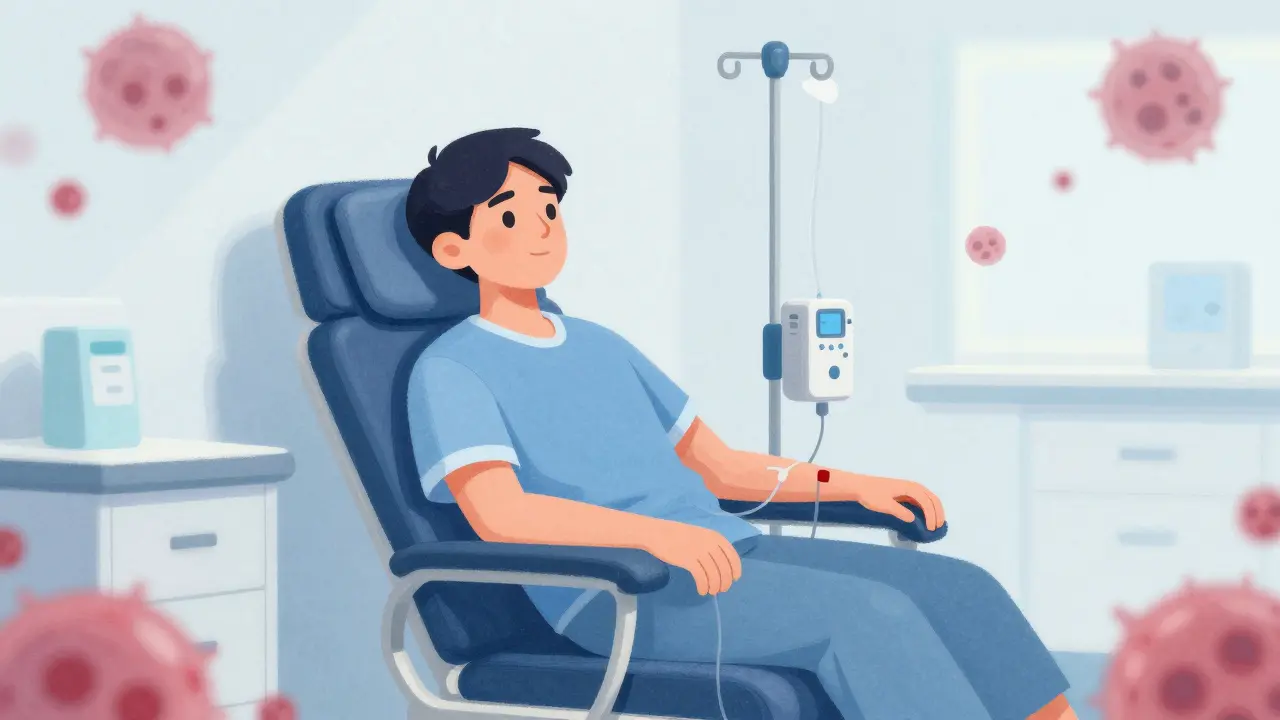
You sit in the infusion chair. The IV line is in. The pump starts humming. For most people, this is just another Tuesday of treatment. But for a small percentage of patients, that moment triggers something far more dangerous than nausea or fatigue. It triggers a hypersensitivity reaction, which is an immune system response to chemotherapy drugs that can range from mild itching to life-threatening anaphylaxis. These reactions are not rare quirks; they are a known risk of modern oncology care. About 5% of cancer patients experience an allergic reaction to their medication. While many cases are manageable, others escalate rapidly. If you are a patient, a caregiver, or a healthcare professional, knowing what to look for-and what to do-can mean the difference between a minor inconvenience and a medical emergency.
Understanding the Mechanism Behind the Reaction
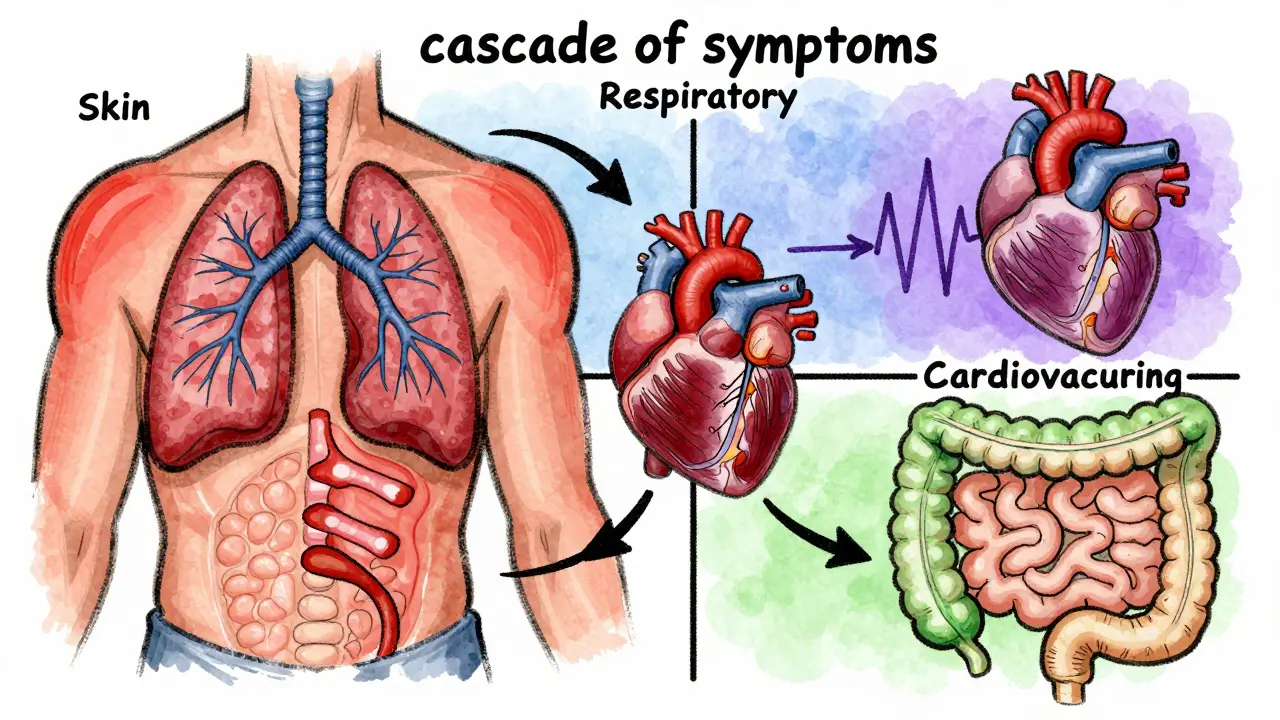
To understand why these reactions happen, we have to look at how your body interacts with foreign substances. Chemotherapy agents are powerful drugs designed to kill rapidly dividing cells. However, your immune system sometimes mistakes these drugs for invaders. This triggers the release of histamine and other chemicals from mast cells. This process is called degranulation. The result? A cascade of symptoms affecting multiple body systems simultaneously. It is important to distinguish between two types of events:
- Hypersensitivity Reactions (HSRs): True immune-mediated responses, often involving IgE antibodies or T-cells.
- Cytokine Release Syndromes: Non-allergic reactions caused by the rapid release of inflammatory proteins, often seen with monoclonal antibodies.
Recognizing the Signs: A System-by-System Breakdown
Symptoms can appear during the infusion, immediately after it ends, or even up to 48 hours later. They rarely present as a single symptom. Instead, they usually involve multiple body systems. Here is what to watch for, organized by area:
Body System
Mild to Moderate Symptoms
Severe / Life-Threatening Symptoms
Skin
Itching (pruritus), flushing, hives (urticaria)
Widespread rash, angioedema (swelling of lips/tongue)
Respiratory
Nasal congestion, throat tightness, cough
Wheezing, shortness of breath, bronchospasm, cyanosis (blue skin)
Cardiovascular
Dizziness, palpitations, anxiety
Hypotension (low blood pressure), fainting, cardiac arrest
Gastrointestinal
Nausea, abdominal cramps
Vomiting, diarrhea, severe pain
Neurological
Anxiety, sense of impending doom
Altered mental status, seizures
Which Drugs Carry the Highest Risk?
Not all chemotherapy drugs carry the same level of risk. Some agents are notorious for triggering hypersensitivity reactions. Knowing which drug you are receiving helps you stay vigilant. The highest-risk categories include:
- Platinum Agents: Carboplatin, Cisplatin, and Oxaliplatin. Carboplatin is particularly tricky because the risk increases with cumulative exposure. You might be fine for the first five cycles, but the risk jumps significantly after cycle six.
- Taxanes: Paclitaxel (Taxol) and Docetaxel (Taxotere). These are often associated with reactions due to the solvent used to dissolve the drug (polysorbate 80 or Cremophor EL).
- Monoclonal Antibodies: Drugs like Rituximab, Trastuzumab, and Cetuximab. These are large protein molecules that the immune system readily identifies as foreign.
- Others: L-asparaginase, Bleomycin, and liposomal formulations like Doxil.
Immediate Management Protocols: What Happens Next?
If a reaction occurs, time is critical. The management strategy depends entirely on the severity of the symptoms. Healthcare providers use grading systems (like CTCAE grades 1-4) to categorize severity, but in practice, the decision tree is straightforward. Mild Reactions (Grade 1-2) Symptoms include localized itching, mild flushing, or a few hives without respiratory or cardiovascular involvement.
- Pause the infusion: Stop the drug delivery immediately.
- Assess: Check vital signs (blood pressure, heart rate, oxygen saturation).
- Treat: Administer antihistamines (e.g., diphenhydramine) and possibly corticosteroids (e.g., dexamethasone).
- Resume: If symptoms resolve completely, the infusion may be restarted at a slower rate (e.g., half the original speed) under close observation.
- Stop the infusion permanently: Do not restart the drug.
- Call for help: Activate the emergency response team.
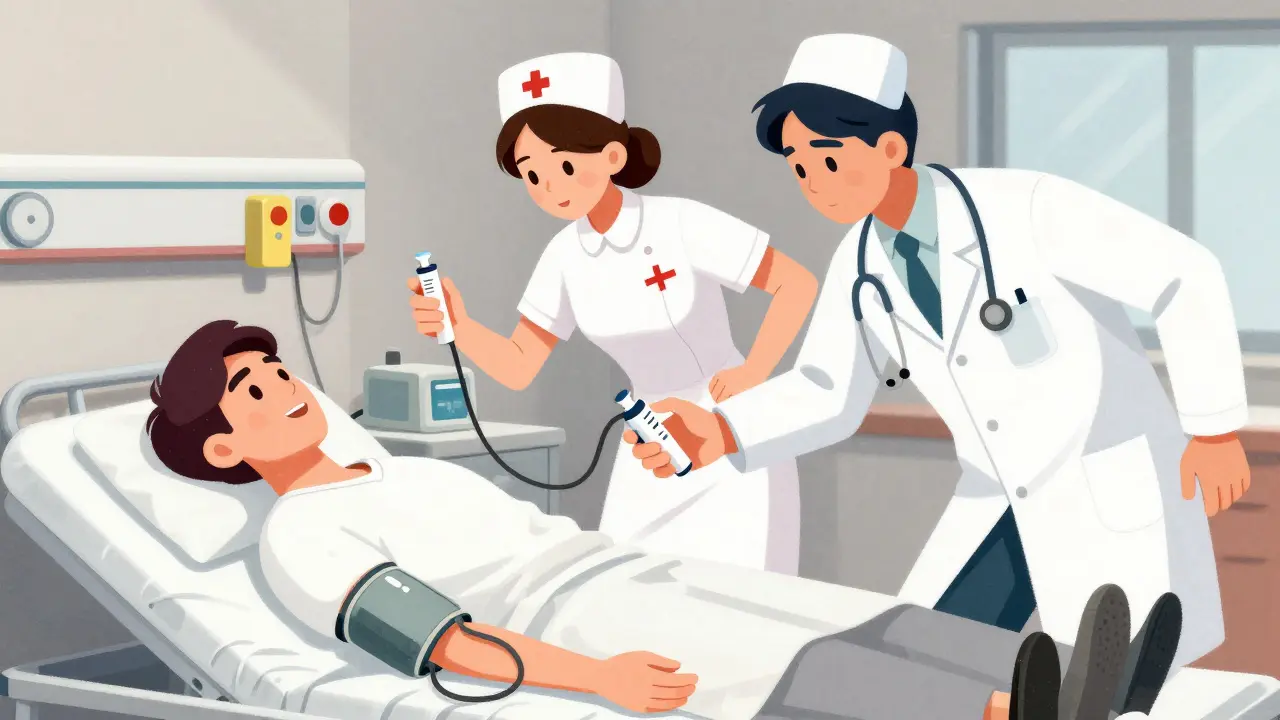
- Administer Epinephrine: This is the first-line treatment for anaphylaxis. It is given intramuscularly (IM) into the thigh. Delaying epinephrine increases the risk of fatal outcomes.
- Supportive Care: Provide oxygen, establish IV access for fluid resuscitation, and monitor airway patency. Position the patient supine (lying flat) with legs elevated if blood pressure is low.
- Secondary Medications: Antihistamines and steroids may be given, but only after epinephrine has been administered. They are not substitutes for epinephrine.
Prevention Strategies and Premedication
Can these reactions be prevented? Not always, but the risk can be significantly reduced through premedication and careful planning. For high-risk drugs like taxanes, standard premedication regimens are mandatory. This typically includes:
- Corticosteroids: Dexamethasone given orally or IV 12 and 6 hours before the infusion.
- H1 Blockers: Diphenhydramine (Benadryl) given 30 minutes before the infusion.
- H2 Blockers: Famotidine (Pepcid) or ranitidine given 30 minutes before the infusion.
Long-Term Implications and Follow-Up
If you experience a severe hypersensitivity reaction, your treatment plan will likely change. The offending drug is usually discontinued permanently. Your oncologist will switch to an alternative agent within the same class (if safe) or a different class entirely. For example, if you react to paclitaxel, you might switch to docetaxel, though cross-reactivity is possible. If you react to carboplatin, you might switch to cisplatin or a non-platinum regimen. These decisions require careful consideration of efficacy versus safety. Additionally, consider referral to an allergist or immunologist. They can perform specific testing (such as tryptase levels drawn during the reaction, or basophil activation tests) to confirm the diagnosis and identify specific triggers. This information is crucial for future treatments, including other procedures that might involve similar compounds or contrast dyes.
How quickly do chemotherapy hypersensitivity reactions start?
Most acute reactions occur during the infusion or within the first hour after administration begins. However, delayed reactions can occur up to 48 hours later. This is why patients are advised to report any unusual symptoms, such as persistent itching or rash, even after leaving the clinic.
Is it safe to continue chemotherapy after an allergic reaction?
It depends on the severity. For mild reactions, the drug may be restarted at a slower rate with additional premedication. For severe reactions (anaphylaxis), the drug is usually stopped permanently. In some cases, a desensitization protocol allows the patient to continue receiving the same drug under strict supervision.
What is the difference between an infusion reaction and an allergic reaction?
An allergic reaction (hypersensitivity) involves the immune system recognizing the drug as a threat. An infusion reaction can be caused by the drug itself, its solvent, or cytokine release, without true immune sensitization. Clinically, they look similar, so they are often managed with the same initial steps: stopping the drug and treating symptoms.
Why does the risk of carboplatin allergy increase with more cycles?
Carboplatin acts as a hapten, binding to proteins in the body to form a complete antigen. With repeated exposure, the immune system becomes sensitized. The risk is low in the first few cycles but rises sharply after cycle six, reaching up to 27% in patients receiving more than seven cycles.
What should I do if I feel dizzy or itchy during my infusion?
Tell your nurse immediately. Do not wait to see if it gets worse. Early reporting allows the team to pause the infusion and administer preventive medications before the reaction escalates. Even if you think it might be nothing, it is better to be cautious.


Dat Alexander, May 13, 2026
its wild how the immune system can turn on something meant to help you. makes you think about how fragile the balance really is. we are all just walking bags of chemicals waiting for a trigger. interesting read though.
Raymond Roberts, May 13, 2026
i mean yeah its scary but like they say premedication helps right? my husband gets taxol and he always takes the benadryl before hand so hes usually fine except for that one time where he got super hot and flushed but the nurse said it wasnt an allergy just a reaction to the solvent or whatever lol long story short dont panic unless you start coughing up blood or something
Nisha Koshti, May 15, 2026
!!!STOP LYING TO PATIENTS!!! ::::: THEY WANT YOU TO GET SICK SO THEY CAN SELL MORE DRUGS !!! I TOLD MY DOCTOR ABOUT THIS AND HE LAUGHED IN MY FACE !! BIG PHARMA IS WATCHING US !!! :( :( :(
Jannet Suen, May 15, 2026
oh honey please go touch grass 🙄 some of us are actually fighting cancer here not sitting around theorizing about lizard people in the oncology ward. if you have issues with big pharma maybe try donating blood instead of posting nonsense online x)
Claire A, May 16, 2026
I hope everyone stays safe during their treatments! It's great to see such detailed info shared. Knowledge really is power when it comes to health. Keep spreading the good vibes!
andrew iregbayen, May 16, 2026
hey thanks for this post man. i was wondering if the desensitization protocol works for platinum drugs too? my friend is on carboplatin and they're worried about cycle 6 coming up. seems like a lot of steps but hopefully it saves the treatment plan.
Laura ciotoli, May 16, 2026
IT IS A MEDICAL FACT THAT EPINEPHRINE IS THE FIRST LINE TREATMENT FOR ANAPHYLAXIS. IF YOUR NURSE OFFERS YOU BENADRYL FIRST CALL THE HEALTH DEPARTMENT IMMEDIATELY. ANTISTAMINES ARE TOO SLOW TO SAVE A LIFE IN SHOCK. STOP BEING STUPID AND LEARN PROTOCOLS.
Sarah O'Donnell, May 17, 2026
ugh why do people always ignore the signs 😒 its so selfish to wait until you feel doom before speaking up. nurses are not mind readers. you need to advocate for yourself because no one else will care enough to save your life 🤷♀️💔
Amelia Vaughan, May 18, 2026
amateurs. read the chart. stop guessing.