
You take that little white tablet every morning without thinking twice. It’s part of your routine, like brushing your teeth or grabbing coffee. But have you ever stopped to wonder exactly what is happening inside your body? Or why the box warns about certain antibiotics? Birth control pills are more than just a pregnancy prevention tool; they are complex hormonal interventions that interact with your entire system. Understanding how they work, their true effectiveness, and the risks involved can help you make safer, smarter choices about your health.
Quick Summary
- Effectiveness Gap: Perfect use prevents 99% of pregnancies, but typical use drops to 93% due to missed doses.
- Two Main Types: Combined pills (estrogen + progestin) and progestin-only "mini-pills" serve different needs and have different rules.
- Hidden Risks: Blood clots, mood changes, and blood pressure issues are real side effects that require monitoring.
- Drug Interactions: Certain medications, including some antibiotics and St. John's Wort, can render the pill ineffective.
- Health Benefits: Beyond contraception, pills can reduce risks of ovarian and endometrial cancer and help manage acne.
How Birth Control Pills Actually Work
To understand the risks and benefits, you first need to know the mechanism. Oral contraceptives are medications taken by mouth to prevent pregnancy through hormonal regulation. They do not kill sperm. Instead, they trick your body into thinking it is already pregnant or close to ovulation, stopping the release of an egg.
There are two primary categories you will encounter at the pharmacy or doctor's office. The first is Combined Oral Contraceptives (COCs), which contain both ethinyl estradiol (a synthetic estrogen) and a progestin. These pills suppress the hormones that trigger ovulation. Most modern COCs contain low doses of estrogen, typically between 20 and 35 micrograms. This is a massive improvement from the 1960s, when early versions contained up to 10,000 micrograms, leading to severe side effects.
The second type is the Progestin-Only Pill (POP), often called the "mini-pill." As the name suggests, these contain only progestin, usually norethindrone or drospirenone. Unlike combined pills, mini-pills do not always stop ovulation. Instead, they thicken the cervical mucus, creating a barrier that sperm cannot penetrate, and thin the lining of the uterus so a fertilized egg cannot implant. Newer formulations like Slynd® use a higher dose of drospirenone (4 mg) and allow for a slightly wider window for taking the pill late compared to older mini-pills.
The Truth About Effectiveness: Perfect vs. Typical Use
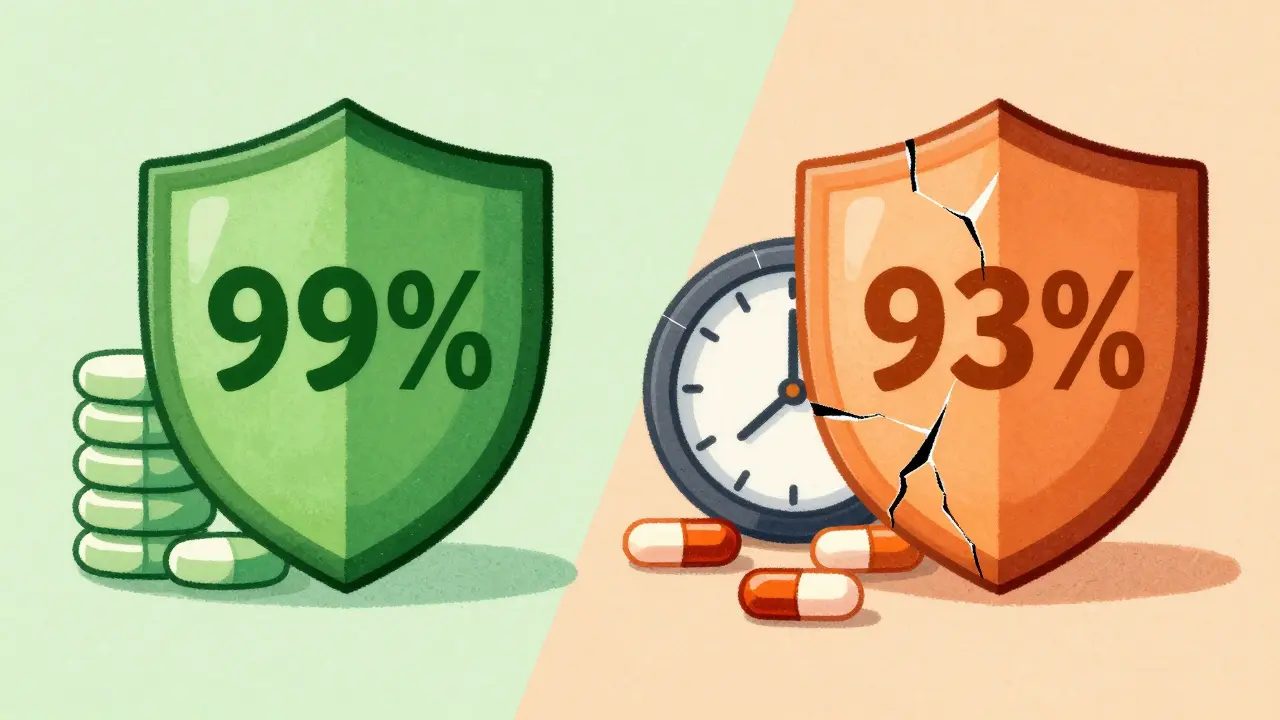
If you look at the packaging, it says "99% effective." That number feels safe. But here is the catch: that 99% figure applies only to perfect use. Perfect use means taking the pill at the exact same time every single day, never missing a dose, and having no vomiting or diarrhea that might prevent absorption. In this ideal scenario, fewer than 1 in 100 women get pregnant in a year.
Reality is rarely perfect. Studies from the CDC and the Guttmacher Institute show that typical use effectiveness drops to about 93%. This means roughly 7 out of 100 women using the pill as their sole method of contraception will experience an unintended pregnancy each year. Why the drop? Human error. You forget a pill. You take it three hours late. You start a new pack a day late because you ran out. For progestin-only pills, timing is even stricter. Missing a mini-pill by even three hours can significantly reduce its protection, whereas combined pills usually have a 12-hour grace period.
This adherence challenge is particularly pronounced among younger users. A JAMA Network review found that women under 21 using short-acting methods like pills face nearly double the pregnancy risk compared to older women using the same methods. Long-acting reversible contraceptives (LARCs), such as IUDs and implants, bypass this human error factor entirely, boasting failure rates below 1% regardless of user behavior. However, pills remain popular because they are non-invasive, easily reversible, and offer immediate control over your cycle.
Side Effects: What Your Body Might Experience
Introducing synthetic hormones into your system changes your biology. While many people tolerate the pill well, others experience noticeable side effects. These can range from mild annoyances to serious health concerns.
- Blood Clots (Venous Thromboembolism): This is the most serious risk associated with combined oral contraceptives. Estrogen increases the production of clotting factors in your liver. If you smoke, are over 35, or have a history of blood clots, this risk multiplies. Progestin-only pills carry a much lower risk of clotting events.
- Mood Changes: Hormonal fluctuations can impact neurotransmitters like serotonin. Some users report increased anxiety, depression, or irritability. If you notice your mood shifting drastically after starting a new brand, talk to your doctor.
- Breast Tenderness and Nausea: Common in the first few months as your body adjusts. Taking the pill with food or at bedtime can help mitigate nausea.
- Changes in Libido: The effect varies wildly. Some women see an increase in sex drive due to reduced fear of pregnancy, while others experience a decrease due to hormonal suppression of natural testosterone.
- Weight Fluctuations: Despite common belief, most studies show no significant long-term weight gain directly caused by the pill. However, water retention and increased appetite can occur in some individuals.
It is also worth noting the protective benefits. Long-term use of combined pills is linked to a 50% reduction in the risk of endometrial cancer and a 27% reduction in ovarian cancer risk. These protections last for decades after you stop taking the pill. Additionally, certain formulations containing drospirenone are FDA-approved to treat moderate acne and premenstrual dysphoric disorder (PMDD).
Critical Drug Interactions and Lifestyle Factors
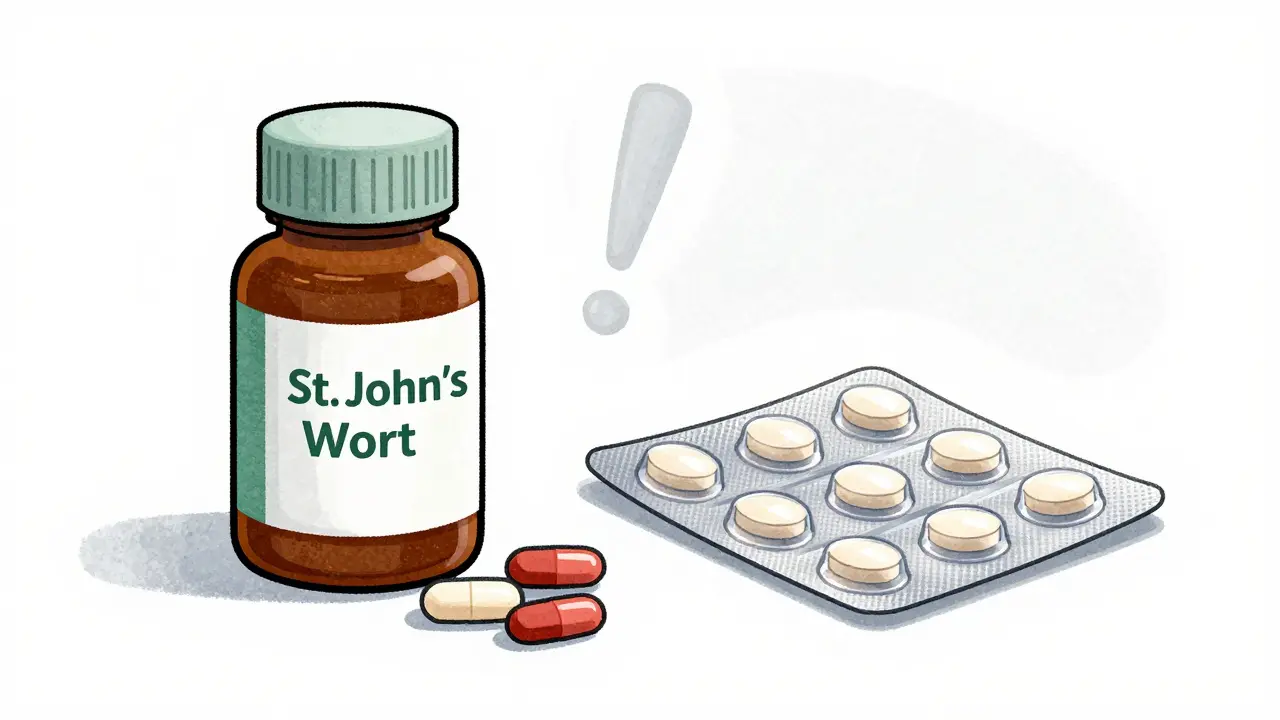
One of the biggest hidden dangers of birth control pills is how they interact with other substances. The pill is metabolized by the liver using enzymes called cytochrome P450. If another substance speeds up these enzymes, your body breaks down the hormones too quickly, leaving you unprotected.
| Substance/Medication | Impact on Pill | Action Required |
|---|---|---|
| St. John's Wort | Significantly reduces hormone levels | Avoid completely; use backup contraception |
| Rifampin (antibiotic) | Speeds up hormone metabolism | Use condoms for 28 days after stopping antibiotic |
| Some Anti-seizure meds (e.g., Carbamazepine) | Reduces efficacy | Consult doctor for alternative birth control |
| Griseofulvin (antifungal) | May reduce effectiveness | Use backup method during treatment |
| Vomiting/Diarrhea | Prevents absorption | Treat as a missed pill if within 3-4 hours of dose |
Note that most common antibiotics (like amoxicillin or azithromycin) do not interfere with the pill. The myth persists, but the exception is primarily rifampin and related drugs used for tuberculosis. However, if you are sick enough to vomit or have severe diarrhea, your body may not absorb the pill properly. In those cases, treat it as a missed dose.
Choosing the Right Pill for You
Selecting the right formulation depends on your health history, lifestyle, and tolerance for side effects. If you have migraines with aura, high blood pressure, or a history of blood clots, combined pills are generally contraindicated. In these cases, progestin-only pills or non-hormonal options like copper IUDs are safer alternatives.
For those who struggle with remembering to take a pill at the exact same time every day, newer progestin-only pills with a longer "missed pill" window might be better than traditional mini-pills. Alternatively, if adherence is a major concern, switching to a LARC method eliminates the daily burden entirely.
Always consult with a healthcare provider before starting or changing your contraceptive method. They can review your medical history, check your blood pressure, and discuss any medications you are currently taking to ensure the pill is a safe choice for you.
How long does it take for birth control pills to become effective?
If you start taking combined pills within the first five days of your menstrual period, you are protected immediately. If you start at any other time, it takes seven full days of consistent pill-taking before you are protected against pregnancy. For progestin-only pills, it takes 48 hours to become effective, regardless of when you start.
Do birth control pills protect against sexually transmitted infections (STIs)?
No. Birth control pills only prevent pregnancy. They offer zero protection against STIs like HIV, chlamydia, or gonorrhea. Using condoms in addition to the pill is highly recommended, especially with new or multiple partners, to ensure comprehensive sexual health protection.
What should I do if I miss a birth control pill?
Take the missed pill as soon as you remember, even if it means taking two pills in one day. Continue taking the rest of the pack at the usual time. If you missed a combined pill by more than 24 hours, or a progestin-only pill by more than 3 hours, use backup contraception (like condoms) for the next seven days. If you miss pills near the placebo week, skip the break and start a new pack immediately.
Can I drink alcohol while on the pill?
Yes, alcohol does not interfere with the effectiveness of birth control pills. However, excessive drinking can lead to vomiting or forgetting to take your pill, which would compromise protection. Stick to responsible drinking habits to maintain your routine.
Will I get my period back immediately after stopping the pill?
For most women, yes. Studies show that 97% of women resume spontaneous menstruation within 90 days of stopping combined oral contraceptives. Fertility returns quickly, so if you do not want to get pregnant, switch to another method immediately upon stopping the pill.