
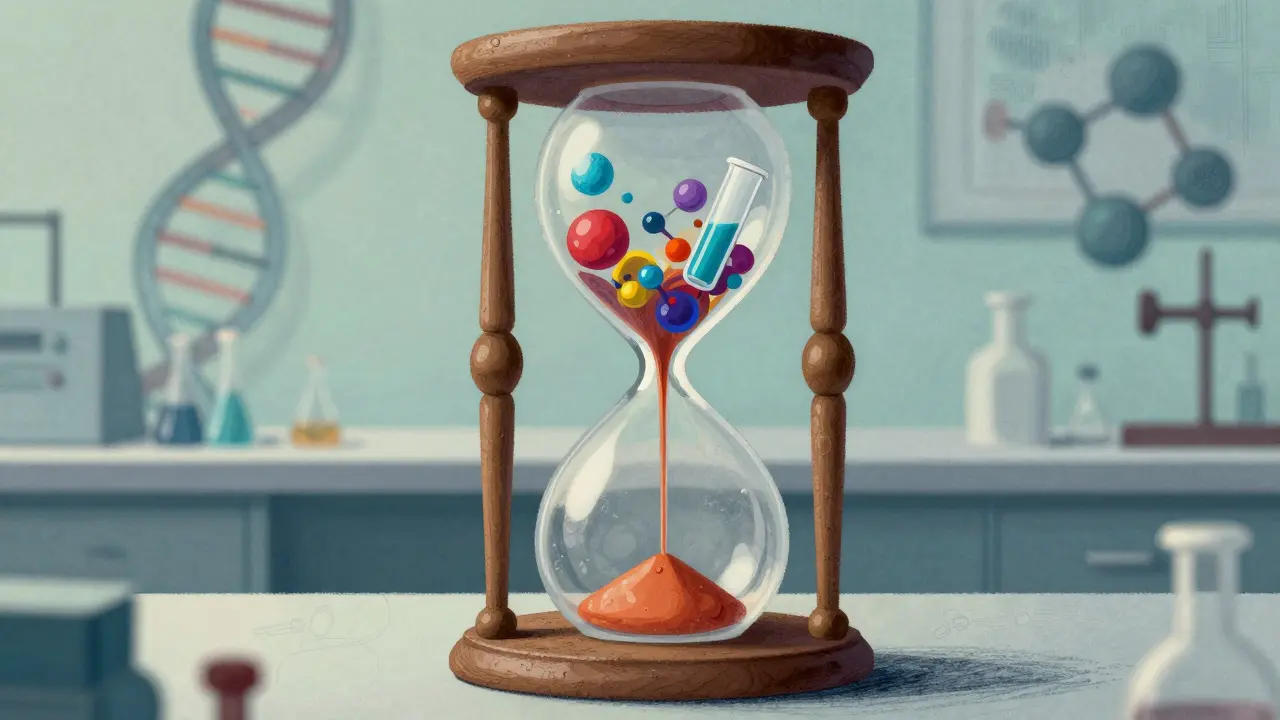
It is a common misconception that a drug patent guarantees twenty years of exclusive sales. If you hold a patent for a new medication today, you will likely see it hit the market in seven to ten years. That leaves only a fraction of the original term for your company to recoup research costs and generate profit before competitors can legally produce cheaper versions. This gap between legal protection and commercial reality is where billions of dollars are won or lost.
The pharmaceutical industry operates on a tightrope walk between innovation incentives and public access to medicine. Understanding when these protections end requires looking past the simple "twenty-year" rule. It involves navigating complex adjustments, regulatory exclusivities, and strategic litigation. For investors, patients, and healthcare providers, knowing the exact timeline of patent expiration determines pricing strategies, insurance coverage, and treatment options.
Why do drug patents expire sooner than 20 years after approval?
Drug patents start counting down from the filing date, not the approval date. Since clinical trials take 5-10 years, much of the patent term is consumed before the drug even reaches the market.
The Baseline: How the 20-Year Clock Starts
In the United States, the standard patent term is defined by 35 U.S.C. § 154(a)(2). This law sets a nominal period of twenty years from the earliest effective filing date of the application. This framework was established following the Uruguay Round Agreements Act of 1994, which aligned U.S. laws with international standards under the TRIPS Agreement. The United States Patent and Trademark Office (USPTO) administers this process.
However, this clock starts ticking long before a patient ever takes a pill. The development of a new chemical entity (NCE) is a marathon. According to analysis by DrugPatentWatch, the Research & Development (R&D) and clinical trial phases consume approximately five to ten years of that initial term. By the time the Food and Drug Administration (FDA) grants approval, the patent may already be halfway through its life. This means the actual period of market exclusivity-the time when no generic competitor can enter-is typically only seven to twelve years.
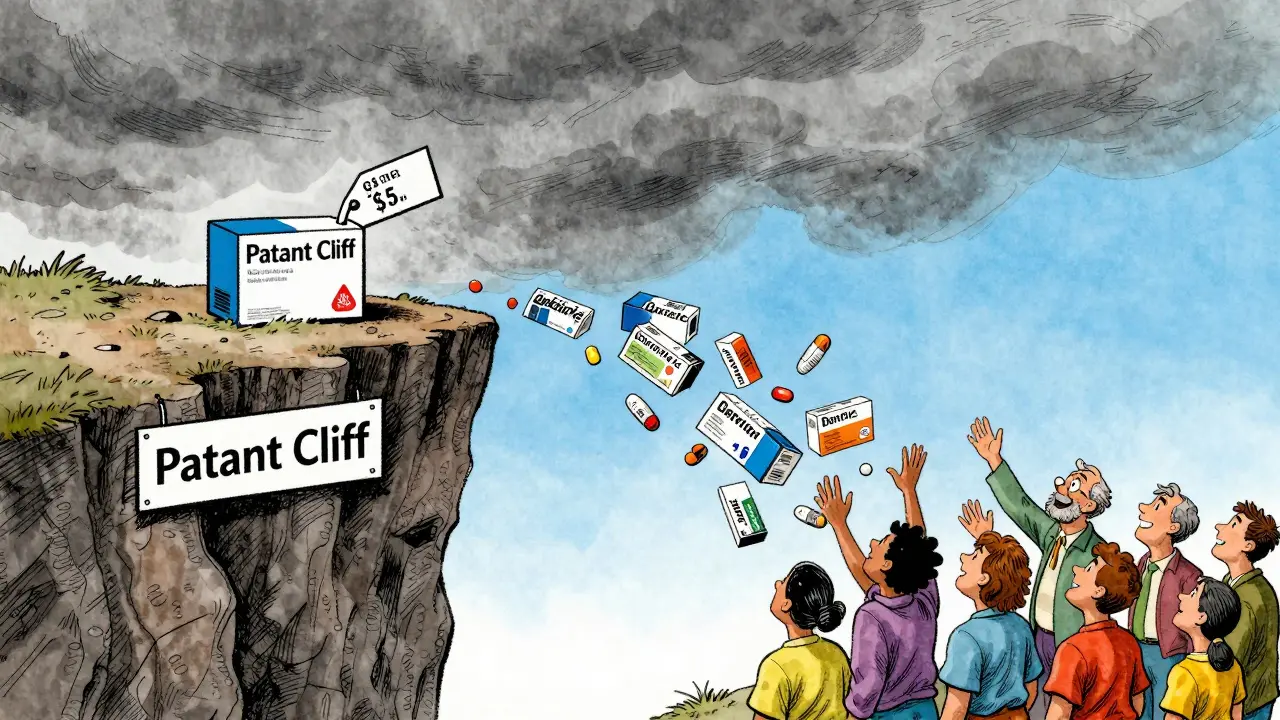
This discrepancy creates a high-stakes environment for pharmaceutical companies. They must maximize every day of exclusivity because the post-expiration landscape is brutal. Once the last enforceable intellectual property right expires, the product faces what is known as the Patent Cliff, defined as the expiration of the last IP right preventing generic entry. Data from the National Bureau of Economic Research shows that physician-administered drug prices drop by 38% to 48% immediately following this event.
Extending the Life: Adjustments and Extensions
Because the baseline term is often insufficient to justify the massive investment in drug development, the system includes mechanisms to add time back. These are not automatic; they require specific conditions and timely applications.
Patent Term Adjustment (PTA) compensates for delays caused by the USPTO itself. There are two main types:
- A-Delay: Applies if the USPTO fails to issue an initial Office Action within 14 months of filing.
- B-Delay: Applies if the patent is not issued within three years of the actual filing date.
More significantly, the Hatch-Waxman Act of 1984 introduced Patent Term Extension (PTE). This allows for up to five additional years of protection to compensate for the time spent in FDA regulatory review. However, there is a hard cap: the total market exclusivity cannot exceed fourteen years from the date of FDA approval. To secure this extension, patent holders must submit an application within a strict 60-day non-extendable deadline after FDA approval. Missing this window results in forfeiture of rights, as noted by Fish & Richardson in their 2022 analysis.
Regulatory Exclusivity: A Separate Layer of Protection
Patents are not the only barrier to generic competition. Regulatory exclusivity periods operate independently of patent law and can sometimes provide longer protection. These are granted by the FDA rather than the USPTO.
| Exclusivity Type | Duration | Requirement |
|---|---|---|
| New Chemical Entity (NCE) | 5 Years | First approval of a drug with no prior marketing authorization. |
| Orphan Drug | 7 Years | Treats rare diseases affecting fewer than 200,000 Americans. |
| New Clinical Investigation | 3 Years | New clinical studies essential for approval of new indications. |
| Pediatric Exclusivity | 6 Months | Completion of requested pediatric studies. |
During the NCE exclusivity period, the FDA cannot even accept an Abbreviated New Drug Application (ANDA) for generics. This provides a clean shield regardless of patent status. Orphan drug exclusivity is particularly powerful, offering seven years of market protection for treatments of rare diseases. Pediatric exclusivity adds six months to all existing patents and exclusivity periods, incentivizing companies to study effects on children.
The Strategy of Layered Patents
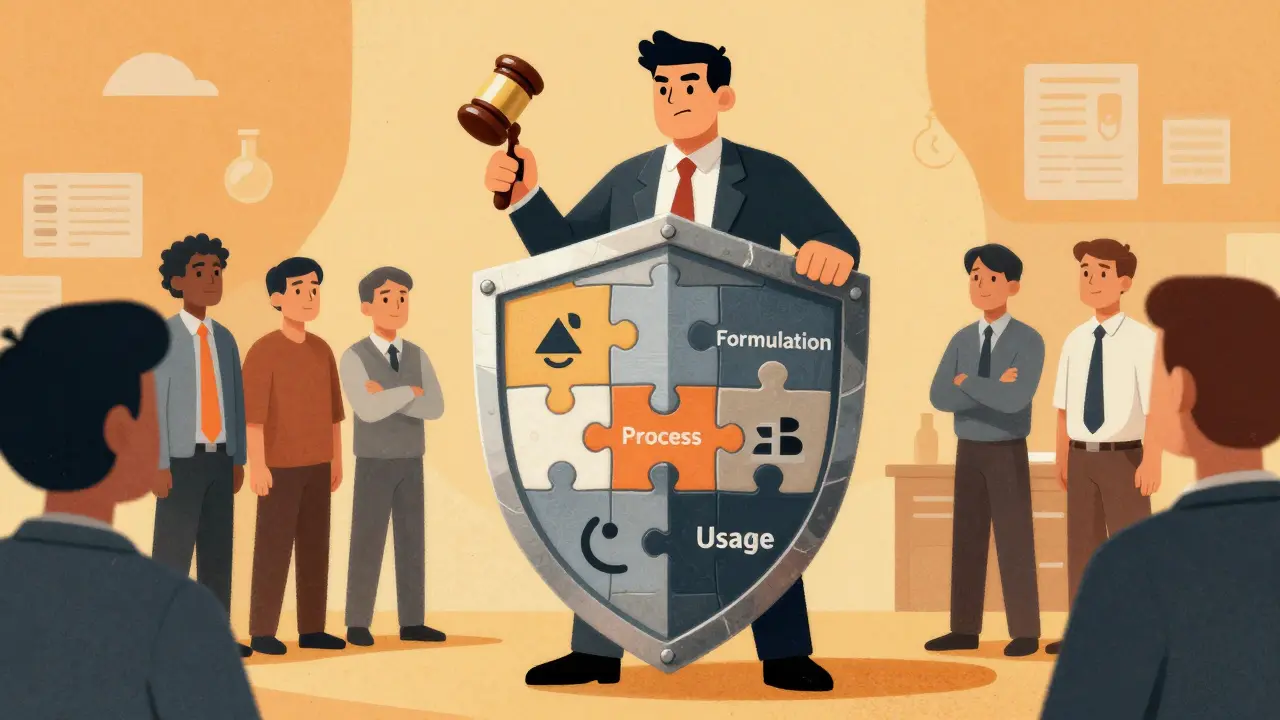
Pharmaceutical companies rarely rely on a single patent. Instead, they build a portfolio of intellectual property around a single drug. This strategy, often criticized as "evergreening," involves filing multiple patents covering different aspects of the product.
A typical portfolio includes:
- Active Ingredient Patents: Protect the core molecule.
- Formulation Patents: Protect how the drug is delivered (e.g., tablet vs. capsule).
- Manufacturing Process Patents: Protect the method of production.
- Method-of-Use Patents: Protect specific medical uses or dosages.
The Federal Trade Commission (FTC) has documented that some companies use secondary patents on delivery mechanisms to delay generic entry by 2-3 years on average. While controversial, this is a legal and standard industry practice designed to extend revenue streams.
Litigation and the 30-Month Stay
Patent expiration is not always a passive event. Generic manufacturers often challenge patents before they expire. Under the Hatch-Waxman Act, if a generic company files a Paragraph IV certification (stating the patent is invalid or not infringed), the brand-name company can sue for infringement.
Filing this lawsuit triggers a 30-month stay. During this period, the FDA is prohibited from approving the generic application. This gives the courts time to resolve the dispute. FTC data shows that if the generic applicant is not sued, FDA approval typically occurs within 25 months and 15 days. However, if litigation ensues, resolution averages 37 months and 20 days. This legal battle effectively extends the brand's exclusivity beyond the technical patent expiration date.
Market Impact: The Patent Cliff Reality
When the final barriers fall, the market reacts swiftly. For small-molecule drugs, generic competition typically captures 80-95% of market share within 24 months of patent expiration. Prices plummet. Following the December 2022 patent expiration for Eliquis (apixaban), generic versions captured 35% market share within just six months, with wholesale prices dropping 62% in the first year.
Biosimilars (generic versions of biologic drugs) follow a slower trajectory. Due to higher manufacturing complexity and interchangeability regulations, they typically achieve only 40-60% market share. The economic impact is staggering. Evaluate Pharma predicts the industry will lose $268 billion in cumulative revenue from 2023-2028 due to patent expirations, with 2025 being the peak loss year at $62 billion.
Global Differences and Future Outlook
The U.S. system is unique in its complexity. Japan, for instance, uses a "reference date" methodology for extensions, calculating based on the later of five years after filing or three years after examination request. This demonstrates alternative approaches to balancing innovation and access.
Legislative pressure is mounting. The World Health Organization has recommended harmonized reductions in pharmaceutical patent terms to 15 years to improve global access to medicines. Conversely, industry groups like PhRMA argue that the current 20-year framework is essential to recoup the average $2.3 billion R&D investment per approved drug. Bills such as the "Restoring the America Invents Act" have been proposed to eliminate certain patent term adjustments, potentially reducing average exclusivity by 6-9 months.
For now, the system remains a delicate balance. Companies invest heavily in lifecycle management, reformulating drugs or creating combination therapies to maintain protection. As seen with AstraZeneca's Tagrisso franchise, maintaining patent protection through 2033 despite a 2026 primary expiration requires sophisticated legal and regulatory maneuvering.
What happens to drug prices when a patent expires?
Prices typically drop significantly. For small-molecule drugs, prices can fall by 80-95% as generic manufacturers enter the market. Biologics see a smaller decline, usually 40-60%, due to higher production costs and regulatory hurdles for biosimilars.
Can a drug patent be extended indefinitely?
No. While companies can file new patents for formulations or methods of use, the total market exclusivity for a specific indication is capped. The Hatch-Waxman Act limits patent term extension to ensure a maximum of 14 years of post-approval exclusivity.
What is the difference between patent expiration and regulatory exclusivity?
Patent expiration ends the legal monopoly on the invention. Regulatory exclusivity prevents the FDA from approving generic applications for a set period, regardless of patent status. Exclusivity can sometimes outlast the primary patent.
How does the 30-month stay affect generic drug availability?
If a brand-name company sues a generic applicant for patent infringement, the FDA pauses the approval process for 30 months. This delays generic entry until the court resolves the case, effectively extending the brand's market dominance.
Why do some drugs remain expensive after patent expiration?
This can happen if no generic competitor enters the market due to low demand, complex manufacturing, or lack of profitability. Additionally, some companies acquire the sole rights to manufacture the generic version, keeping prices artificially high.