
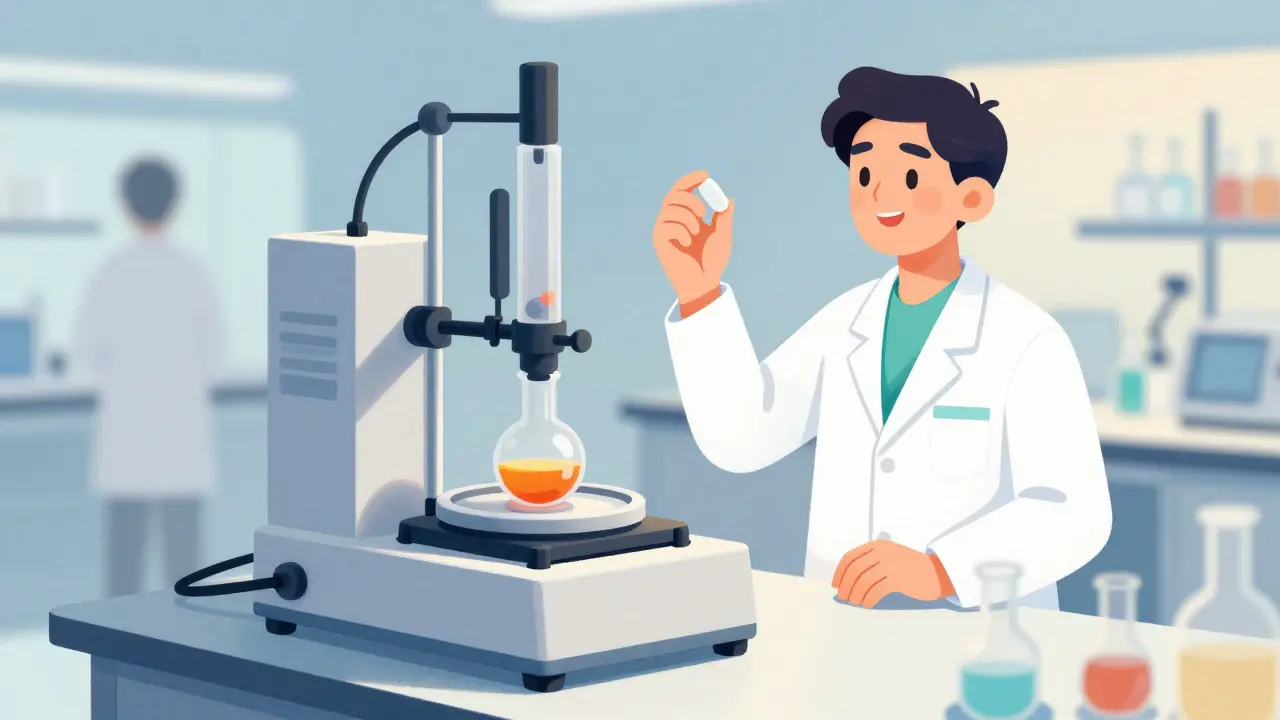
Imagine launching a generic drug without ever giving it to a single human volunteer. For decades, that was impossible. Regulators demanded blood draws from dozens of people to prove the new pill worked just like the brand-name original. But the industry is shifting. In Vitro-In Vivo Correlation (IVIVC) is a predictive mathematical model linking laboratory dissolution rates to actual drug absorption in the body. This technology allows companies to use test tubes instead of trial participants, securing regulatory waivers that skip clinical trials entirely.
This shift isn't just about saving money-though avoiding a $1 million bioequivalence study certainly helps. It’s about speed, safety, and efficiency. By proving that how fast a pill dissolves in a machine predicts exactly how it behaves in a patient, manufacturers can bring life-saving generics to market faster. Let’s break down how IVIVC works, when you can use it, and why regulators are finally getting on board.
What Exactly Is IVIVC?
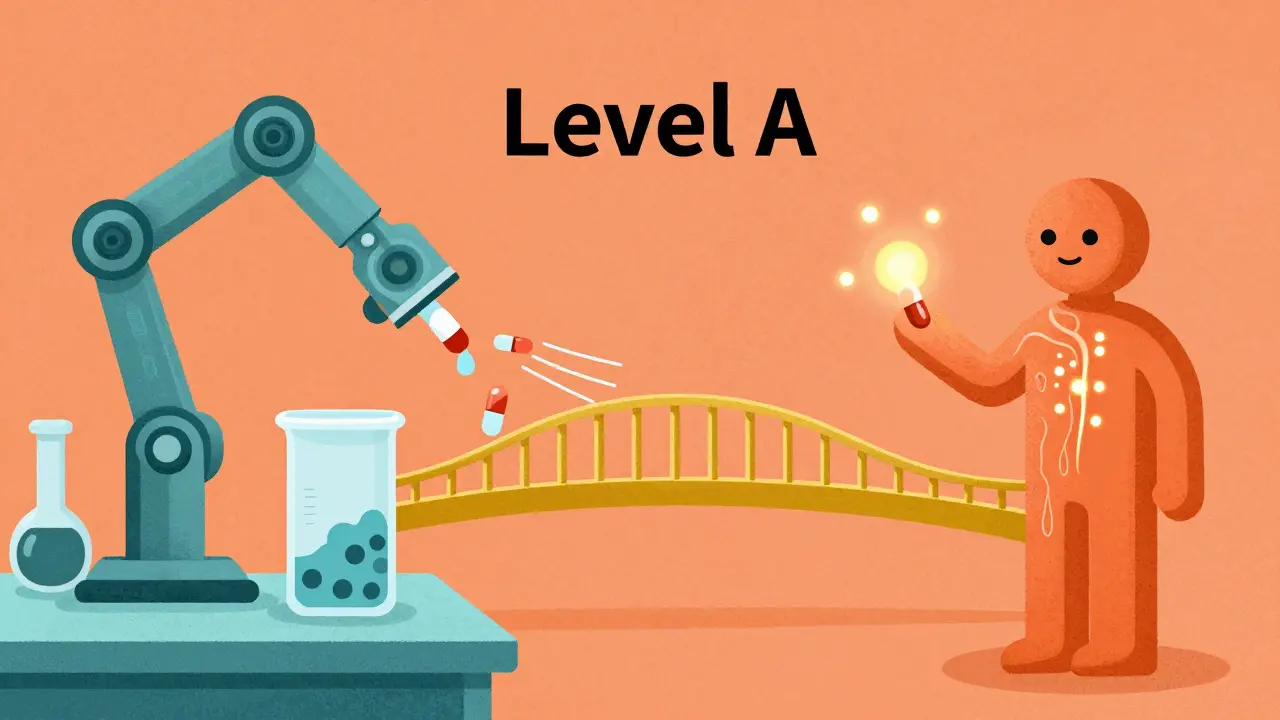
At its core, IVIVC connects two worlds. On one side, you have in vitro dissolution testing, where a machine measures how quickly a tablet breaks apart in liquid. On the other side, you have in vivo pharmacokinetics, which tracks drug levels in human blood over time.
The goal is simple: if you know how the drug dissolves, you should be able to predict how the body absorbs it. The U.S. Food and Drug Administration (FDA) first recognized this concept in the 1990s, but it wasn’t until the 2014 revision of their guidance that the rules became clear enough for widespread use. Today, both the FDA and the European Medicines Agency (EMA) accept these models as valid surrogates for human studies, provided the math holds up.
Why does this matter? Because traditional bioequivalence (BE) studies are slow and expensive. They require 24 to 36 healthy volunteers, strict hospital monitoring, and complex logistics. An IVIVC-supported waiver replaces all that with data from a lab bench. According to Premier Research, skipping even one BE study can save $1-2 million and shave 6-12 months off your development timeline.
The Four Levels of Correlation
Not all correlations are created equal. The FDA classifies IVIVC into four distinct levels, and knowing the difference is crucial for regulatory success.
- Level A: This is the gold standard. It establishes a point-to-point relationship between dissolution and absorption. If you know the dissolution profile, you can predict the entire plasma concentration curve. Regulators prefer this level because it offers the highest predictive power. You need an R² value above 0.95 and a slope close to 1.0.
- Level B: This uses statistical moments to link mean dissolution time with mean residence time in the body. It’s easier to calculate but lacks the detailed predictability of Level A. It tells you about average behavior, not individual profiles.
- Level C: This links a single dissolution parameter (like percent dissolved at 1 hour) to a single pharmacokinetic parameter (like peak concentration, or Cmax). It’s limited but useful for specific checks.
- Multiple Level C: Similar to Level C but uses multiple time points. While easier to develop than Level A, experts warn it often misses the complexity of real-world absorption.
For biowaivers, Level A is almost always required. Dr. Gordon Amidon, a pioneer in this field, notes that a validated Level A IVIVC is one of the most powerful tools in modern pharmaceutics-but only if built correctly.
When Can You Skip Human Trials?
You can’t just declare an IVIVC and walk away. Regulatory agencies require rigorous proof before granting a biowaiver, which exempts a product from in vivo bioequivalence testing. Here’s what you need to satisfy the FDA or EMA:
- Discriminatory Dissolution Method: Your lab test must be sensitive enough to detect small changes in the formulation. If changing an excipient by 5% doesn’t show up in the dissolution data, the method isn’t good enough.
- Multiple Formulations: You typically need 3-5 different formulations with varying release rates (fast, medium, slow) to build a robust model.
- Clinical Data: Despite replacing future trials, you still need initial human data. The FDA requires at least three pharmacokinetic studies with 12-24 subjects each to validate the model.
- Predictive Accuracy: The model must predict Area Under the Curve (AUC) within ±10% and Peak Concentration (Cmax) within ±15%. Anything outside these bounds gets rejected.
If you meet these criteria, you can secure waivers for post-approval changes too. Need to switch manufacturing sites? Adjust a non-critical ingredient? With a strong IVIVC, you might only need to show similar dissolution profiles (using the f2 similarity factor >50) rather than running another human study.
| Feature | Traditional In Vivo Study | IVIVC-Supported Biowaiver |
|---|---|---|
| Cost | $500,000 - $2,000,000 per study | $50,000 - $200,000 (lab & modeling costs) |
| Timeline | 6-12 months | 3-6 months (after initial validation) |
| Subjects | 24-36 healthy volunteers | None (for subsequent waivers) |
| Best For | Immediate-release drugs, novel mechanisms | Modified-release, extended-release products |
| Regulatory Risk | Low (standardized protocol) | High (requires expert modeling & validation) |
Why Do So Many Submissions Fail?
It sounds great, but the reality is harsh. Only about 29% of companies achieve regulatory acceptance on their first try. Why? Because building an IVIVC is harder than it looks.
The biggest culprit is insufficient physiological relevance. Many labs use standard buffers that don’t mimic the human gut. Real digestion involves pH gradients, bile salts, and enzymes. If your dissolution test doesn’t reflect these conditions, your correlation will fail when tested against real patient data. This issue alone caused 82% of failed submissions according to recent analyses.
Another major pitfall is inadequate formulation space coverage. If you only test two slightly different formulas, your model won’t be robust enough to handle real-world variations. You need to stress-test the system with fast, slow, and intermediate release profiles to ensure the math holds up across the board.
Finally, there’s the expertise gap. Only about 15% of pharma companies have the internal talent to build these models. Most rely on contract research organizations (CROs) like Alturas Analytics or Pion, who report success rates of 60-70% when involved early in development.

Who Should Use IVIVC?
IVIVC isn’t for every drug. It shines brightest with modified-release products-think extended-release capsules or tablets designed to release medication slowly over 12 or 24 hours. For these complex generics, the Biopharmaceutics Classification System (BCS) often falls short, making IVIVC the primary path to approval.
However, avoid using IVIVC for:
- Narrow Therapeutic Index (NTI) Drugs: Small differences in absorption can be dangerous. Regulators rarely waive human studies for these.
- Non-linear Pharmacokinetics: If doubling the dose doesn’t double the blood concentration, the linear math of IVIVC breaks down.
- Complex Absorption Mechanisms: Drugs absorbed via active transport or those affected heavily by food effects are hard to model accurately.
For immediate-release drugs, the BCS approach is usually simpler and cheaper. Save IVIVC for the complex cases where human trials are logistically nightmares or ethically questionable.
The Future: AI and Expanded Applications
The landscape is evolving fast. The FDA’s GDUFA III plan allocates $15 million specifically to improve IVIVC guidance for complex products. We’re also seeing a push toward biorelevant dissolution testing, which mimics gastrointestinal conditions more closely than traditional methods.
Machine learning is entering the chat too. At a 2024 joint workshop, both the FDA and EMA expressed openness to AI-enhanced IVIVC models, provided the algorithms remain transparent. This could dramatically reduce the time needed to build and validate models, moving us closer to a future where most generic approvals rely on virtual predictions rather than human volunteers.
By 2027, McKinsey projects that 35-40% of modified-release generic approvals will use IVIVC-supported waivers. If you’re in pharmaceutical development, ignoring this trend means falling behind. Start building your dissolution methods now, partner with experts early, and design your formulations with correlation in mind.
What is the difference between IVIVC and BCS biowaivers?
BCS biowaivers rely on the physical properties of the drug substance (solubility and permeability) to justify skipping human studies, primarily for immediate-release, highly soluble drugs. IVIVC relies on a mathematical model linking dissolution rates to absorption, making it suitable for complex modified-release products where BCS principles don't apply.
How long does it take to develop a Level A IVIVC?
Typically 12-18 months. This includes 3-6 months for developing a discriminatory dissolution method, 6-9 months for conducting pharmacokinetic studies with multiple formulations, and 3-6 months for modeling and validation.
Can IVIVC be used for topical or injectable drugs?
Historically, IVIVC focused on oral dosage forms. However, the FDA released draft guidance in 2023 for topical products, and workshops in 2023 explored applications for implantables. Acceptance is currently lower for non-oral routes (e.g., 19% for ophthalmic products) due to higher technical challenges.
What are the cost savings of using IVIVC?
Avoiding a single bioequivalence study can save $1-2 million and reduce development time by 6-12 months. Over the lifecycle of a product, IVIVC can eliminate the need for multiple post-approval BE studies, resulting in significant cumulative savings.
Why do many IVIVC submissions get rejected?
The top reasons include insufficient physiological relevance of dissolution methods (82% of failures), inadequate coverage of formulation space (74%), and poor model validation strategies (68%). Using standard buffers instead of biorelevant media is a common mistake.