
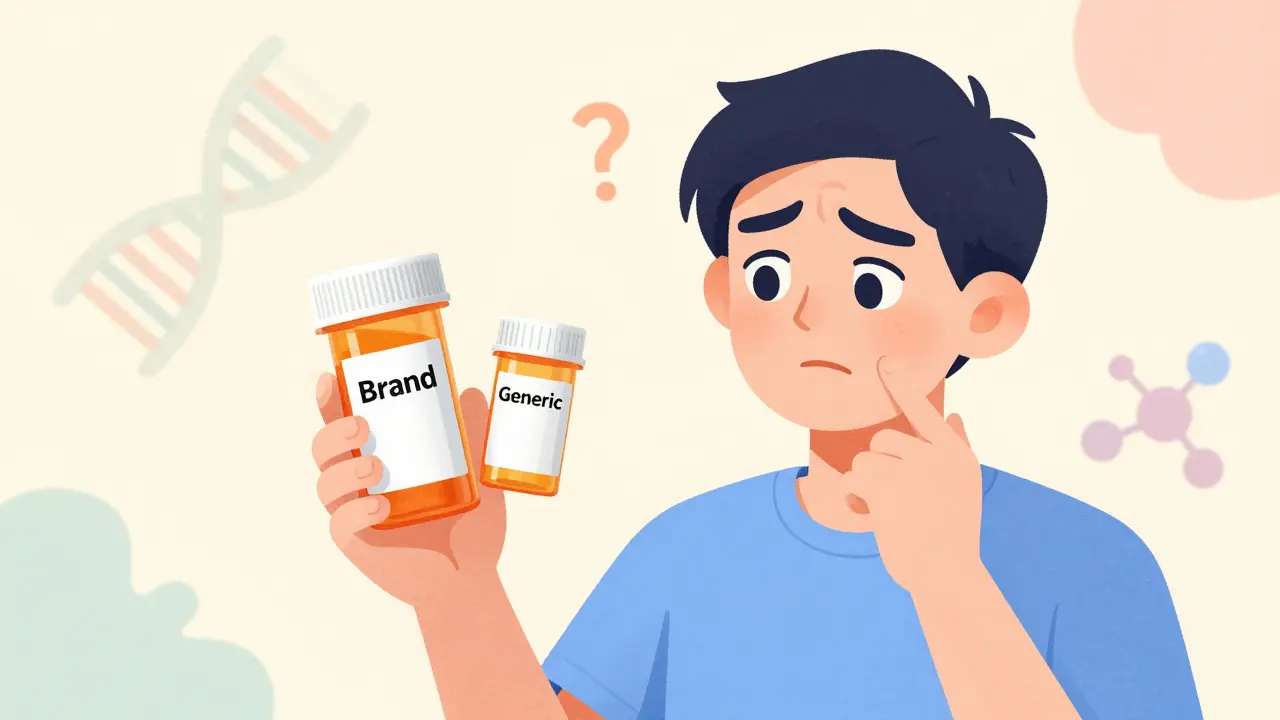
Have you ever looked at your prescription bottle and wondered if the cheaper generic pill is truly as safe as the expensive brand-name version? It’s a common hesitation. You see the same active ingredient listed, but the shape, color, or even the manufacturer looks different. Does that mean something was cut from the formula to save money? The short answer is no, but the long answer involves one of the most rigorous scientific verification processes in modern medicine.
The U.S. Food and Drug Administration (FDA) does not give generic drugs a free pass. In fact, the regulatory framework established by the Drug Price Competition and Patent Term Restoration Act of 1984, also known as the Hatch-Waxman Act, created a system where generics must prove they are essentially identical to their brand-name counterparts in every way that matters for patient health. This isn’t just about having the same chemical compound; it’s about proving that your body absorbs and processes the medication in the exact same manner.
The Core Requirement: Bioequivalence Explained
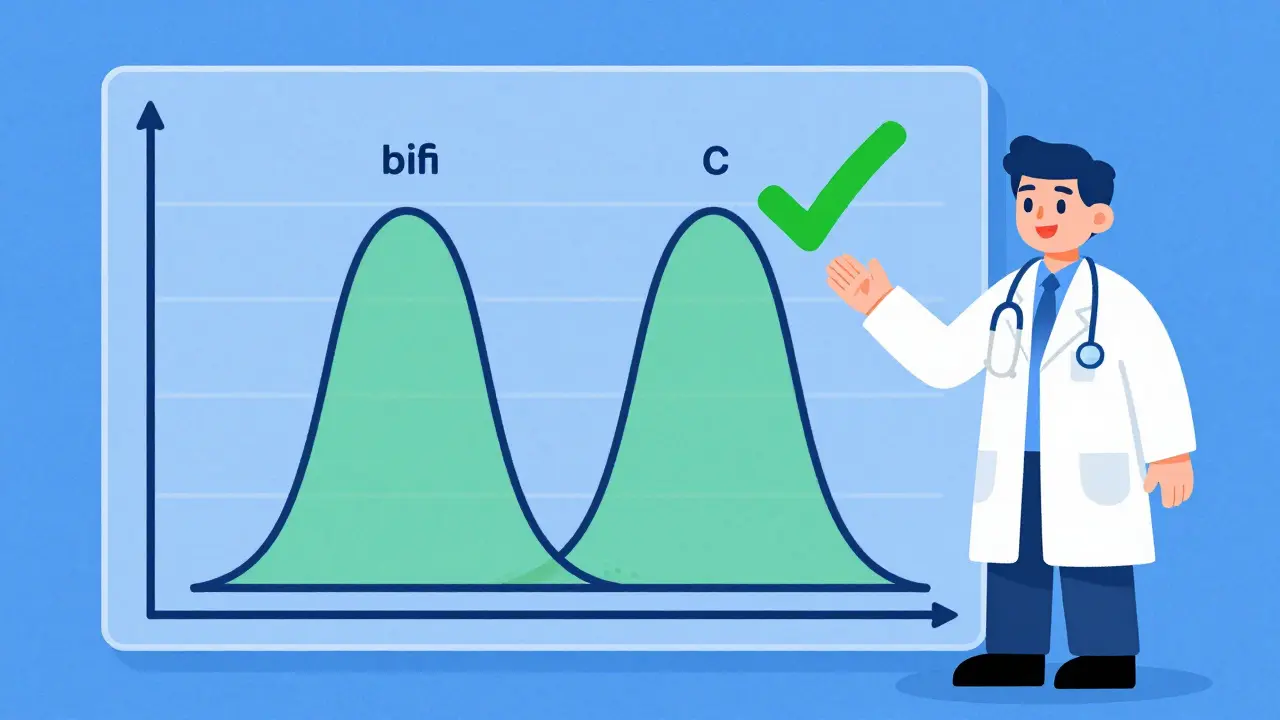
The single most important concept in understanding generic drug safety is bioequivalence, which is defined as the absence of a significant difference in the rate and extent to which the active ingredient becomes available at the site of drug action. When a company wants to sell a generic version of a brand-name drug, they don’t need to repeat the massive, multi-year clinical trials that proved the original drug works. Instead, they must demonstrate through specific studies that their product behaves identically in the human body.
Here is how the FDA measures this. Researchers conduct studies on healthy volunteers, comparing the generic drug against the Reference Listed Drug (the original brand-name product). They measure two critical metrics:
- Cmax (Maximum Concentration): How high the drug levels get in your blood.
- AUC (Area Under the Curve): The total amount of drug absorbed over time.
For a generic to be approved, the 90% confidence interval for these metrics must fall within a strict range of 80% to 125%. This might sound like a wide margin, but it accounts for natural biological variation between individuals. If a generic falls outside this window, it is rejected. For drugs with a narrow therapeutic index-like warfarin or levothyroxine, where small changes in dosage can be dangerous-the FDA tightens this window significantly, often requiring the range to be between 90% and 111%. This ensures that patients switching between brands experience no change in efficacy or safety.
The Approval Pathway: ANDAs vs. NDAs
To understand why generics are cheaper without being less safe, you have to look at the paperwork. Brand-name drugs require a New Drug Application (NDA), which includes years of preclinical animal testing and extensive Phase I, II, and III clinical trials involving thousands of patients. This process costs billions and takes over a decade.
Generic manufacturers use an Abbreviated New Drug Application (ANDA). The word "abbreviated" refers to the data submission, not the safety standards. Because the FDA has already determined that the active ingredient is safe and effective through the original NDA, the generic maker only needs to prove their version is equivalent. They submit data on chemistry, manufacturing, controls, and bioequivalence. The FDA’s Office of Generic Drugs reviews approximately 1,000 ANDAs annually. As of 2023, the median review time for first-cycle approvals is about 10 months, thanks to efficiency programs like the Generic Drug User Fee Amendments (GDUFA).
Manufacturing Quality and Impurity Controls
Safety isn’t just about what happens inside your body; it’s also about what happens on the factory floor. Generic drugs must comply with Current Good Manufacturing Practices (cGMP). These are federal regulations that ensure facilities maintain consistent quality control. Manufacturers must provide detailed written procedures for cleaning, maintenance, and calibration of equipment, all of which are subject to FDA inspection.
One area of intense scrutiny is impurities. The FDA follows guidelines such as ICH Q3B and ICH M7 to regulate impurity levels. Specifically, they monitor for genotoxic impurities-substances that could damage DNA and potentially cause cancer. The FDA enforces a Threshold of Toxicological Concern (TTC) of 1.5 micrograms per day for these impurities. If a generic manufacturer cannot prove their production process keeps impurities below this safety threshold, the drug is not approved. Stability testing is also mandatory, requiring 12 to 24 months of data to prove the drug remains potent and safe throughout its shelf life.
What Can Be Different?
If generics are so similar, why do they look different? The FDA allows permissible differences in inactive ingredients. These include fillers, binders, dyes, and flavors. These components hold the pill together or make it easier to swallow, but they do not affect the therapeutic outcome. A generic ibuprofen might be blue while the brand name is white, but the pain-relieving molecule is identical.
Labeling is another area of similarity. By regulation, generic labeling must be substantially the same as the brand-name drug’s label, covering dosage instructions, warnings, and side effects. The only exceptions are minor details like the manufacturer’s name, package size, or specific inactive ingredients listed. This ensures that doctors and patients receive consistent information regardless of which version is dispensed.
| Feature | Brand-Name Drug | Generic Drug |
|---|---|---|
| Active Ingredient | Required | Must be identical |
| Dosage Form & Strength | Defined by developer | Must match brand exactly |
| Clinical Trials | Full Phase I-III trials required | Bioequivalence study only |
| Inactive Ingredients | Proprietary formula | Can differ (fillers, dyes) |
| Approval Pathway | New Drug Application (NDA) | Abbreviated New Drug Application (ANDA) |
| Cost to Develop | $Billions | $1-2 million (bioequivalence study) |
Complex Generics: Where It Gets Tricky
Not all pills are created equal. Simple tablets dissolve quickly and uniformly, making bioequivalence easy to prove. But what about inhalers, eye drops, or topical creams? These are known as complex generic products. The FDA acknowledges that demonstrating equivalence for these forms is harder. For instance, a metered-dose inhaler must deliver the same particle size distribution to reach the lungs effectively. The FDA reports a higher initial refusal-to-file rate (around 40%) for complex generics because the standard dissolution tests aren’t enough.
To address this, the FDA has launched initiatives like the Complex Generic Drug Products Initiative. They now accept additional evidence types, such as comparative clinical endpoint studies or pharmacodynamic assessments, to approve these difficult formulations. While the bar is higher, the goal remains the same: ensuring the generic performs identically to the brand in real-world usage.

Real-World Evidence and Patient Confidence
Data supports the safety of generics. A 2022 study published in JAMA Internal Medicine analyzed 38,000 Medicare beneficiaries and found no statistically significant difference in clinical outcomes between brand and generic statins. Similarly, analysis of thousands of patient reviews shows high satisfaction rates for generic cardiovascular medications. However, skepticism persists, particularly among patients taking narrow therapeutic index drugs like levothyroxine. Some report perceived differences in symptom control, though FDA standards for these drugs are stricter than usual. Healthcare professionals generally trust generics, with surveys showing high confidence in generic antiepileptics and antibiotics, reinforcing that the regulatory system works as intended.
Future of Generic Drug Regulation
The FDA continues to evolve its standards. Recent proposals aim to allow generic companies to update safety labeling more quickly, rather than waiting for the brand-name holder. Additionally, the agency is investing in advanced modeling, simulation, and artificial intelligence to predict impurities and assess bioequivalence more accurately. With generics accounting for 90% of prescriptions filled in the U.S., maintaining rigorous safety standards is essential for public health and economic sustainability.
Are generic drugs always tested on humans?
Yes, generic drugs undergo bioequivalence studies in healthy human volunteers. These studies compare how the body absorbs the generic versus the brand-name drug to ensure they perform identically. They do not typically involve large-scale clinical trials for efficacy because the active ingredient's safety and effectiveness were already proven during the brand-name drug's development.
Why do some people feel generics don't work as well?
While generics are chemically equivalent, they may contain different inactive ingredients like fillers or dyes. Rarely, a patient might have a sensitivity to one of these inactive components, causing mild side effects. Additionally, the placebo effect or natural fluctuations in a chronic condition can lead patients to perceive a difference even when none exists clinically. For narrow therapeutic index drugs, the FDA enforces stricter bioequivalence limits to minimize this risk.
What is the Hatch-Waxman Act?
The Drug Price Competition and Patent Term Restoration Act of 1984, commonly known as the Hatch-Waxman Act, is the legislation that established the current regulatory framework for generic drugs in the United States. It created the Abbreviated New Drug Application (ANDA) pathway, allowing generics to enter the market faster and cheaper by relying on the safety data of the original brand-name drug, while still requiring proof of bioequivalence.
How does the FDA check for impurities in generic drugs?
The FDA requires generic manufacturers to follow Current Good Manufacturing Practices (cGMP) and adhere to international guidelines like ICH Q3B and ICH M7. These standards set strict limits on impurities, particularly genotoxic impurities that could damage DNA. The FDA enforces a Threshold of Toxicological Concern (TTC) of 1.5 micrograms per day, ensuring that any impurities present are at levels considered safe for daily consumption.
Can I switch between brand and generic versions of my medication?
In most cases, yes. The FDA considers therapeutically equivalent generics interchangeable with brand-name drugs. Pharmacists often substitute generics automatically unless the doctor specifies "Dispense as Written." However, for narrow therapeutic index drugs, some doctors prefer patients stay on one specific manufacturer to avoid minor variations in absorption, though both meet FDA safety standards.